There is no tired like “first week of school” tired.
Once I left a restaurant and couldn’t find my keys. And I realized they were still in my car. And that my car was still running in the parking lot. That’s “Back to School” tired.
And unfortunately, I can’t completely make this go away. Because no matter how long you teach and how good you get at this, your students will always be new… to you.
But what I can give you is some magical words of wisdom to make that first week a little smoother and a lot more joyful. Which will pave the way for an amazing school year where you are 👏MUCH 👏 LESS 👏TIRED.
Table of Contents
First, a word on systems, routines, and procedures.
Yes, you need to teach your students about pencils and bathrooms and homework and passing in papers and rewards and consequences. The list is a mile long. I’m not going to dwell here, because these things are school- and teacher-specific.
But here’s what I will say: teaching these things in isolation is BORING. And a snoozefest leaves the door wide open for misbehavior, which is the last thing you want in week one.
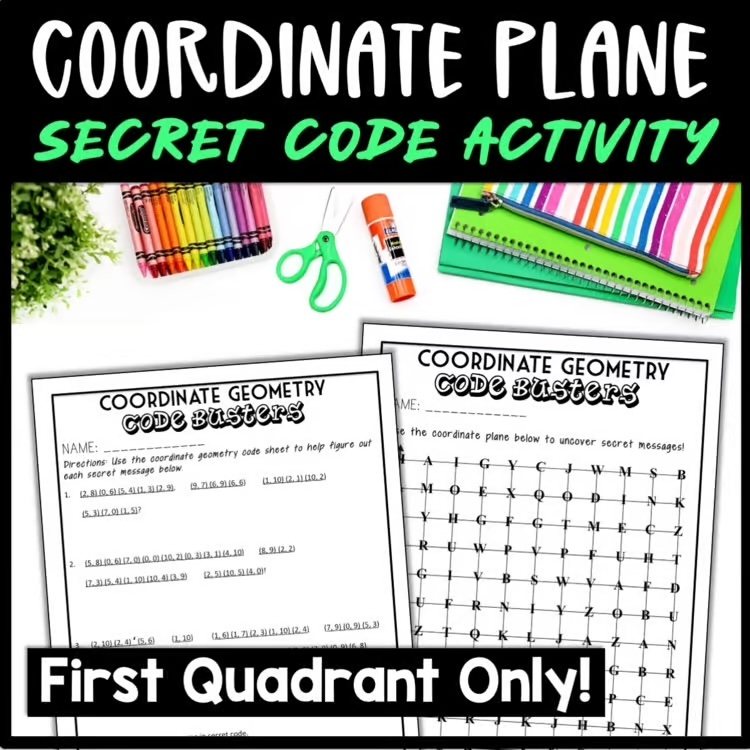
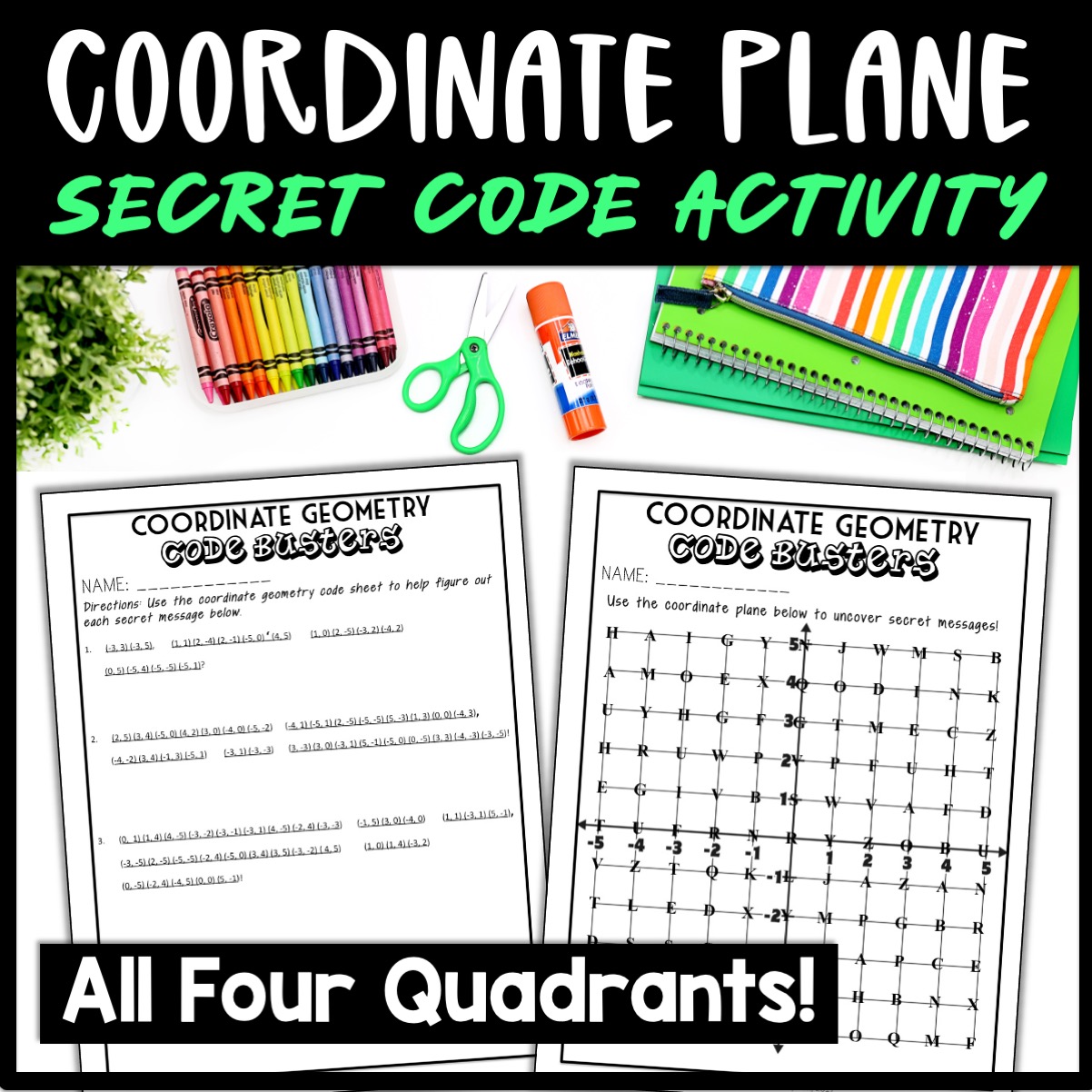
So instead of teaching the procedure for lining up by itself, have students line up and then play a math game. Instead of teaching partner-work procedures in isolation, teach them while you do the Coordinate Plane Secret Code activity (more details below).
If you can pair your systems and procedures with the fun, joyful parts of your class, the whole first week will go more smoothly.
Second, consider your goal.
My goal for the first week of school is for students to be so busy and so excited that they don’t have a chance to think about misbehaving.
👏Read 👏that 👏again.
Kids learn best when they feel successful and when they’re having fun. So we set them up for success: clear instructions, activities at their level, and work that feels exciting and joyful.
6 Things I Do the First Week of School
1. Teach Skip Counting Songs (aka Rolling Numbers)
Whether you teach 3rd grade or 8th grade, I want you to teach these songs your first week of school. Trust me. This will be your secret weapon.
Skip counting songs let your students access any multiplication or division fact without a times tables chart or a calculator. Whether they’re simplifying fractions, multiplying decimals, or factoring polynomials, this is something they need.
And it’s just plain fun. The songs are exactly the right balance of cool and silly. And once they know them, they know them for life. Your 8th graders may act too cool, but I have high school students come up to me all the time telling me how they “still roll their numbers.”
Here’s an entire blog post about how I teach this and how we use our songs through the year. The songs are also linked and they’re completely free!
For the first week of school, teach one song per day. 3rd–5th graders should learn all the songs. 6th–8th graders can probably get away with just the 6s, 7s, 8s, and 9s.
If you choose one thing from this list, please let it be this!
Want some receipts? Here are my 5th grade rockstars rolling their 7s, 8s, and 9s — on the third day of school.
Bonus: procedures you can introduce while you teach Skip Counting Songs:
- Participation
- Turn & talk with a partner
- Volume or voice levels
2. Introduce the Mad Minute
Raise your hand if you remember the mad minute from elementary school. It’s the best, right?
But here’s the problem with the traditional mad minute: some kids don’t know their multiplication facts yet. And if you start right off with multiplication, you’re going to have kids shut down on Day 1.
Instead, start with something easy-peasy, like addition facts. Kids will be fired up to see how many problems they can solve in a minute, and you can teach the procedure for your fluency block at the same time. Later, you can crank up the difficulty to multiplication facts. Or really, any mental math skill.
Guess what: I have an entire blog post on my Fluency Block too!
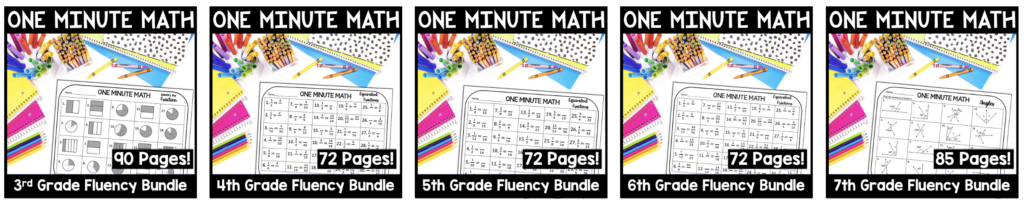
Want Mad Minute sheets that are ready to print and go? Here you go!
Bonus: Procedures you can introduce while you teach The Mad Minute:
- Pencil procedures
- Passing out papers
- Passing in papers
3. Start Playing Mental Math Games
Every math classroom needs a few “back pocket” math games to play whenever there is unexpected dead time. You know what I mean right? The lesson finishes early. The specials teacher is late picking their class up. You are standing in the hallway with 30 students because the cafeteria isn’t ready yet.
These moments in teaching are inevitable. Having a plan beforehand means they want ruin you’re day, but you’ll actually looking forward to them!
Our current favorite is ZAP!
🎯 How to Play ZAP
- Two students face each other at the front of the room.
- They take turns saying multiples of a number.
Let’s use 7s as an example:
Student 1: 7
Student 2: 14
Student 1: 21
Student 2: 28
Student 1: 35
You get the idea! 😄
Now comes the fun part… ZAP! ⚡
There are two ways to zap someone in this game:
⚡ ZAP #1: Taking Too Long
This is the most common one. If a student pauses too long…
“Ummm… ummm…”
…their partner can jump in with “ZAP!” That person is out, and the Zapper takes on their next opponent.
⚡ ZAP #2: Saying the Wrong Number
Let’s say Student 2 says 45 instead of 42. Student 1 can respond: “ZAP! It’s 42!”
But be careful — if you zap someone who was actually correct, they get to zap you right back! This is why having a referee is important. 😂
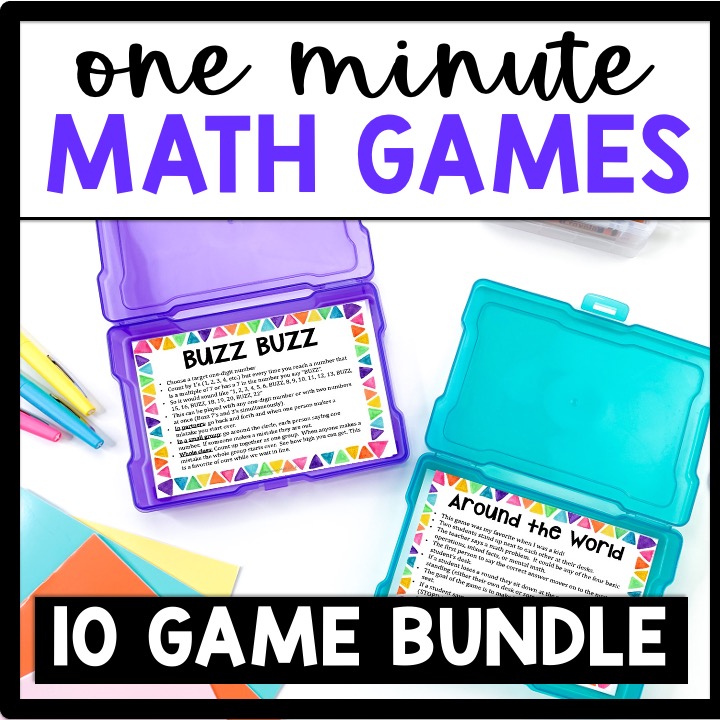
Want more ideas for One Minute Math games? This set of 10 includes ZAP! Plus it has handy game posters you can hang around your room!
Bonus: procedures you can introduce while you teach mental math games:
- Lining Up
- Transitioning to another place (lunch, specials, recess, dismissal)
- Partner work, group work, or centers
4. A “Mathy” Get-to-Know You Activity
Every first week of school should have at least one or two “Getting to Know You” activities where students can tell you a little about themselves. Obviously, I like to make this activity mathy.
This serves many purposes. You get to know your students. You get a snapshot of their ability to complete an assignment when the stakes are very low. And you have instant student work to hang on your walls.
Here’s my very favorite for the first week of school. In this activity, students connect different aspects of their lives to numbers and math. How many letters are in your whole name combined? What is your age in months?
There are three different versions, so you can pick the one that works best for you!
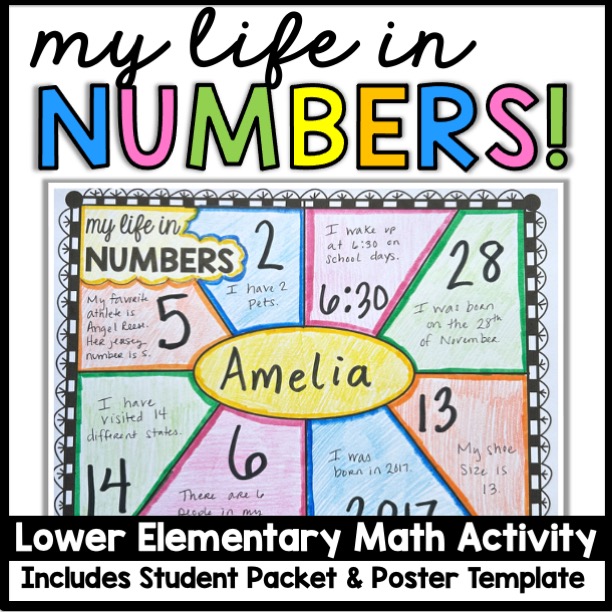
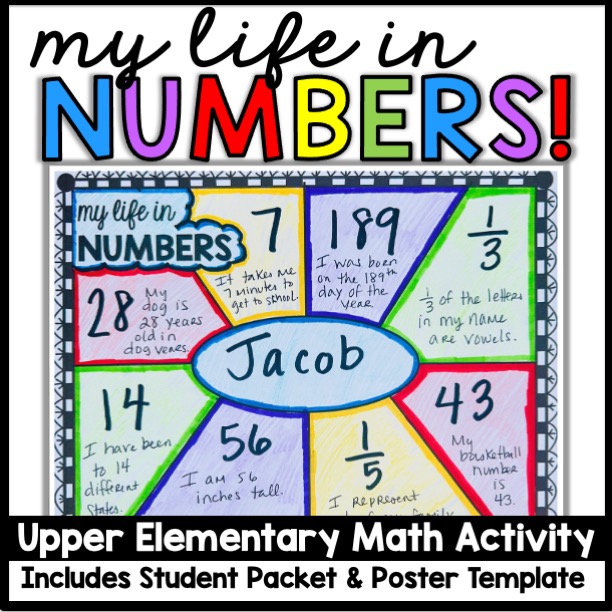
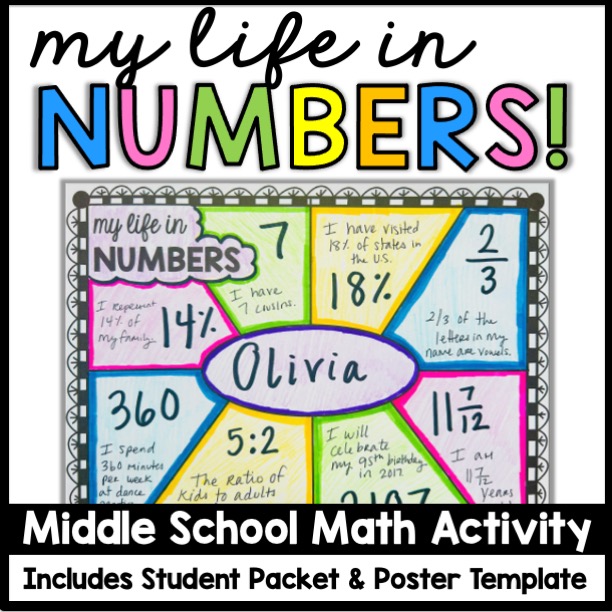
Another one I love for the first week is The Coordinate Plane Code Busters. Each ordered pair corresponds to a letter, and students write their own names in code. Then they write secret messages to each other.
This one is better for middle school (remember that kids don’t learn Quadrant I until 5th grade, and all four quadrants until 6th.)
Bonus: Procedures you can introduce while you complete a Back-to-School Activity:
- Working in partners
- Working independently
- Pencil procedures
- Passing out papers
- Passing in papers
- Managing supplies like rulers, scissors, and art supplies
5. A Beginning-of-Year Diagnostic
Ok, this one is the least fun on the list, but it’s also extremely necessary. Don’t give a diagnostic on the first day (because… that’s really mean), but do give it at some point during the first week.
Why? Because you need to get to know your students, both individually and collectively. A diagnostic will help you make meaningful groups or pairs, and it will help you determine which priority skills need to be taught before you start real content.
Your school may have one for you to give, but if not, I have one for every grade level!
Beginning of Year Math Assessments:
Word to the wise — if you already know your students are wayyyyy below grade level, consider going down a grade. You’ll still get that meaningful data, but you can avoid kids feeling defeated the first week of school.
Getting kids bought into a Back to School assessment is easy. It’s all about the messaging! It should sound something like this:
“I need to know what you learned last year. And I need to know what you forgot from last year. I don’t want to teach you something you already know. There may be things you haven’t mastered yet, and that’s ok.
This counts as a grade — but not in the way you think. It counts as an effort grade. If you take your time, show your work, and do your very best, then everyone gets an A!”
Bonus: Procedures you can introduce while you complete a Diagnostic:
- Assessment procedures
- Tech procedures (if you give the assessment digitally)
- Growth mindset surrounding an assessment
- Grading and passing back papers (or self-grading)
- Bathroom (because an assessment may take an entire block!)
6. Start Real Content (aka Unit Zero)
I feel very strongly about this last one. Students should get to some real-live, meat-and-potatoes MATH in the first week. Even if it’s not until Friday.
One, we want to show them that learning is a priority. Two, it’s not just about showing them. LEARNING IS A PRIORITY AND WE’VE GOT STUFF TO DO, BABY!
Maybe you use your diagnostic to select a Unit Zero, or maybe you’ve taught long enough that you know exactly what your students need.
But you need to start real content. And it needs to be just right content — right at that level where every kid feels some semblance of success.
Because friends? This isn’t just about reviewing key content (even though that’s important too!). It’s about changing the narrative for some kids. We have a chance to show them that THEY ARE, IN FACT, MATH PEOPLE. A strong Unit Zero will do this for them!
Not sure where to start? I have some thoughts!
3rd–4th Grade Teachers: Start with Addition & Subtraction! This unit goes back to basic 3rd grade addition and subtraction with 2- and 3-digit numbers before building to larger ones.
5th Grade Teachers: Whole Number Place Value, Factors & Multiples, or Understanding Fractions all lay essential groundwork for 5th grade content.
6th–8th Grade Teachers: Whole Number Operations or Foundations for Fractions are designed to give middle school students the basics — and the confidence — to tackle more rigorous math.
I also wrote a whole blog post about successfully implementing a Unit Zero if you’d like to read more!
Bonus: Procedures you can introduce while you start Unit Zero:
- The whole she-bang!
- Every component of your math block- Warm Up, Fluency, Direct Instruction, Practice, Exit Ticket
- The beauty of Unit Zero is you teach these systems when students are feeling successful. You’ll be shocked how much better it goes!
You’ve Got This
The first week of school will always be exhausting. There’s no song, game, or worksheet that can change that (although if you find one, tell me immediately).
But it doesn’t have to be a slog of rules and procedures. When your week is packed with rolling numbers, mad minutes, secret codes, and just-right math, something magical happens: your students walk out Friday thinking, “I like math class.” And you walk out with a pep in your step and the whole year ahead of you.
Here’s to a joyful first week! You’ve got this, friend!
Math love 💛
Sally
P.S. If you try any of these activities, I’d love to hear how it goes! Reply and tell me — or better yet, send me a video of your rockstars rolling their numbers.
FAQs: First Week of Math Class
Do I really have time for games AND procedures AND a diagnostic in one week?
Yes, because you’re not doing them separately. You’re doing them together. Teach lining up, then play a game. Teach partner procedures during the secret code activity. The mad minute is your fluency block procedure. Layering is the whole trick.
Aren’t my middle schoolers too cool for skip counting songs?
They will act too cool for approximately one day. Then the songs get stuck in their heads, and they’re rolling their numbers in the hallway. I have high school students who still do it. Trust the process.
When should I give the diagnostic?
Not Day 1 (because… that’s really mean). Aim for Day 3 or 4, after you’ve built some goodwill with games and songs. And remember the messaging: it’s an effort grade, and everyone who does their best gets an A.
What if my school already has a required beginning-of-year assessment?
Use it! The data matters more than the source. My assessments are for teachers whose schools don’t provide one, or who want something more targeted to priority skills.
What about the actual first DAY of school?
Keep it simple: a warm welcome, your most essential procedures (paired with something fun!), the first skip counting song, mad minute, and a mathy getting-to-know-you activity. Save the diagnostic and real content for later in the week.
My students are way below grade level. Where do I start?
Two moves: give a diagnostic from one grade level down so kids get meaningful data without feeling defeated, and pick your Unit Zero at that just-right level where every student can feel successful. Changing the narrative starts in week one.