
I started teaching in New Orleans over two decades ago. Some of my former students are in their thirties now (which is bizarre, because I am also in my thirties… ).
).
I run into students everywhere here. And 99% of the time, they say some version of:
“Ms. Witherspoon, I still roll my numbers all the time!”
“I still remember the song for my 7s!”
And every time, I smile, because number rolling is just out there doing its job.
Table of Contents
What Is “Rolling Numbers”?
“Rolling Numbers” is my name for skip-counting multiplication songs used as a strategy for math fact fluency.
Instead of drilling multiplication facts in isolation, students:
-
- Count by a number (like 7s, 8s, or 9s)
-
- Sing the multiples to a tune or beat
-
- Use rhythm and repetition to build automaticity
If it sounds simple, it is. But in its simplicity lies its power.
When my students don’t know a fact instantly, they don’t guess and they don’t shut down… they roll their numbers.
Why Skip-Counting Songs Actually Work
There’s a reason students still remember these years later:
-
- Movement + sound strengthens learning pathways
-
- It reduces anxiety around “not knowing” facts
-
- Singing the songs as a group removes the stigma of not knowing a fact
Instead of freezing up or growing frustrated, students have a strategy they can fall back on immediately.
Where I Use Rolling Numbers in Math
Short answer?
Everywhere.
Rolling Numbers shows up anywhere a student might need a times table fact:
-
- Long division
-
- Simplifying fractions
-
- Decimal operations
-
- Ratios & proportions
-
- Solving algebraic equations
Whole group. Partner work. Assessments.
If a student doesn’t know a fact instantly, they have a tool they can always use.
An Example: Equivalent Fractions
Let’s say students need to convert 4/7 to an equivalent fraction out of 56.
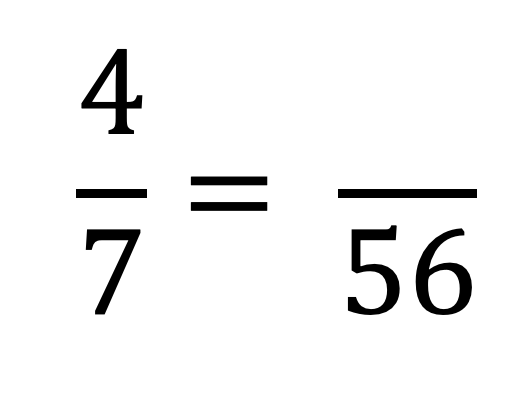
First, we find how many 7s fit into 56:
Students sing the multiplication song for their 7s:
7, 14, 21, 28, 35, 42, 49, 56
They look at their fingers to see 8 groups.
So we scale by a factor of 8:
-
- Multiply denominator: 7 × 8 = 56
-
- Multiply numerator: 4 × 8 = 32
If students don’t know 4 × 8?
They just roll their 8s until they have 4 fingers up (4 groups):
8, 16, 24, 32
No anxiety and no stigma. We just sing our way to the answer.
Why I Allow Finger Counting (Forever)
Let’s get this out of the way:
In my classroom, there is no shame in counting on fingers.
Unlike calculators or posters, fingers are always available.
And yes, some students count on their fingers for a long time (even as grown ups!). That’s fine with me.
Because the goal isn’t speed.
The goal is confidence and accuracy.
The “But They Should Already Know This” Problem
If I had a dollar for every time a middle school teacher has said:
“They should have learned their times tables facts in 3rd grade!”
And sure… in theory, yes.
But here’s what actually happens:
-
- 3rd grader memorizes facts
-
- Then stop using them consistently
-
- Then slowly forget them
-
- They gradually disengage in math class for ever
And yes, it is that serious.
I have taught every grade level 4th – 9th and never have I ever taught a group of students with true math fact fluency. Because learning times tables is not a one-time milestone. It requires ongoing maintenance. And most teachers don’t put in the time to maintain this fluency after 3rd or 4th grade.
And when students don’t have fact fluency, they slowly start checking out of math altogether.
Rolling Numbers in Action (Videos)
I bet you want some math fact fluency reciepts? Look at these cutie 5th graders rolling their numbers on the third day of school!
Because I get asked for these songs so often (and let’s be honest, you can only record them to friends’ voicemails so many times before promising to find a better way), I finally uploaded polished versions of all my multiplication songs to YouTube. Full disclosure: I’m not a singer  , but you’ll get the gist!
Click here for Rolling Number Magic:
What about 2s, 5s, 10s, or 11s? Do you have multiplication songs for them? Umm, do your kids struggle with these facts? Yeah… that’s what I thought.
And for the math nerds among us (hi, it’s me), there’s even a 13s version… because is there anything funnier than a group of middle schoolers singing the multiples of 13 to a Mystikal song?
Final Thoughts (why this matters…)
Here is one thing I know with my whole heart to be true: your loudest kiddos probably already know their facts. They are going to enjoy rolling numbers because they get to sing a silly multiplication song at the top of their lungs.
This matters because somewhere in your room, is a quiet student who is begging for a lifeline. And you just threw them one.
As these students quietly whisper their 6s, problems that they previously could not access are suddenly making sense to them. And that, my friends, is why we roll our numbers. That’s what this is all about.
Math love,
Sally 
FAQs
What is Rolling Numbers?
Rolling Numbers is the strategy of singing skip counting multiplication songs to solve any problem involving a times tables fact- multiplication, division, fractions. Literally anything.
Why do skip-counting songs help students?
Students memorize the multiplication songs and then learn to use them to access any fact quickly. It removes the stigma from finger counting. Unlike multiplication charts or calculators, it gives students a math fact fluency tool that can never be taken away.
Do students still need to memorize facts if they use Rolling Numbers?
Rolling numbers is the way in which we memorize facts and reach math fact fluency. Student should still learn all the visuals and strategies involved with the meaning of multiplication and repeated groups. But as a tool that carries us through middle and high school math? There is nothing more effective than rolling numbers!
Can older students use Rolling Numbers?
Absolutely. It is effective for any student who still needs support with multiplication or fact recall. My former students tell me all the time how they still roll their 12s.
Is finger counting ok?
If it means avoiding a incorrect answer or a student who shuts down, finger counting is A-ok! Most students won’t need this strategy forever. It is a means to an end. It is a lifeline for struggling students. And it’s also just…FUN!


2 Responses