

Do you call it an Exit Ticket or an Exit Quiz?
Or maybe something else entirely?
Whatever name you use, here’s the real question:
👉 Are you making daily formative assessments a non-negotiable in your classroom?
Because let me tell you, these little checks are one of the most powerful tools we have as math teachers.
Let’s break it down.
Table of Contents
Why Daily Assessments Matter
Daily exit tickets do a lot more than just check for understanding.
They:
✔️ Send the message that every minute of class matters
Students quickly learn: we’re always working toward something meaningful.
✔️ Reduce test anxiety over time
When students are assessed daily, big tests don’t feel like surprises—they feel like familiar practice.
✔️ Close the feedback loop immediately
Misconceptions don’t get time to grow roots when they’re addressed the next day.
✔️ Help you target instruction faster
Instead of waiting until the end of a unit, you can spot and fix gaps in real time.
How to Make Exit Tickets Work Every Day
The power isn’t just in doing exit tickets. It’s in doing them consistently and intentionally.
Here’s how to make them actually work in your classroom 👇
Step 1: Do It Every Day (No Exceptions)
Yes, every day.
Even if you don’t finish the lesson.
Even if time feels tight.
Even if the day went sideways.
👉 The exit ticket still happens.
Why?
Because it holds you accountable for protecting instructional time. And it shows kids that if they derail the lesson with misbehavior, it has a direct effect on their learning!
Step 2: Build a Clear Exit Ticket Routine
Students thrive on predictability.
In my classroom, students stack binders in the center of their desks to prevent wandering eyes. This is the signal that we have moved into “exit ticket mode.” Aka no talking, no asking for help.
If you don’t use binders, you can create simple “privacy screens” by taping two folders together. The key thing is that students understand they are no longer getting help from their neighbor or from you!
Step 3: Plan for Early Finishers
Exit tickets should never create stress or pressure.
To support early finishers:
- Pass out homework during the quiz
- Add a challenge question at the bottom of each quiz
- Keep a deck of flashcards in every desk so students can silently drill facts while everyone else is finishing.
This ensures that students who may need more time don’t feel rushed to finish
Step 4: Give Feedback Fast
This is the linchpin.
👉 Return exit tickets the very next day.
Yes, it takes time. But it’s worth it.
How do I do it?
- Simple- I grade the previous class’s exit quizzes while the current class is testing.
- This removes the temptation to wander around looking at student work and give hints.
- It also gives me “in the moment” data that allows me to adjust my lesson when I might still have a few classes to teach!
You can often grade 100 exit tickets in under 30 minutes when focused.
The quick feedback loop motivates kids to do their very best every day!
Important Caviot: If grading while students are working is not a good fit for you, you can always have students grade their own quizzes. The immediate feedback matters more than the chance that students might give themselves a few extra points.
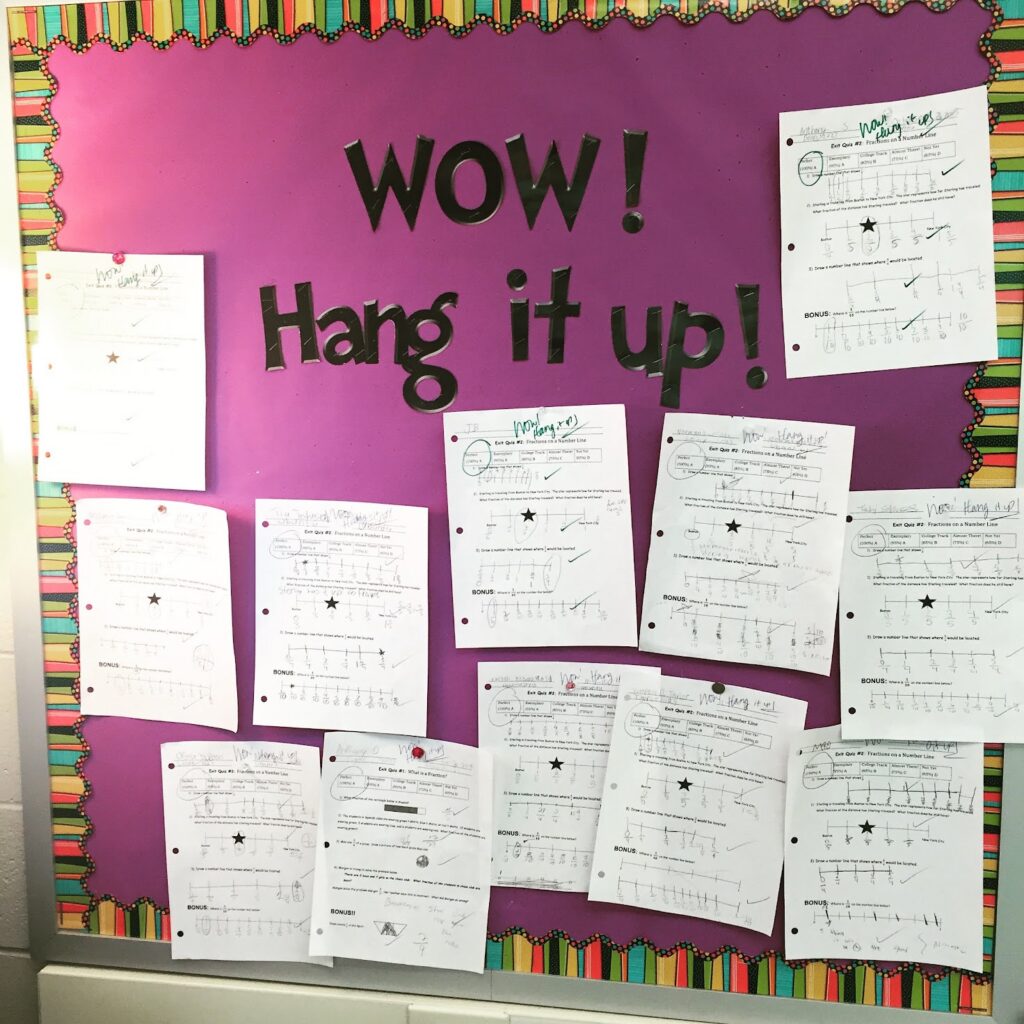
Bonus Grading Hack: The “Wow! Hang it Up!” Board
I have a bulletin board in my room that is simply titled “Wow! Hang it Up!”
When a student gets every question correct + the bonus question, I write “Wow! Hang it Up!” on their papers. Then they get to strut across the classroom and… you guessed it, HANG IT UP.
It makes passing out exit tickets a little more exciting. Walking across the class to hang up your quiz is like a victory lap. And it makes sure you ALWAYS have up-to-date student work hanging in your room!
Free Math Exit Tickets to Try
Did you know I have 300+ lessons in my TpT Store and they all have Exit Tickets (with a bonus question for early finishers)?
Visit my Freebie Library to try some of them out today!
Or grab one of these Free Lessons my TpT Store today:
- 📘 3rd Grade: Fractions on a Number Line
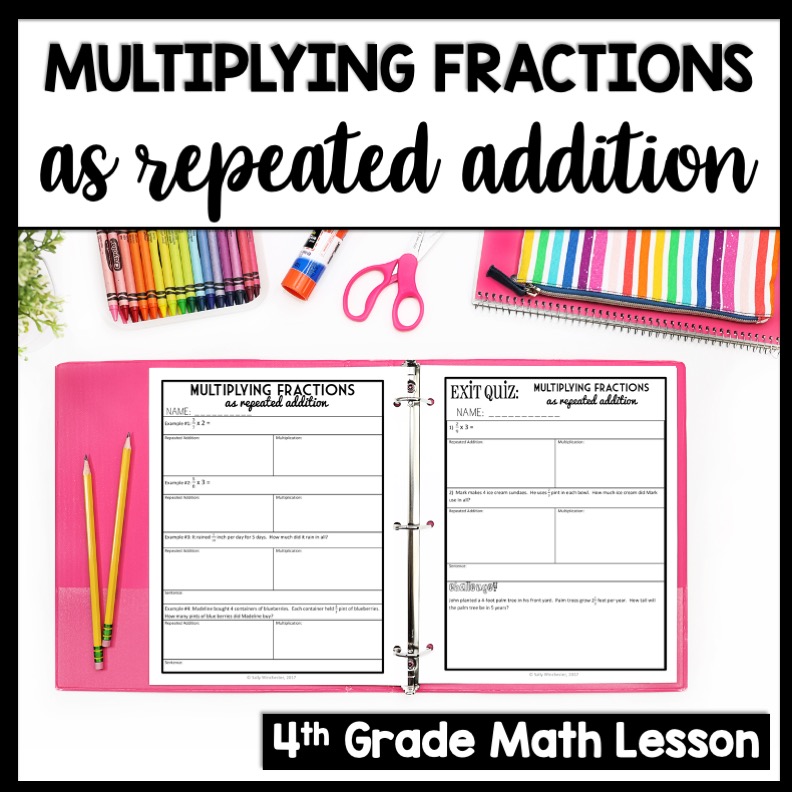
- 📗 4th Grade: Multiplying Fractions as Repeated Addition
- 📙 5th Grade: Creating Line Plots
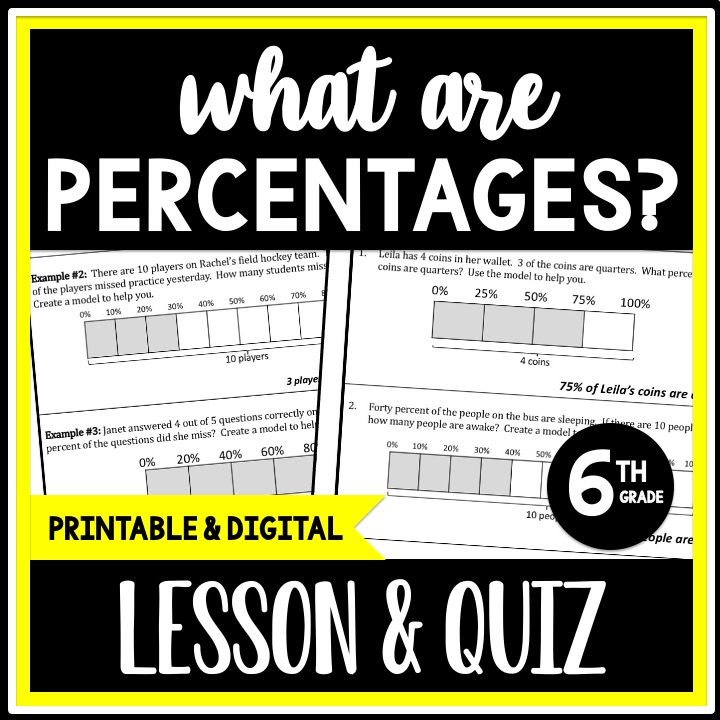
- 📕 6th Grade: What Are Percentages?

Final Thoughts
Exit tickets aren’t about adding more to your plate.
They’re about making sure what you already teach actually sticks.
Small tool. Big impact.
Happy quizzing, and math love 💛
Sally
FAQs
What is the difference between an exit ticket and an exit quiz?
Not a thing! They both are quick formative assessments at the end of a lesson.
How long should an exit ticket take?
Ideally, 3–7 minutes. It should be quick enough to maintain lesson flow but focused enough to measure understanding.
Do exit tickets have to be graded?
Yes, yes, 1000000% yes! It doesn’t need to go in your grade book every day, but the assessment must be graded. If students don’t get immediate feedback, don’t even bother.
What makes a good exit ticket question?
A strong exit ticket targets one key skill or concept and reveals whether students can apply it independently.
What should I do with exit ticket data?
Use it immediately to group students, reteach misconceptions, or adjust the next day’s instruction.



One Response