
The first few minutes of class matter. And those first few minutes during the first week of school? High stakes doesn’t even begin to cover it.
Students are figuring out expectations. You’re setting the tone. And the energy you build (or don’t build) carries through the entire period.
That’s why a daily math warm-up routine is one of the first routines you need to teach during back to school. Whether you call it a do now, a bell ringer, or a warm up, this small routine delivers big results.
Table of Contents
Why Math Warm Ups Matter
A strong math warm-up routine does more than just “fill time.” The first 5 minutes of class:
- Sets the tone for your classroom
- Builds consistency and structure
- Reinforces important skills
- Creates a calm, focused start to learning
Instead of hearing “Do we need our notebooks?” and “Are we really doing work today?”, students walk in and immediately think:
👉 I know exactly what to do.
And even more importantly:
👉 This part of class makes me feel successful, so I’m excited to get started.
The Benefits of a Daily Warm-Up Routine
✔️ 1. It Creates Instant Calm
Students enter → grab their work → get started.
No chaos. Just routine.
✔️ 2. It Builds Long-Term Retention
Remember that time you nailed teaching fractions. And then the next week students asked what a numerator was?
Warm ups solve that. Through spiral review, students revisit skills regularly so nothing gets forgotten and learning stays fresh all year long.
✔️ 3. It Gives You Breathing Room
Let’s not ignore this part, because YOU matter a lot in this equation.
Warm ups give you a few minutes to:
- Take attendance
- Set up materials
- Check in with a struggling student
- Or just take a breath
Teaching is nonstop. These built-in moments of peace are worth their weight in gold.
What Makes an Effective Math Warm Up
Not all warm ups are created equal. Here’s what makes them truly impactful:
⭐ Start with Easy Wins
Begin with low-stress mental math. Why?
- Gets students engaged quickly
- Builds confidence
- Creates early success for all learners
⭐ Spiral Review Matters
The best warm ups:
- Review past content
- Reinforce foundational skills
- Fill learning gaps
A skill taught months ago should still feel familiar.
⭐ Build in Progression
Introduce skills in stages:
- Start with simple computation
- Gradually increase difficulty
- Transition into word problems
This builds both skill mastery and student confidence.
⭐ Cover Everything (Strategically)
A strong system ensures no standards get skipped and no last-minute reteaching panic. Everything is revisited with intention.
How to Structure Your Warm Ups for Maximum Impact
A simple structure works best:
Step 1: Enter & Begin Immediately: No directions needed; routine does the work. I have students grab the warm up on their way into class so it’s one less paper to pass out and no waiting on the student part.
Step 2: Mental Math: Right at the top of the worksheet.
Step 3: Skill Practice: This comes next and begins at the lowest level of difficulty so students who didn’t master it the first time get another go.
Step 4: Application: Once Step 3 is mastered, these skills come back in to word problems.
Step 5: Debrief: We review A FEW high-leverage problems and move along with our day.
Most importantly:

It’s called the “Do Now” not the “Do Forever.”
The debrief is the easiest way to lose 30 minutes and then not have time for your actual math lesson. Rome wasn’t built in a Do Now. You will not address every misconception at this very moment and that’s ok!
Making Warm Ups Work All Year Long
Want this routine to actually stick? Here’s what matters:
✔️ Be consistent — Same structure every day = stronger habits
✔️ Don’t over-explain — Routine replaces repeated directions
✔️ Keep it short — 5–10 minutes is plenty
✔️ Use the data — Warm ups show you who’s struggling and what needs reteaching. We can address these in other structures- homework, morning work, small groups, reteach lessons!
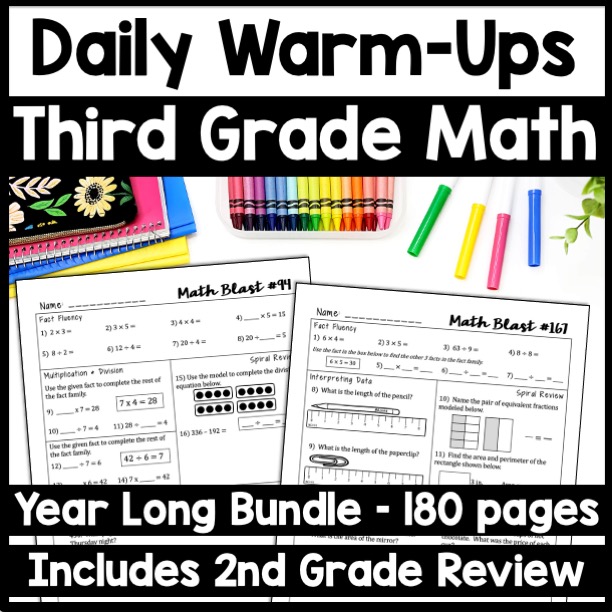
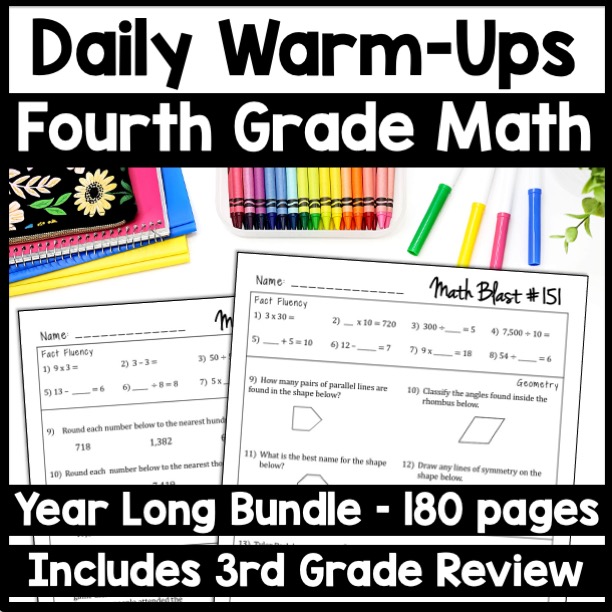
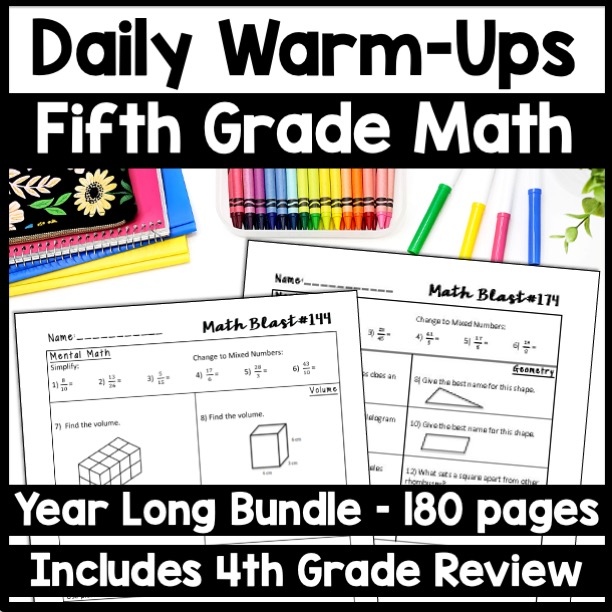
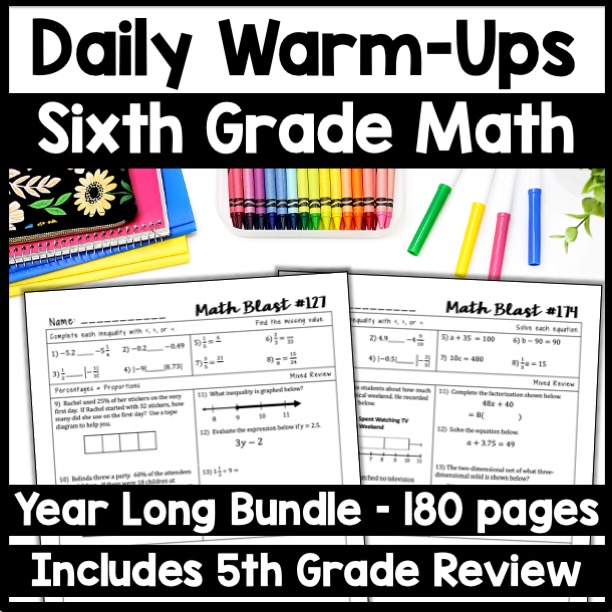
Need Warm Ups that are Ready-to-Print?
Not to brag, but mine are best-sellers for a reason!
They meet all the above criteria and are ready to use tomorrow.
- Each Warm Up starts with mental math.
- Each focus skill is re-introduced at the most basic level.
- Once skills are mastered as focus skills they appear in word problems.
- No skill slips throughtcracks
Final Thoughts
If you’re looking for a simple way to improve classroom management, increase retention, build student confidence, and start class smoothly every day…
👉 A math warm-up routine is it.
It’s small. It’s simple. And it works.
Set the tone early. Stay consistent. Watch the difference.
Wishing you a stress-free, smooth-starting school year!
Math love 💛
Sally
FAQs
What is a math warm up? A short, daily activity at the start of class designed to review skills, build fluency, and establish routine.
How long should a math warm up take? Typically 5–10 minutes. It should be quick and focused.
Should I give directions every day? No. The goal is for students to know the routine so well that directions aren’t needed.
What kind of problems should I include? A mix of mental math, review problems, gradually increasing difficulty, and finally moving into application problems (word problems).
How does spiral review help students? It keeps previously learned skills fresh, preventing forgetting and strengthening long-term retention.
Can I use warm ups for assessment? Yes! They’re a great informal way to monitor understanding and spot gaps early.
What if students struggle with the warm up? That’s valuable data. It means the skill needs more support during your main lesson. Consider lowering the rigor so students don’t get frustrated.
Can warm ups be used outside of the beginning of class? Absolutely. They work well for homework, small groups, intervention, and tutoring.
Do warm ups really make a difference? Yes—when used consistently, they improve fluency, confidence, classroom routines, and overall performance.


One Response