
Plotting points should be simple… so why does half your class plot (3, 5) as (5, 3) the very next day? And the moment a coordinate is zero? Total chaos.
The good news: you don’t need a new lesson plan. A few small language shifts dramatically improve how students understand and remember coordinate plane concepts. Here are four classroom-tested tricks.
How to Teach the Coordinate Plane (4 Tips)
Trick 1: The “Run, Jump” Method (x before y)
As you probably already know, the most common mistake kids make is mixing up their x and y coordinate.
To stop backward plotting, teach students to run before they jump. The x-coordinate is how far you run (left/right); the y-coordinate is how high you jump (up/down).
-
- (3, 5) → Run 3, Jump 5
-
- (-4, 6) → Run -4, Jump 6
This builds muscle memory and eliminates the classic coordinate flip.
BONUS: Hook for day one– Have a student jump as far as they can from a standstill, then again with a running start. They always go farther with a running start — because you always run before you jump.
Trick 2: The “Board Game” Counting Rule (avoid off-by-one errors)
Is it just me or do kids not play board games like they used to? Ahem…Sally, your 1982 is showing…
If you are noticing kids coordinates are off by one number (usually one number too large), they are probably counting their starting point. This is most prevalent when students need to find the distance between two points.
Students count incorrectly when they count the starting point. Fix it with one reminder: you don’t count where you start — only how many moves you make. Just like a board game, you count the spaces your piece actually moves, not the square it begins on.

Trick 3: “Stay Put” at Zero
Any time a coordinate is zero? Total chaos! Students see the zero and just skip it. So they might plot (0, 7) on the first 7 they see- which is the one on the x-axis.
Zero means no movement — so the rule is simply “stay put.”
-
- (0, 7) → Run ZERO, Jump 7 (stay on the y-axis, then move up)
-
- (3, 0) → Run 3, Jump ZERO (move right, then stay on the x-axis)
No new rules, no extra thinking. Just consistent language routines.
Trick 4: Horizontal-First Directions
When describing movement between two points, always go horizontal first, then vertical.
Moving from (7, 8) to (0, 4):
-
- First, move 7 spaces left
-
- Then, move 4 spaces down
(And remember the board-game counting rule.) This consistency helps students organize their thinking and communicate clearly.
Resources for teaching the Coordinate Plane
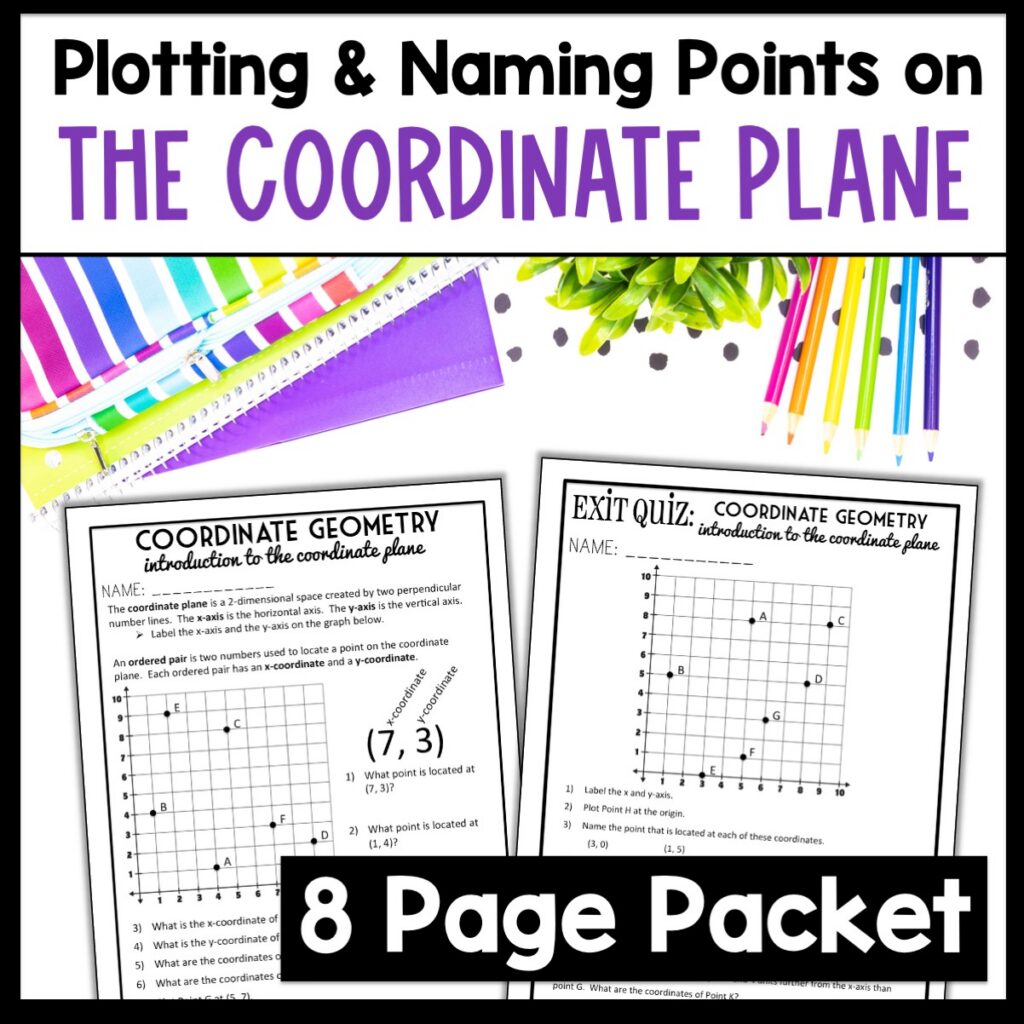
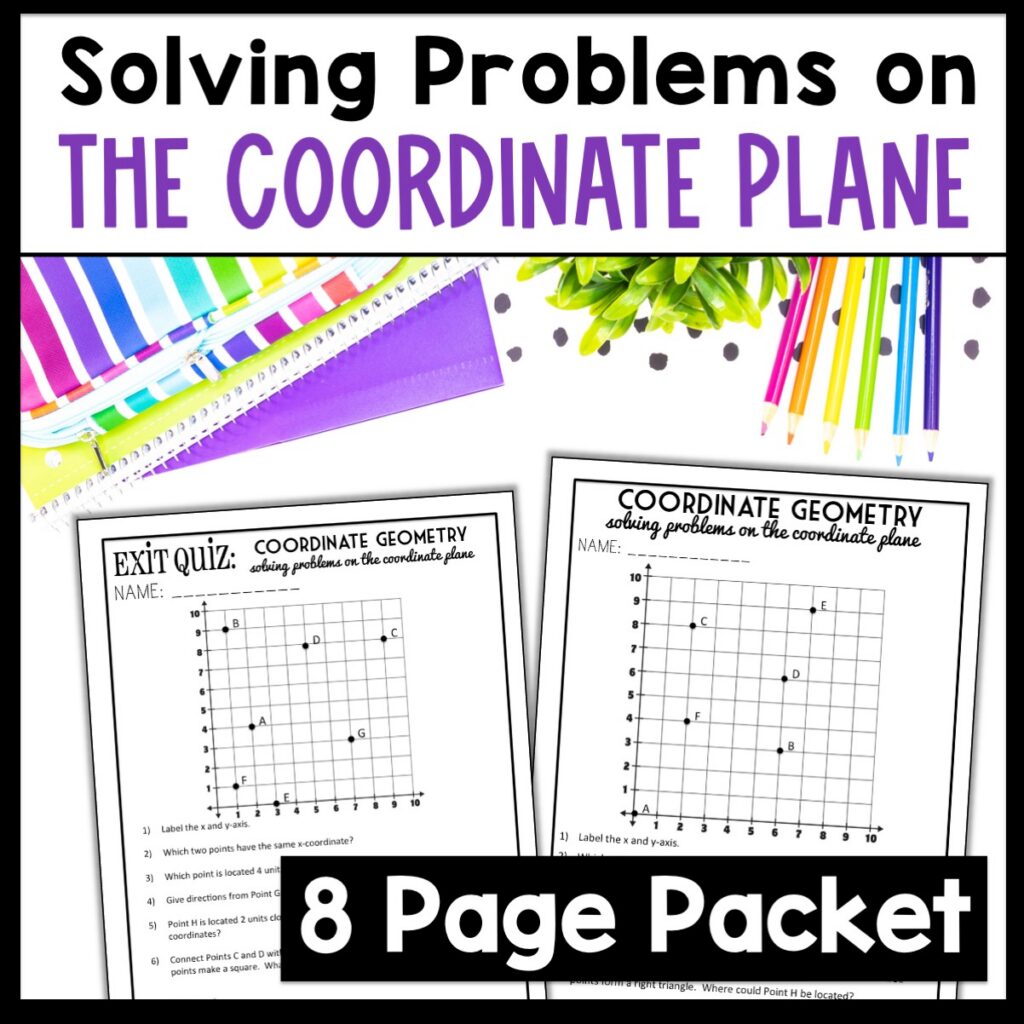
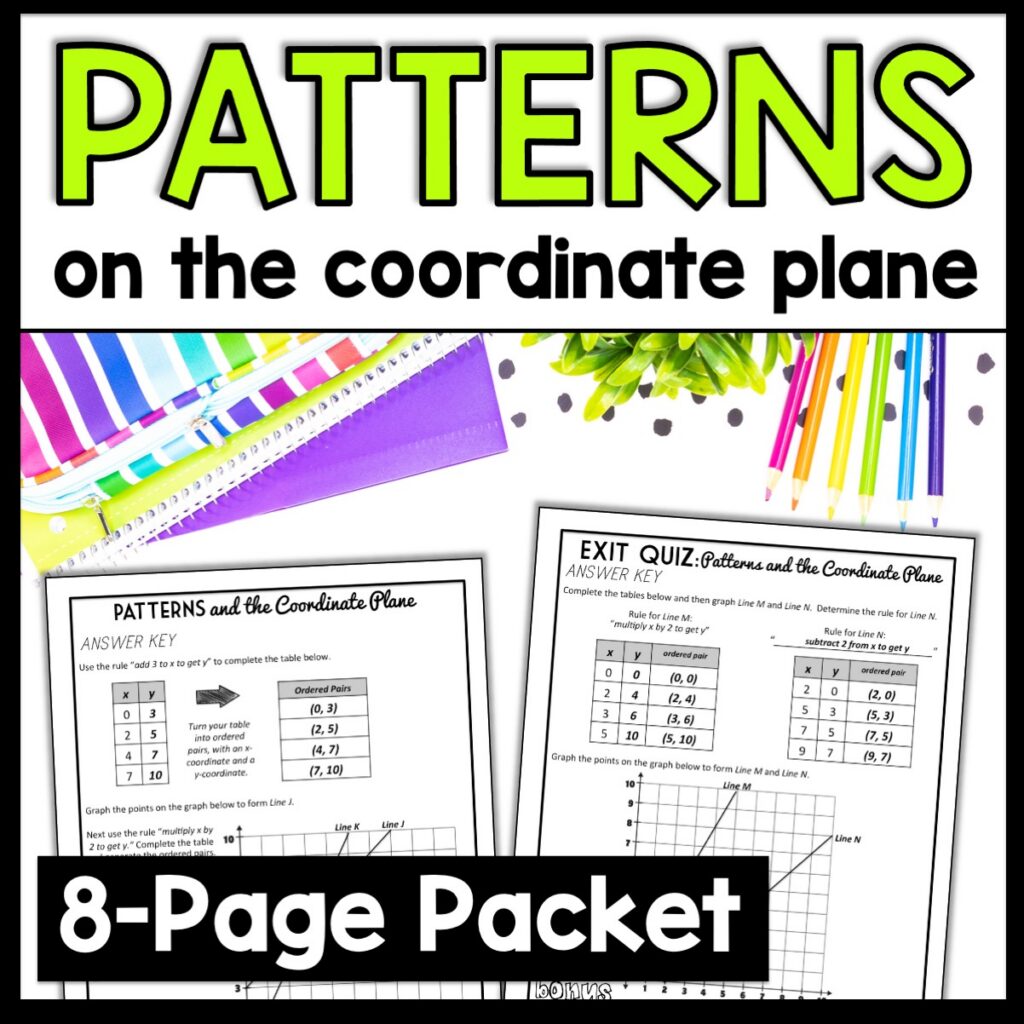
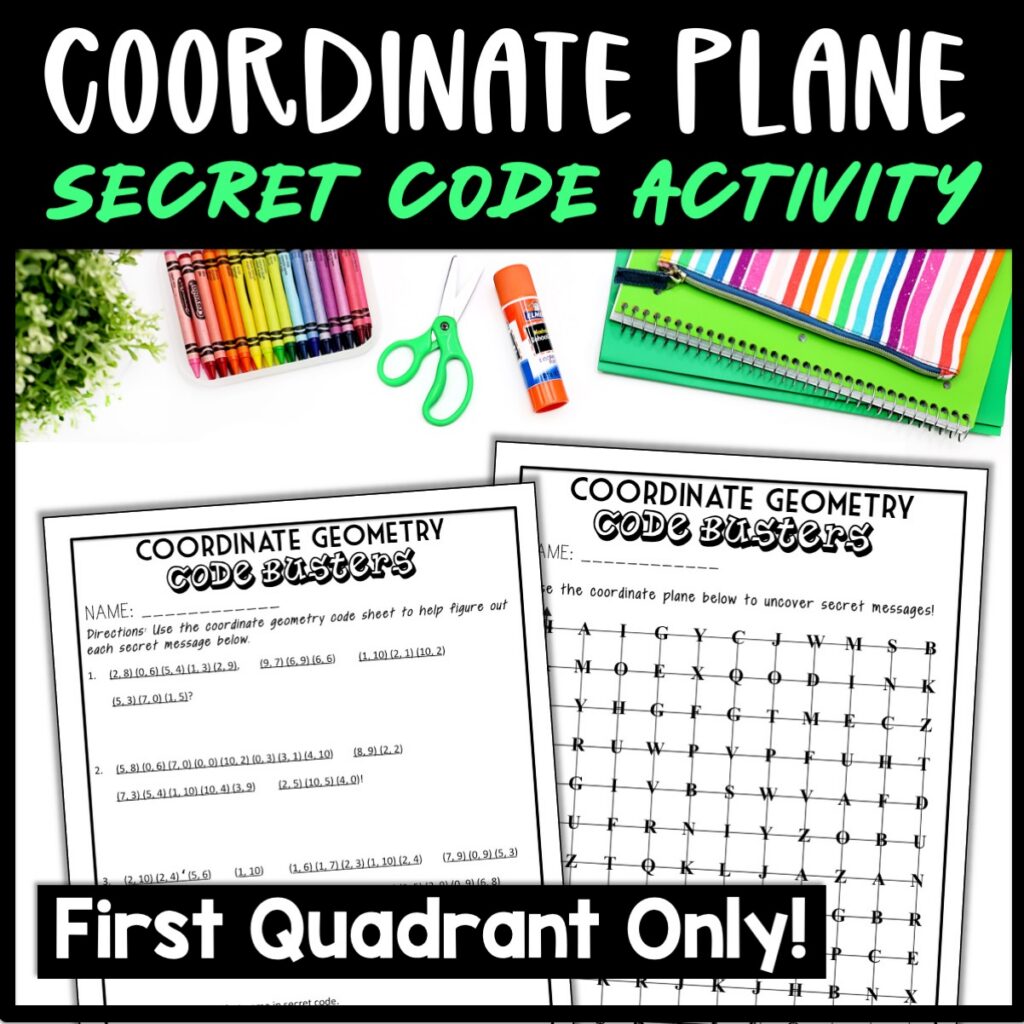
Looking for some ready-to-print resources for teaching the coordinate plane? I’ve got you!
How to Teach the Coordinate Plane: Final Thoughts
Sometimes it’s not about teaching more. It’s about teaching smarter. These small language shifts build consistency, reduce confusion, and help students internalize the process. If your class has been struggling, layer in just one or two and you’ll likely see a difference right away.
Math love 
Sally
How to Teach the Coordinate Plane (FAQs)
Why do students mix up (x, y) coordinates?
Students reverse coordinates because both numbers feel equally important. Without a clear routine like “Run, Jump,” they don’t consistently remember which comes first.
What is the best way to teach the coordinate plane?
Use consistent language, visuals, and routines. Strategies like “Run, Jump” and “Stay Put at Zero” give students simple mental anchors they can rely on.
Why is zero so confusing for students?
Zero represents no movement, which feels different from other numbers. Often students just skip the zero and then plot the y-coordinate on the x-axis. Explicitly teaching that zero means “stay put” reduces confusion.
How can I help students stop counting incorrectly?
Use a board-game comparison: remind students not to count the starting position, which prevents off-by-one errors.
When should students learn the coordinate plane?
Students usually learn Quadrant 1 (positive numbers only) in 5th grade and all four quadrants in 6th grade, when negative integers are introduced.