Table of Contents
5 Comparing Fractions Strategies (Hacks!) Your Students Will Actually Use!
“Hacks? Why do I need hacks for comparing fractions? I’ll just cross multiply and see which one’s bigger.”
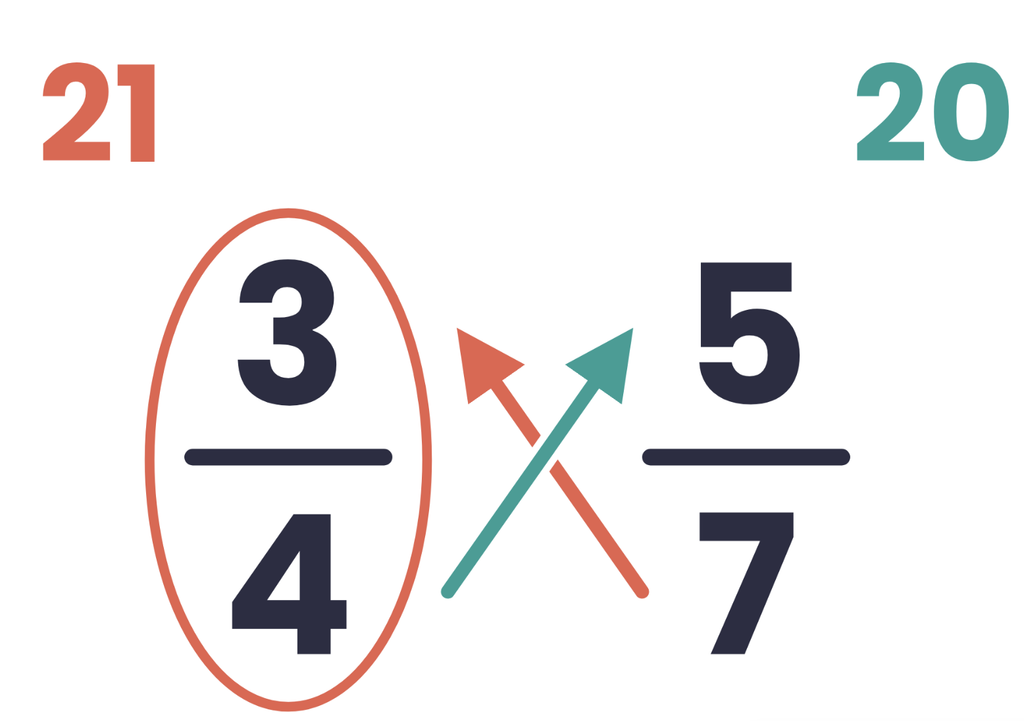
Sound familiar? And sure, it works. So what’s wrong with it?
Well, friends, it takes the thinking out.
Because at the end of the day, nobody randomly stops you on the street to ask if 3/4 is bigger than 5/7. But life asks you to think all the freaking time. That’s what these comparing fractions strategies are really about: helping kids visualize which fraction is bigger and actually understand why.
Let’s get started.
Comparing Fractions Strategy #1: Get those prerequisites in place
Do not attempt comparing fractions until you are confident your students can answer the following questions.
- What even is a fraction?
- How do I place fractions on the number line?
- What does it mean for two fractions to be equivalent?
- How can I use the LCM of two whole numbers?
Need some lesson packets? Don’t worry, I’ve got you!
- What is a Fraction?
- Fractions on a Number Line (FREEBIE)
- Equivalent Factions with Modeling
- Equivalent Fractions on a Number Line
- Least Common Multiple
Comparing Fractions Strategy #2: Start with Estimating & Benchmarks
You would be amazed at how well kids can estimate with fractions if you give them the time and space.
What is a BIG fraction?
- It’s close to one whole.
- It’s only missing a tiny piece to make a whole (like 9/10 or 7/8).
What is a SMALL fraction?
- It’s close to zero.
- The numerator is small and the denominator is big (like 1/12 or 2/15).
What is a MEDIUM fraction?
- It’s close to one half.
- If I double the numerator and get the denominator, it’s exactly half (like 4/8).
- If I double the numerator and it’s less than the denominator, it’s a little less than half (like 3/7).
- If I double the numerator and it’s more than the denominator, it’s a little more than half (like 7/12).
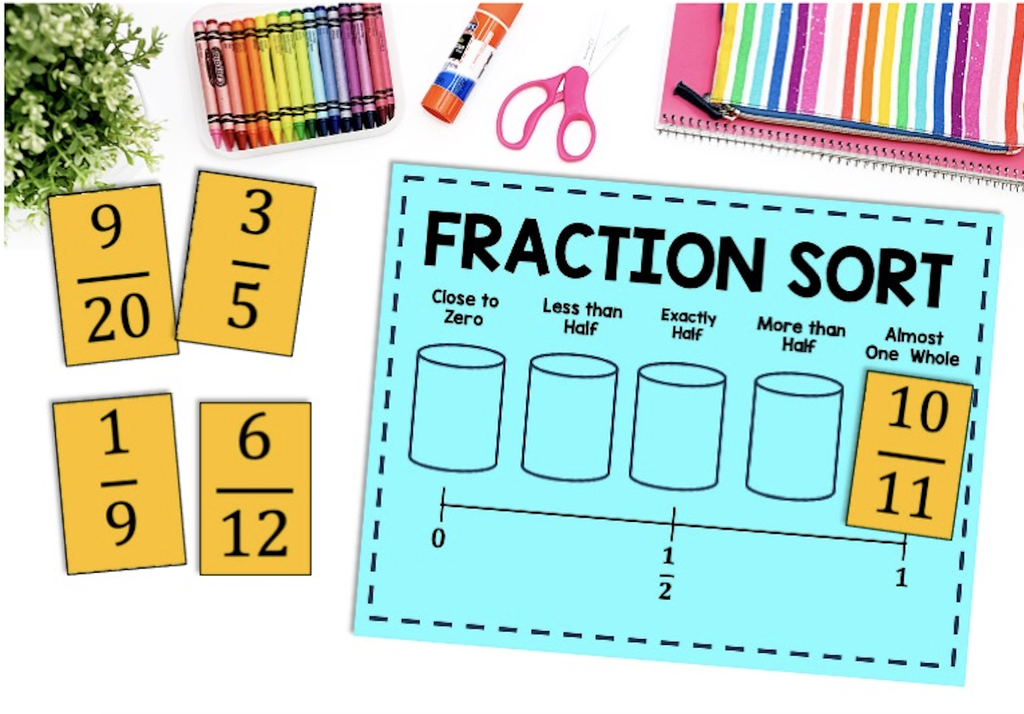
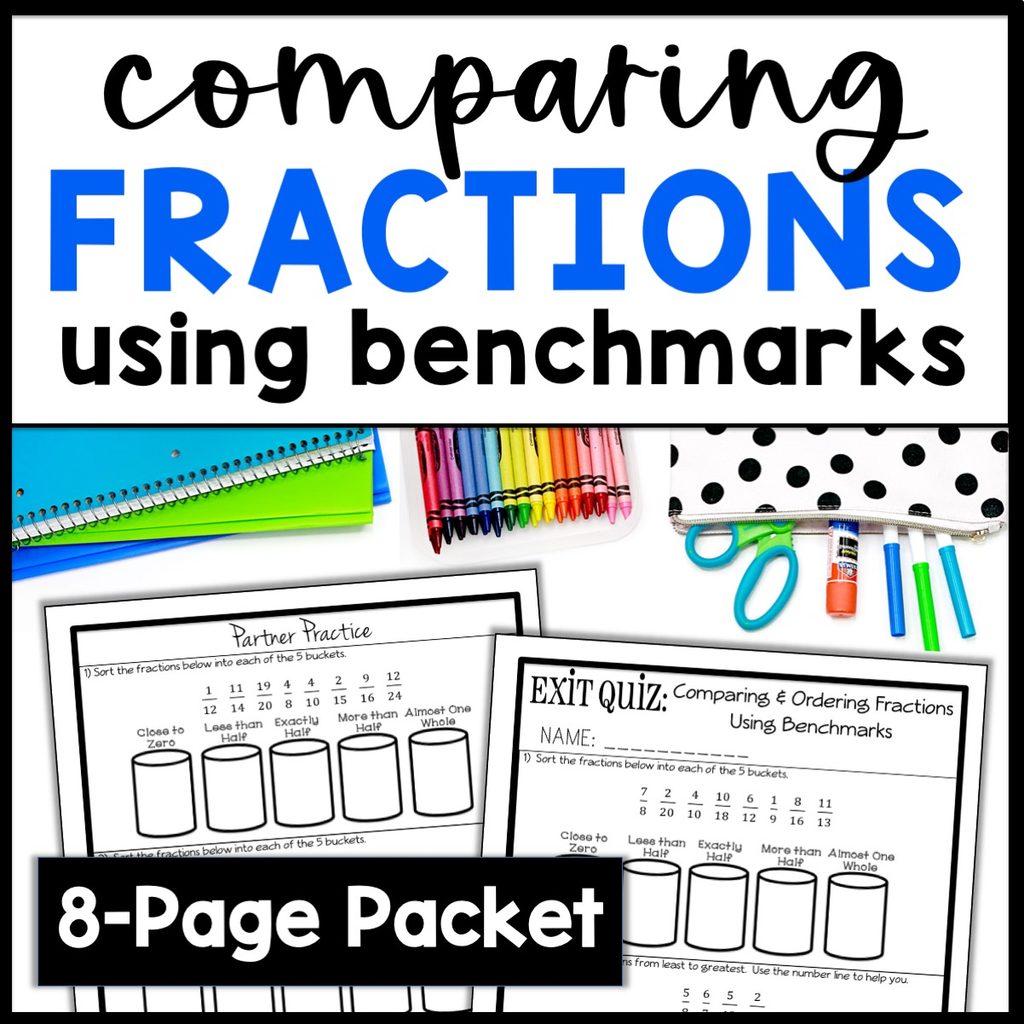
As soon as I realized this clicked for kids, I created a game where they sort fractions into 5 buckets:
- Close to Zero
- Less than Half
- Exactly Half
- More than Half
- Close to One
To this day, this game has sold more than any other resource in my TPT store. And since I may never have an idea this good again, here it is for you: Comparing Fractions Game
CAUTION: This game will make lightbulbs go off for students!
Comparing Fractions Strategy #3: Same Numerators (PIZZA) and Same Denominators (QUIZZES)
These two real-life situations click for kids every time.
When fractions have the same numerator, think PIZZA.
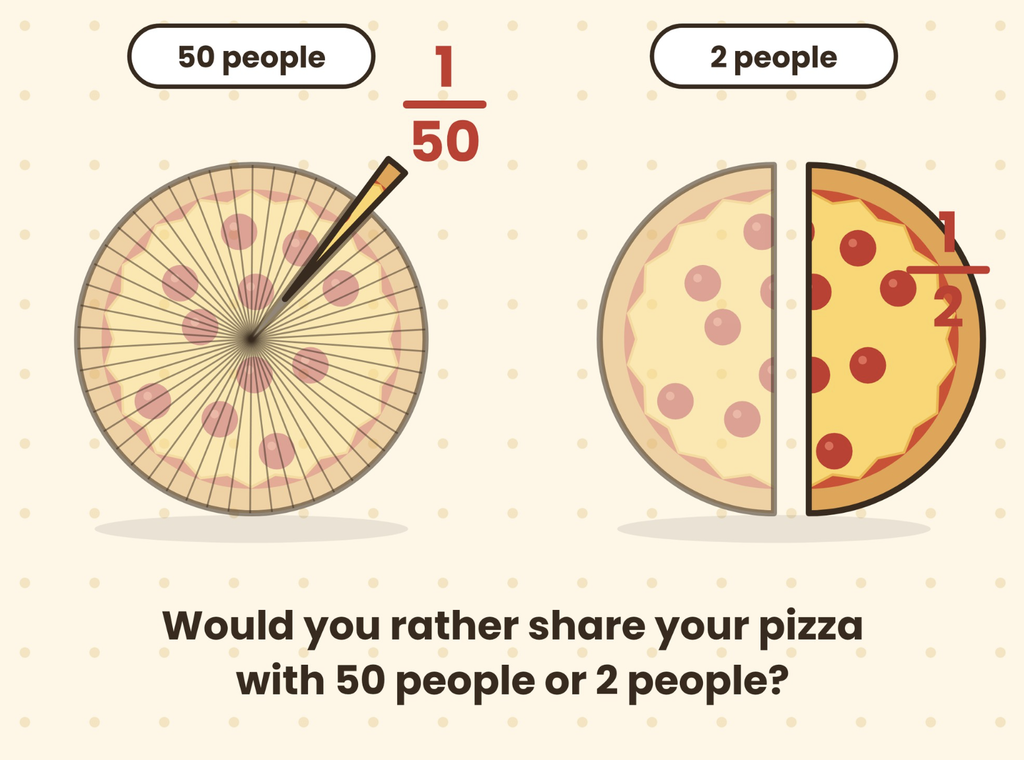
I know 50 sounds like it’s a big number, but how would like to share a pizza with 50 people?
Wouldn’t it better to share it with 2 people?
Me: “The smaller the denominator…”
Kids: “…THE BIGGER THE PIECE!”
When fractions have the same denominator think about QUIZ GRADES.
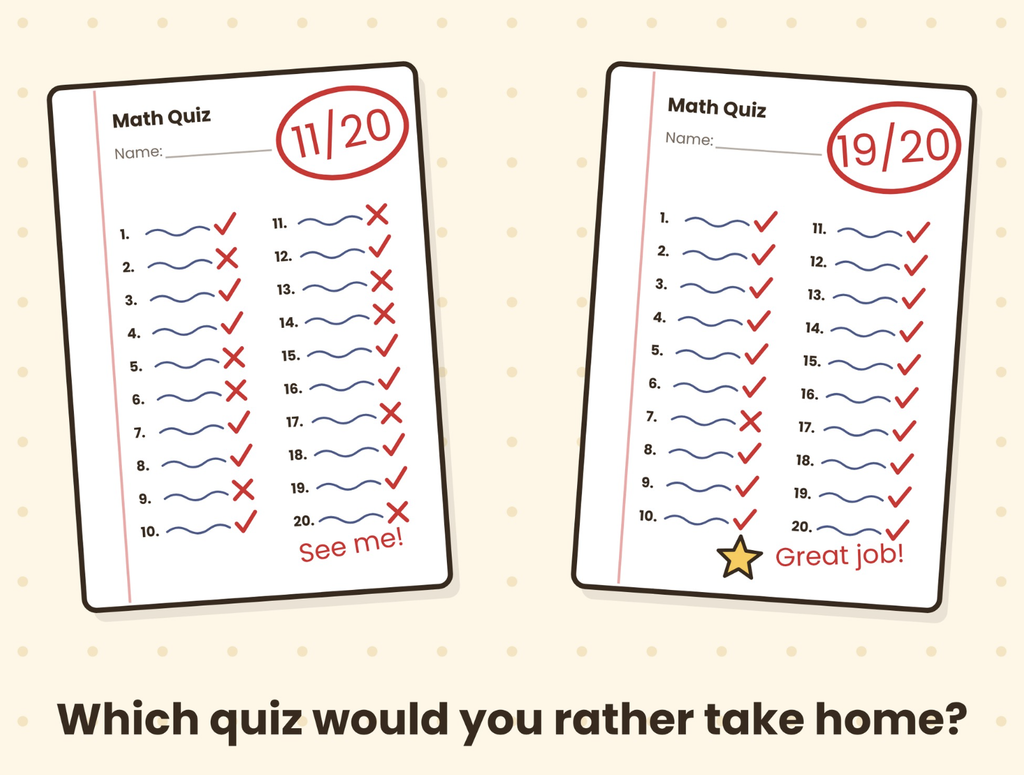
Have students imagine both fractions as quiz grades. When it’s a grade, you want the numerator as close to the denominator as possible, right? You want to get as many questions right as you can!
So 19/20 is greater than 11/20!
And what does 20/20 mean on a quiz? It means you got ALL the questions right, which is why 20/20 is equal to one whole.
And 19/20? Just one question away from a whole. That’s a BIG fraction!
Comparing Fractions Strategy #4: 2 questions to ask before you find a common denominator
It’s so tempting to jump straight to teaching kids to find a common denominator. But not only is it tedious, it takes away the chance to reason and build number sense.
Question 1: Can I estimate which fraction is greater?
More often than you’d think, the answer is YES! And being able to do this well builds so much confidence and number sense.
It’s also a game changer for students who struggle with long algorithms. Estimating gives them far fewer chances to make mistakes than all the steps of finding a common denominator.
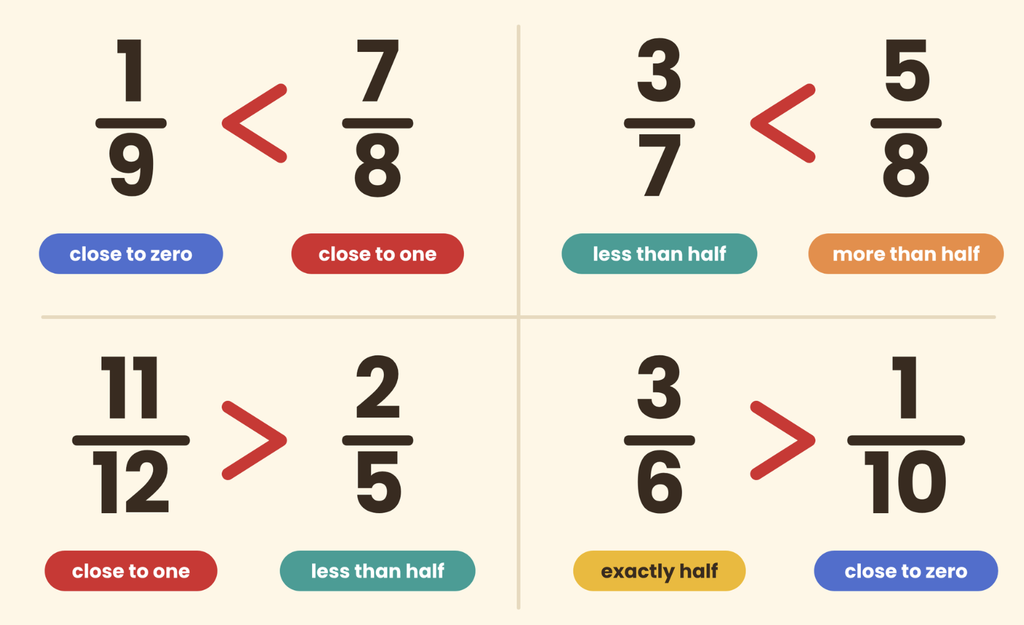
Question 2: Do the fractions have the same numerator?
If so, kids can think about PIZZA and get the answer in seconds. No extra steps needed!
Would you rather share your pizza with 8 people or 3 people? With 4 people or 10 people?
Bring kids back to the call and response:
Me: “The smaller the denominator…”
Kids: “…THE BIGGER THE PIECE!”
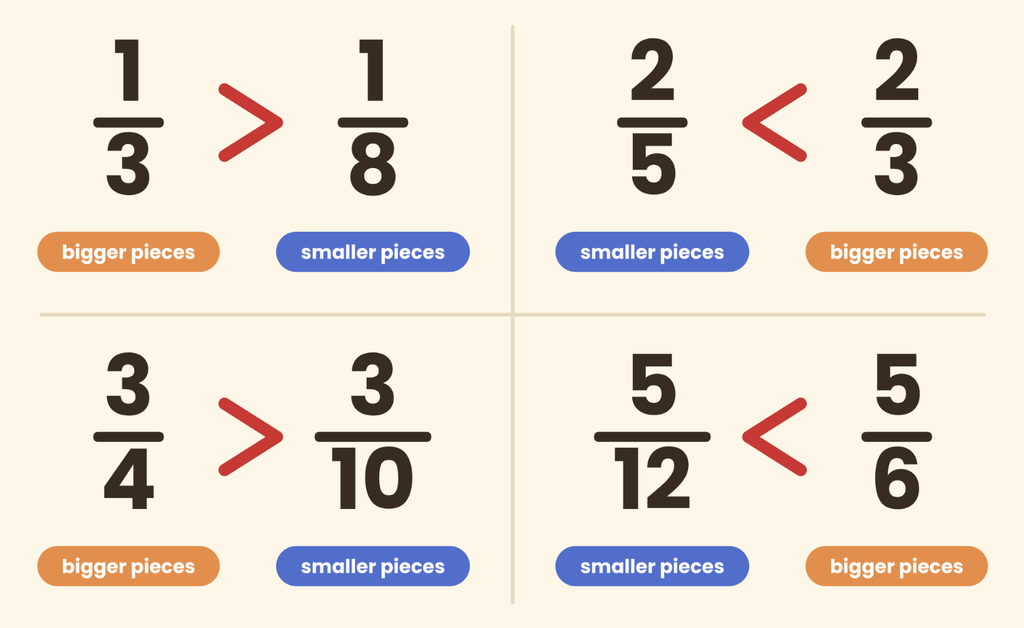
Simply teaching students to ask these two questions will cover the vast majority of comparing fractions problems they’ll see.
If the answer to both questions is no, then it’s time to find a common denominator. (See Strategy #5!)
Comparing Fractions Strategy #5: Use number seats to find a common denominator
We’ve asked both questions and it’s still too close to call.
Let’s pretend we are comparing 7/10 and 3/4.
Can I estimate? No. Both fractions are more than half.
Do they have the same numerator? Also no.
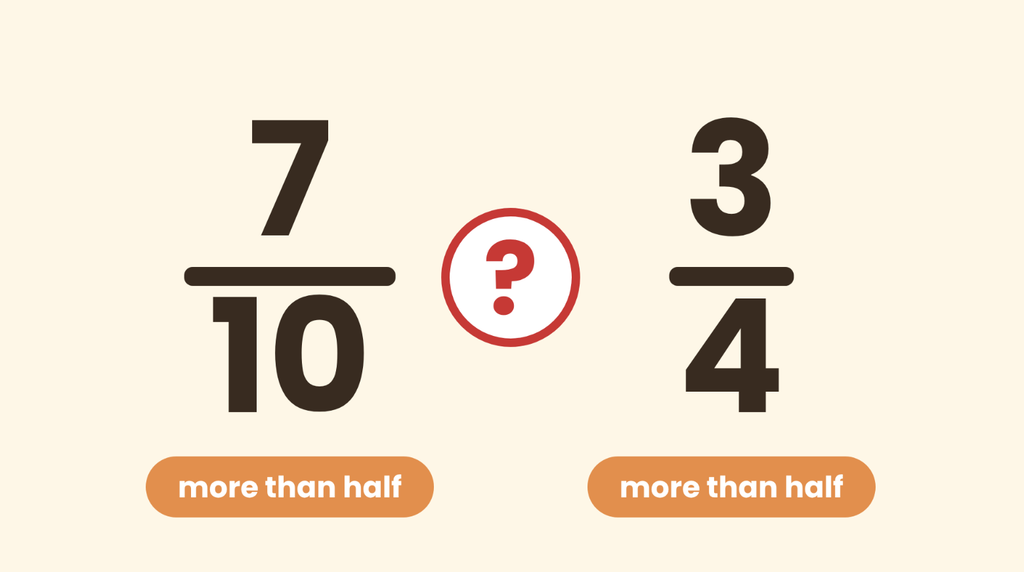
So now we’ll use number seats and equivalent fractions to compare them! As we set up the seats on each side, we say, “times something equals something.”
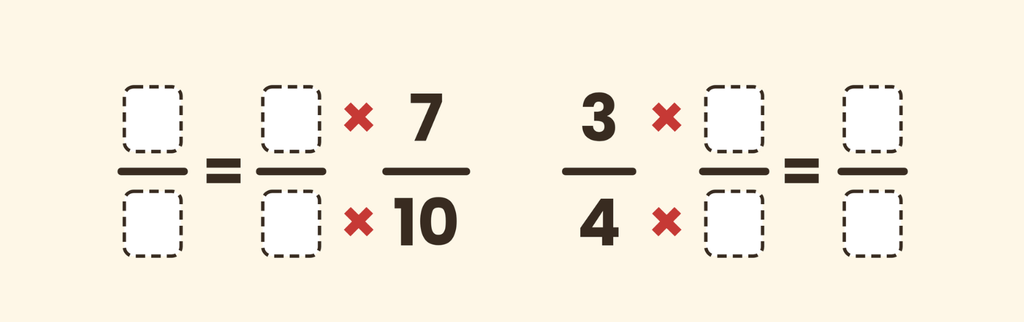
First, we need the least common multiple of my denominators. Where do 4 and 10 meet up? If students need to list multiples in the margin, that’s A-OKAY! Our least common denominator is 20.
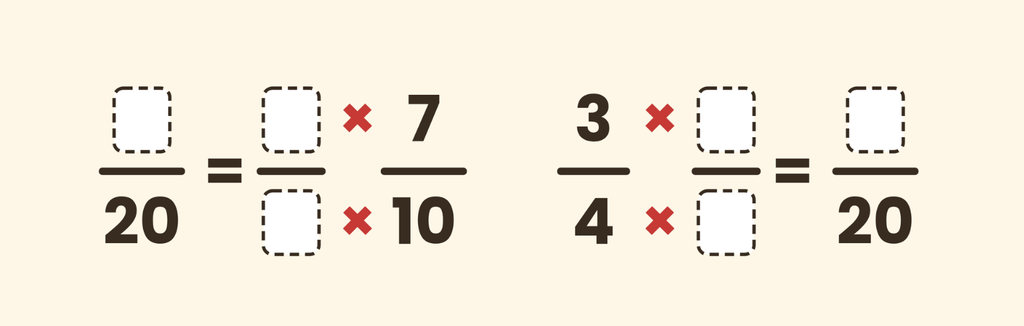
Now, to keep these fractions equivalent, we have to multiply the top and bottom by the same number. Time for another call and response:
Me: “Whatever you do to the bottom…”
Kids: “…YOU ALWAYS DO TO THE TOP!” Clap, clap!
To get from 10 to 20, we multiply by 2, so we do the same thing to the numerator. That means 7/10 is equivalent to 14/20.
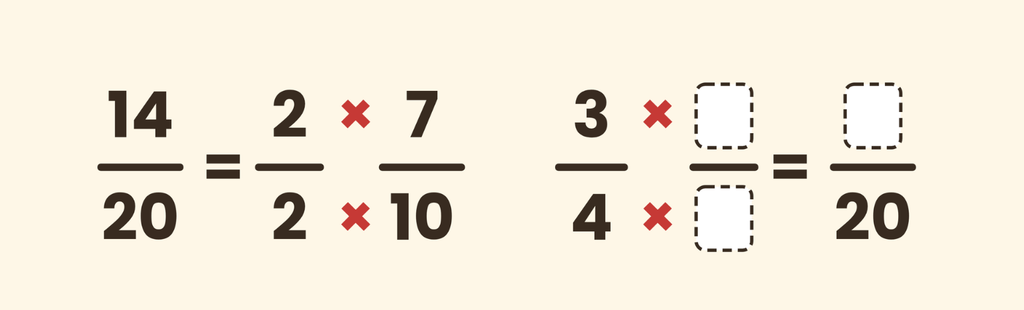
Remember, 2/2 is equal to one whole, so we haven’t changed the value of the fraction. We’ve just changed the size of the pieces!
Let’s do the same thing to 3/4!
How do I get from 4 to 20? Times 5! And remember…
Me: “Whatever you do to the bottom…”
Kids: “…YOU ALWAYS DO TO THE TOP!” Clap, clap!
So 3/4 is equivalent to 15/20.
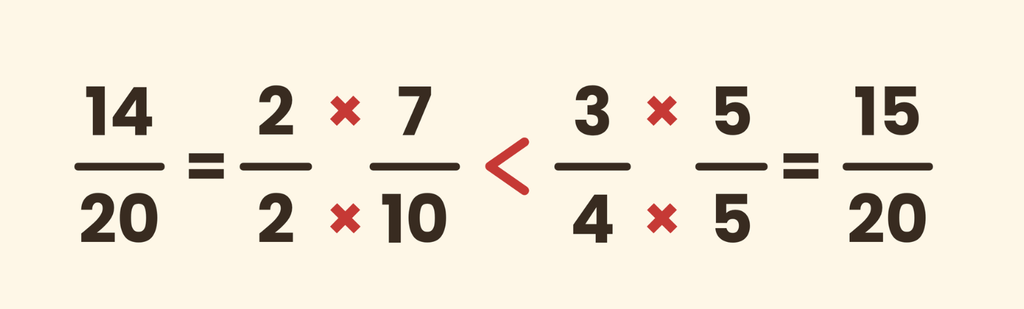
That means 3/4 is greater, because 15/20 is 1/20 greater than 14/20. No wonder it was too close to estimate!
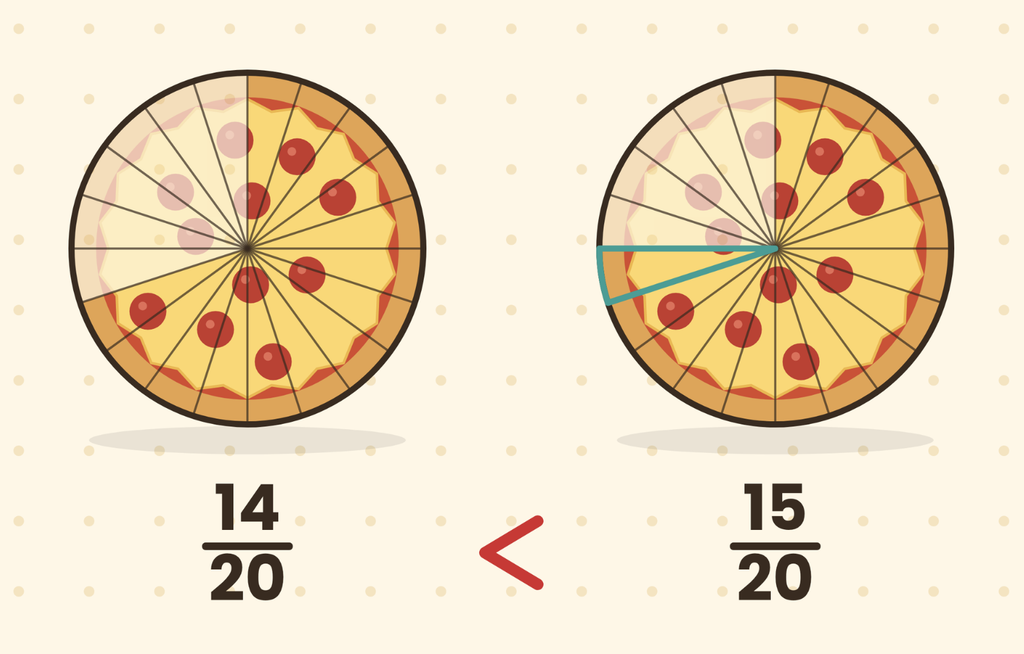
You can see there’s barely any difference between these fractions! That’s why we save common denominators for when it’s too close to call.
BONUS Comparing Fractions Strategy: Don’t assume this extends to fractions greater than one whole!
It seems like if kids can compare fractions, they can also compare mixed numbers, right? Wrong!
For example, kids will see 1-7/8 and 2-1/5, notice that 7/8 is bigger than 1/5, and decide 1 7/8 is bigger. They forgot to look at the whole numbers first!
Take the time to teach comparing improper fractions and mixed numbers as a standalone skill. It solidifies their understanding of fractions on the number line, and it prepares them for adding and subtracting mixed numbers.
Good news! Here’s a game for comparing fractions greater than one that’s ready to go!
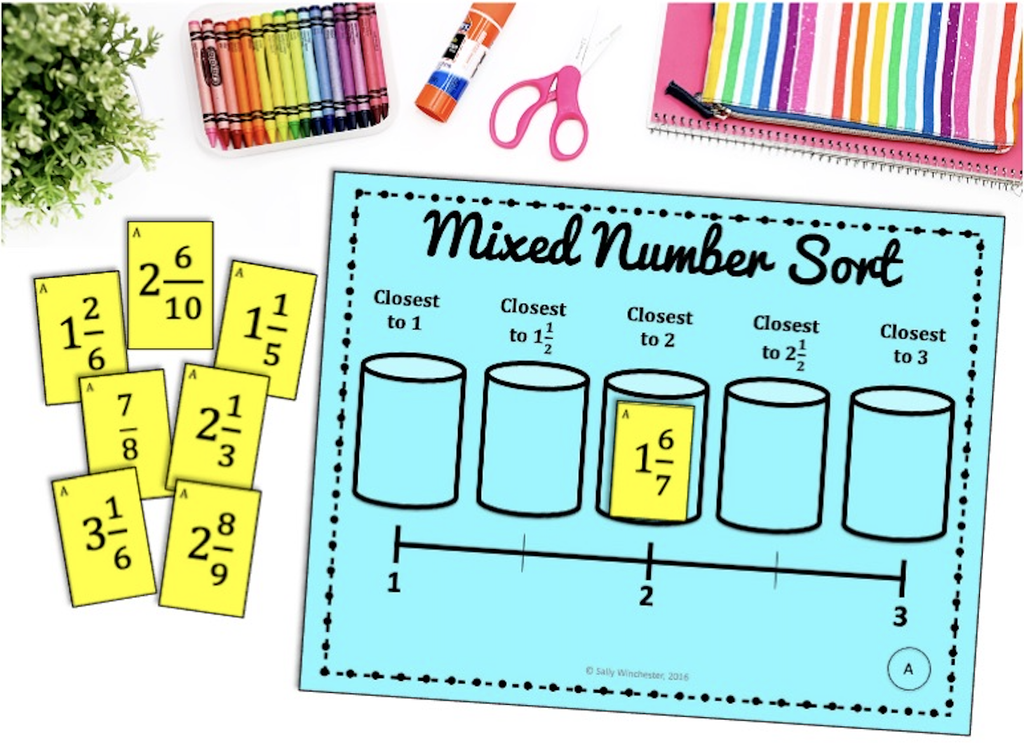
Need more support with these comparing fractions strategies?
Here are three complete, ready-to-teach lesson packets that cover every strategy in this post!
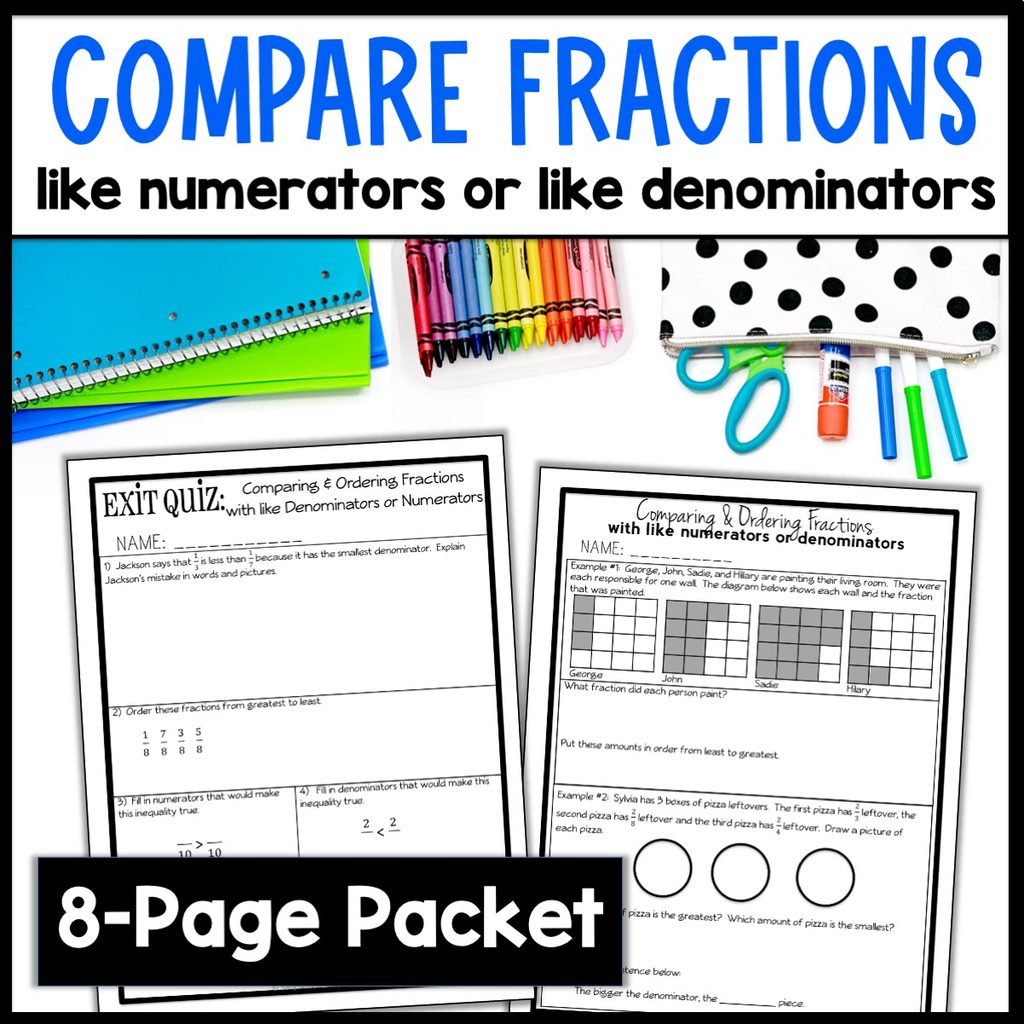
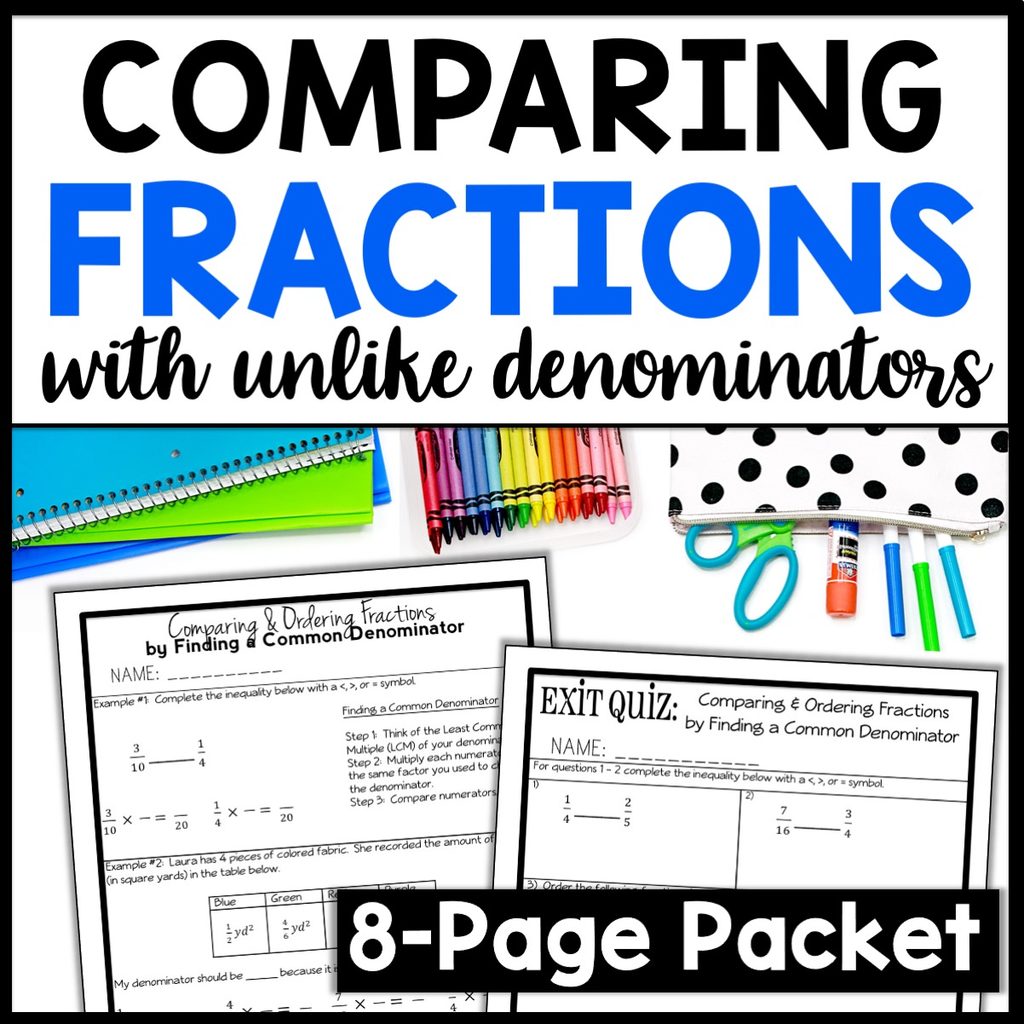
Each lesson packet includes:
- A scripted lesson plan
- Teacher-led examples
- Partner practice
- 3 pages of independent practice
- A challenge for early finishers
- An exit ticket
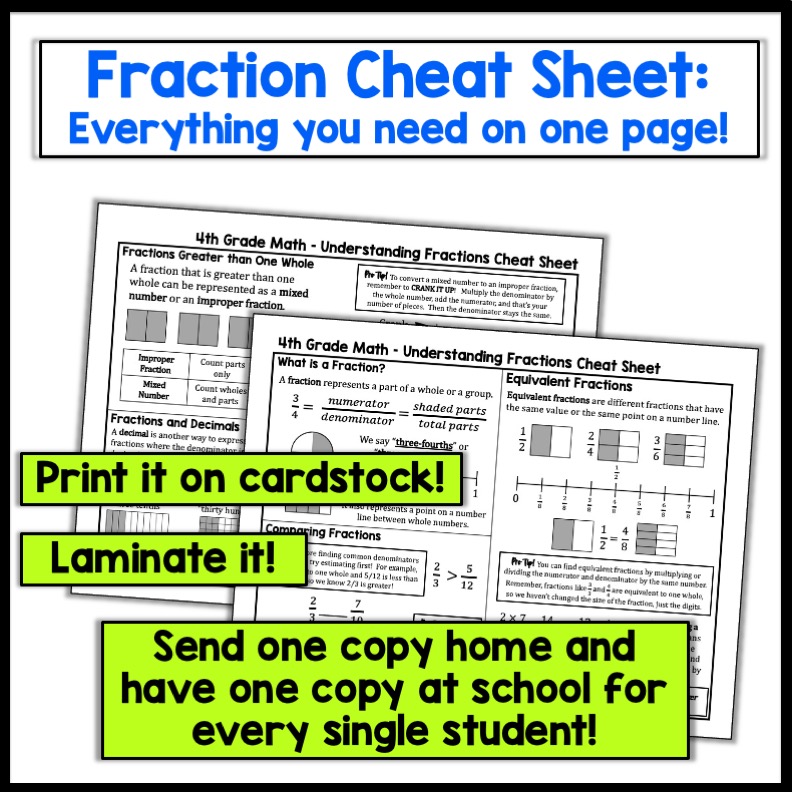
Also check out this 4th Grade Fraction Cheat Sheet! With these comparing fractions strategies plus equivalent fractions, mixed numbers, decimals, and more!
Final Thoughts on Comparing Fractions Strategies
Cross multiplying might get kids the right answer, but it takes the thinking out. These comparing fractions strategies put the thinking back in!
When kids compare fractions, teach them to work through this order:
- Estimate with benchmark fractions. Is it close to zero, close to one half, or close to one whole?
- Look for same numerators or same denominators. Think PIZZA and QUIZZES!
- Ask the two questions before reaching for a common denominator.
- Find a common denominator with number seats, but only when it’s too close to call.
Once kids learn to ask “Can I estimate?” first, you’ll be amazed at how quickly comparing fractions with unlike denominators stops feeling scary. And that number sense will follow them all the way through 5th grade and beyond!
Math love,
Sally 💛
Comparing Fractions FAQs
How do you teach comparing fractions?
Start with number sense, not steps. Make sure students understand what a fraction is, can place fractions on a number line, and know what equivalent fractions are. Then teach comparing fractions strategies in order: estimate with benchmarks, look for same numerators or denominators, and save common denominators for when it’s too close to call.
What is the comparing fractions standard for 4th grade?
Comparing fractions in 4th grade falls under standard 4.NF.A.2. Students compare two fractions with different numerators and different denominators by creating common denominators or numerators, or by comparing to a benchmark fraction like 1/2. They record comparisons with >, =, or < and justify their answers, often with a visual fraction model.
When do students first learn to compare fractions?
Students are introduced to comparing fractions in 3rd grade (standard 3.NF.A.3d), where they compare fractions with the same numerator or the same denominator. In 4th grade they move on to unlike numerators and denominators, and 5th grade reviews the skill as they add and subtract fractions.
How do you compare fractions with unlike denominators?
First, try to estimate using benchmark fractions like 0, 1/2, and 1. If both fractions land in the same benchmark, check for a common numerator. If it’s still too close to call, find a common denominator and create equivalent fractions. Then compare the numerators!
What are benchmark fractions?
Benchmark fractions are familiar reference points students use to estimate the size of a fraction. The most common benchmarks are 0, 1/2, and 1. For example, 7/8 is close to one whole, while 1/9 is close to zero, so 7/8 is greater.
How do you compare fractions to one half?
Double the numerator and compare it to the denominator. If the doubled numerator equals the denominator, the fraction is exactly half (4/8). If it’s less, the fraction is less than half (3/7). If it’s more, the fraction is more than half (7/12). It’s one of the fastest comparing fractions strategies!
Is cross multiplying a good way to compare fractions?
Cross multiplying works, but it skips the reasoning. Kids can get the right answer without understanding why one fraction is bigger. Teaching benchmark fractions and common denominators first builds the number sense students need for adding, subtracting, and multiplying fractions later.
What are some fun comparing fractions activities?
Sorting games are a student favorite! In my Fraction Sort Game, students sort fractions into five buckets: close to zero, less than half, exactly half, more than half, and close to one whole. Partner “would you rather” questions (pizza and quiz grades!) and call-and-response chants also make great comparing fractions activities.
What should go on a comparing fractions anchor chart?
A great comparing fractions anchor chart includes the benchmark fractions (0, 1/2, and 1), the “double the numerator” trick for half, a pizza example for same numerators, a quiz example for same denominators, and the steps for finding a common denominator. Keep it visual and simple so kids can use it on their own!
Have I mentioned I prefer cheat sheets to anchor charts? 😉