Let’s be real. Positive reinforcement trumps negative consequences every single time.
Think about the students who frequently derail your lesson. Do you think there is a consequence out there that’s going to suddenly make them behave? Obviously not, or you would have cracked it by now.
The best classroom management strategy isn’t built on fear. It’s built on motivation and human behavior. We aren’t going to “scare” our students into behaving. So we need to ask ourselves what this student actually wants. If you teach upper elementary, the thing most kids most likely want is approval from their peers.
Enter my favorite classroom management strategy: the “Student of the Day” system!
We all know instruction matters, but culture is what holds everything together. When students feel seen, valued, and connected, everything else becomes easier.
This system is one of the simplest ways I’ve found to build that sense of belonging. It’s easy to implement, and once it’s rolling, it basically runs itself.
Table of Contents
What Is Student of the Day?
Student of the Day (SOTD) is a daily recognition system where one student is chosen to be celebrated for academic effort or a positive contribution to the classroom community.
The best part? This classroom management strategy takes only a few minutes a day, and it becomes part of your classroom routine, not extra work.
How the System Works, Step by Step
Here’s exactly how I run this classroom management strategy. From start to finish it takes less than 3 minutes!
1. Daily Selection
At the beginning of class, the previous day’s Student of the Day chooses the next one.
I require:
- Boys choose girls
- Girls choose boys
This helps prevent long streaks of one gender and keeps things balanced and inclusive.
2. The First 2 Shout Outs
The previous SOTD explains why they chose the new student.
👉 This becomes Shout Out #1
Then I add my own affirmation or extension of that praise.
👉 This becomes Shout Out #2
3. Class Recognition (2 More Shout Outs)
Now we open it up to the class.
- Students raise their hands
- The SOTD chooses 2 classmates to speak
- These become Shout Outs #3 and #4
This is one of the most powerful parts of the entire system.
Why? Remember the thing that motivates kids at this age? Approval from their peers. They are literally out there CRAVING words of affirmation! This is the crux of this entire classroom management strategy!
4. Sign the Board
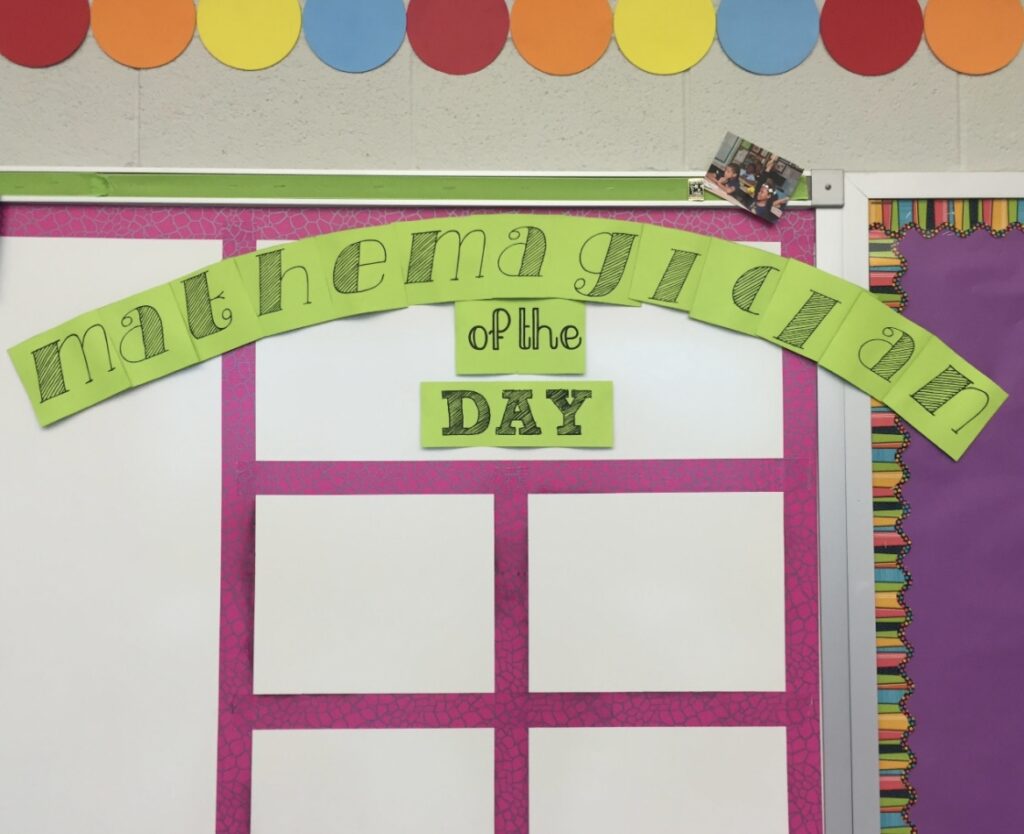
The SOTD signs their name on a class board. This can be a simple spot in the classroom where it’s organized by class period or day of the week. Meaning all you have to do is erase it weekly.
Kids love this because they know their friends in the next class period will see their name up there. AHEM- more approval from peers!
Mine looks like this. One block for each of my four class periods. I erase it every Friday.
5. Pick a Prize
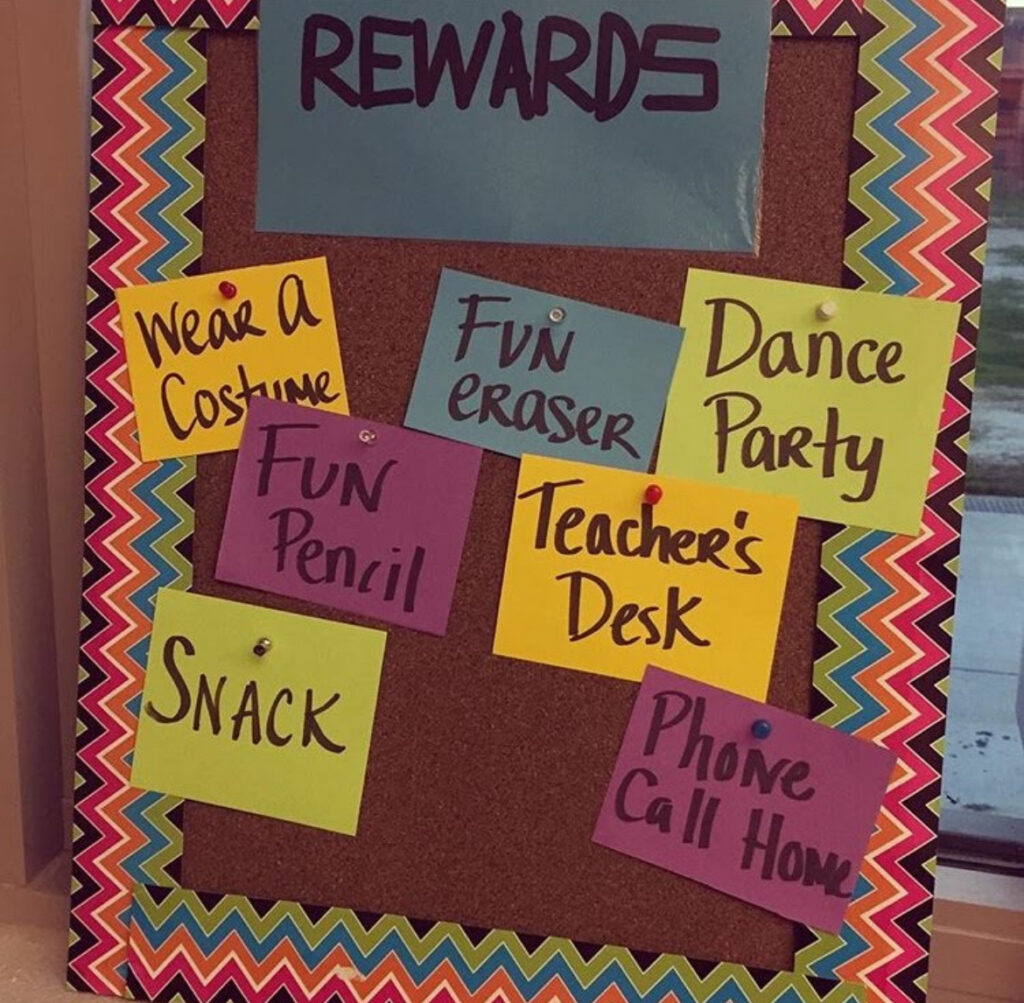
The SOTD selects a small reward from a menu of classroom incentives.
Need ideas? I have an entire post on this: 12 Totally Free Classroom Rewards
6. Number Song + Movement Choice
This is where the fun kicks in.
The SOTD chooses:
- Rolling Numbers (a skip counting song to sing)
- A movement activity to go with it
Movement Ideas:
- Jumping jacks
- Squat Jumps
- Disco (trust me on this one…hilarious!)
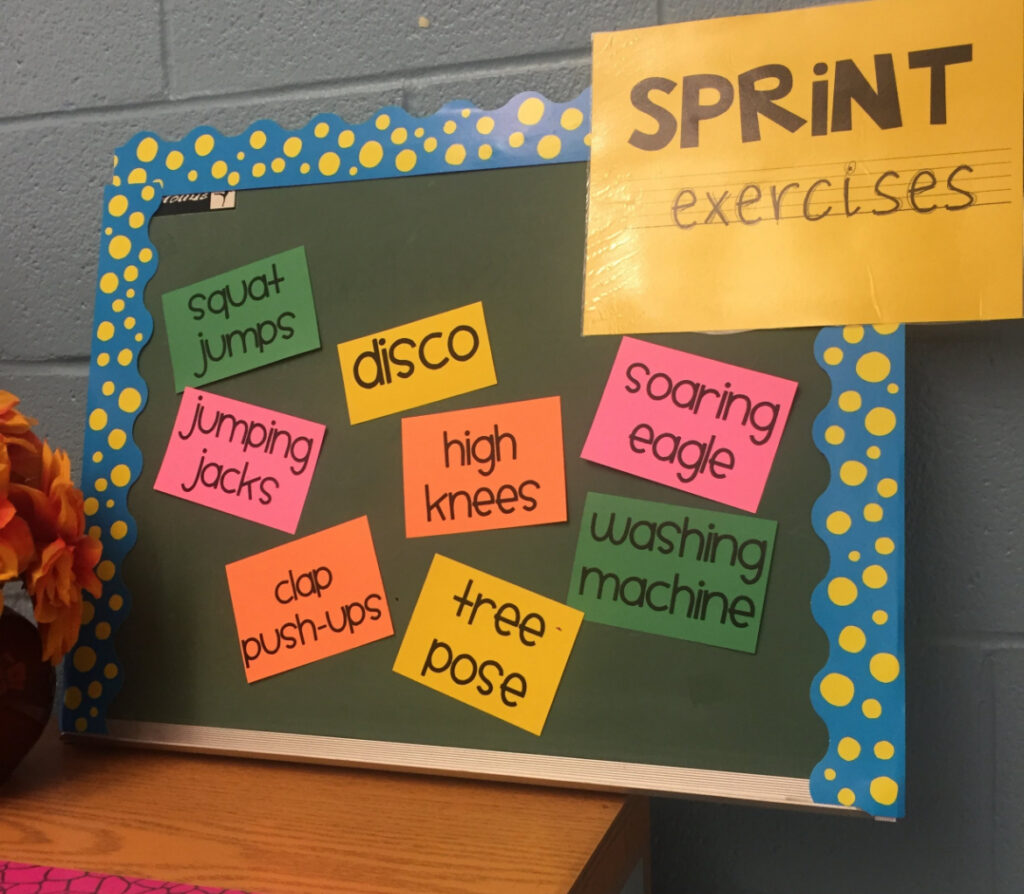
This is titled “Sprint Exercises” which was what we call our Mad Minute. The SOTD picks the exercise and the number we rolled right before we did the sprint to get our brains moving!
So it might sound like this- “I want to roll my 7s while we do jumping jacks.”
Don’t know what I mean when I say “Rolling Numbers?” Here’s my entire overview on how it works: My Secret Weapon for Fact Fluency.
7. Certificate to Take Home
Finally, the SOTD receives a certificate with their name and the date.
They take it home to share with their family. This is often one of the most meaningful parts for students. Parents always tell me how their child as these hanging in their room for YEARS.
I keep a stack of generic pre-signed certificates in my desk. I just write the name and date and get it to the student by the end of class.
Bonus: Unexpected Leadership Moments
Throughout the day, I look for ways to elevate the SOTD even more:
- Fire drill? SOTD leads the line.
- Visitor in the room? Big reveal! Hey Principal Miller! You’ll never guess who the SOTD is today….
- Need a classroom errand? They get to go!
It reinforces the idea: you matter in this space.
Why This System Is So Powerful
On the surface, this classroom management strategy takes only about 3 minutes a day.
But what it builds is much bigger:
- Stronger classroom community
- Daily positive peer interaction
- Increased student confidence
- A culture of recognition instead of correction
- Shared ownership of classroom climate
And the best part? Students genuinely look forward to it every day.
How to Adapt It for Your Classroom
You do not have to use this exactly as written.
In fact, you shouldn’t.
Make it yours:
- Rename it (Mathemagician of the Day, Classroom Star, Daily Leader, etc.)
- Adjust rewards
- Remove or add steps
- Match it to your classroom theme
My classroom theme is ✨magic✨, so I call mine the Mathemagician of the Day.
Yours can be anything that fits your style.
Final Thoughts
Systems like this are not about perfection.
They’re about consistency.
When students walk into a classroom where they know they are seen and cared about and that changes everything.
It doesn’t require more time.
Just some thoughtfulness and planning.
And the return on that investment is huge.
I hope this gives you ideas for building your own classroom “mini-universe” that feels joyful and alive.
Math love,
Sally 💛
Frequently Asked Questions
This seems like a lot! Do I really need to do every part of the Student of the Day system?
No. This classroom management strategy is completely flexible. Make it your own! You can simplify or expand it based on your time and classroom needs.
What grade levels does this work for?
It works best in upper elementary and middle school, but can be adapted for younger or older students with small adjustments.
Doesn’t this take too much class time?
Not at all. The core routine takes about 3 minutes. It takes a little bit of time to teach the system at the beginning of the year, but that’s time you’ll get back tenfold by avoiding all the classroom management issues!
What if students start choosing their friends every day?
The structured rotation (like alternating gender or using criteria) helps reduce favoritism and keeps the system balanced.
Do rewards have to be physical prizes?
No. In fact almost all of my rewards are not physical. See my post on Totally Free Classroom Rewards for ideas! Many of the most powerful rewards are social recognition, leadership roles, and positive peer attention.