Ugh, teaching rounding is one of those math skills that makes everyone cry. It’s hard whether you’re introducing it to 3rd graders for the very first time or rounding decimals with 5th graders.
I’ve been teaching kids how to round for more than 20 years, and I’ve learned a lot of it the hard way. Hopefully my literal blood, sweat, and tears will save you some trouble! Here’s how to teach rounding so it actually makes sense to kids, grade by grade, along with the strategies, misconceptions, and activities that have made the biggest difference in my classroom.
Table of Contents
First of all: when do students learn to round?
3rd Grade (3.NBT.A.1): Rounding is introduced in 3rd grade. Students round 2- and 3-digit numbers to the nearest ten and hundred.
4th Grade (4.NBT.A.3): In 4th grade, we layer it up. Students round multi-digit whole numbers to any place, up to the millions. The jump from 3rd to 4th grade is a big one, and it’s often why kids struggle so much with rounding. (More on that soon!)
5th Grade (5.NBT.A.4): In 5th grade, we invite decimals to the party! Students round decimals to any place through the thousandths.
Ok, but why is rounding so hard?
“But it seems like common sense, right?”
Teachers say this to me all the time. When they say common sense, what they really mean is number sense. At its core, that’s what rounding is: using number sense to decide which number is closest.
And friends, number sense is something a lot of our students don’t have yet. That’s why it’s so important to teach rounding in a way that builds number sense, instead of just asking students to memorize steps.
And also, why is rounding so important?
Here’s an activity that makes it click. Pull up a live world population counter and show it to your kids. Ask them: do you want to read this number out loud, or would you rather just say EIGHT BILLION?
We round because in math, and in life, we want things to be as simple as possible. If we want kids to use math in the real world, they need to be able to round.
Rounding is basically just common sense with numbers: This number is ugly. What’s a prettier, nicer number that it’s CLOSE TO that I can use instead?!
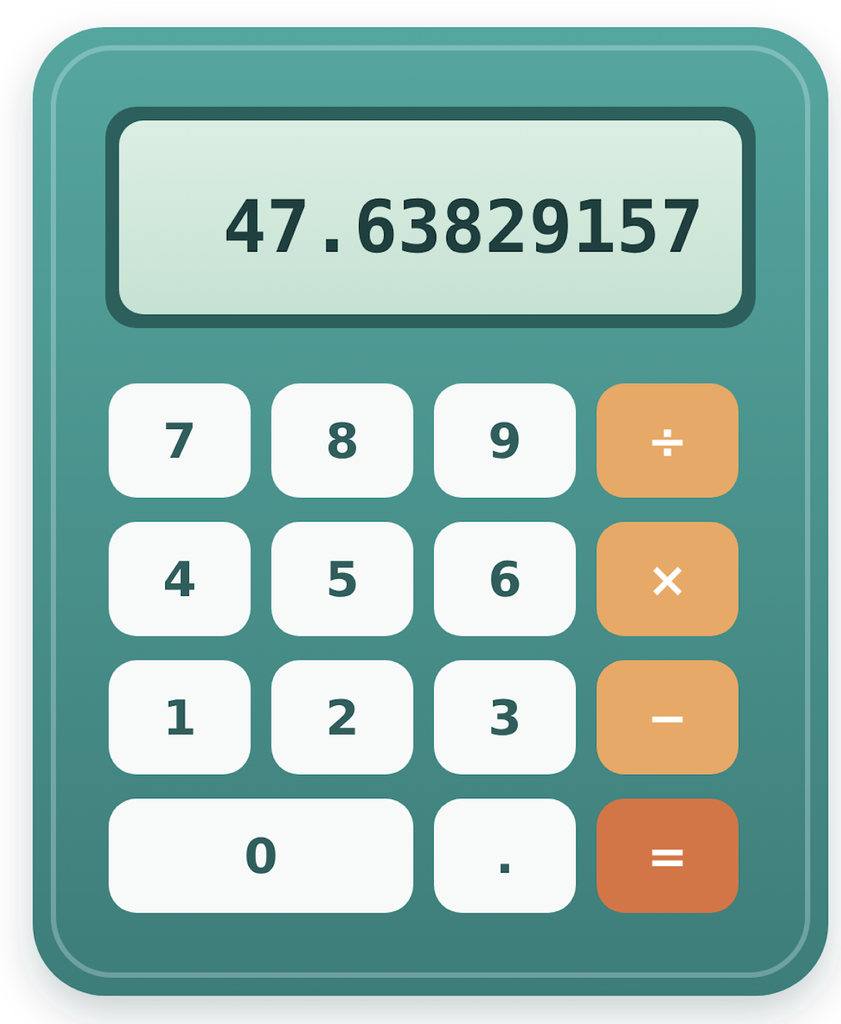
Also, if you’ve ever been in a room full of middle schoolers who plug a problem into a calculator and get answer THIS 👇 You know that rounding matters. A LOT.
Ok, so how do I teach rounding without all the DRAMA?
Teaching Rounding in 3rd Grade
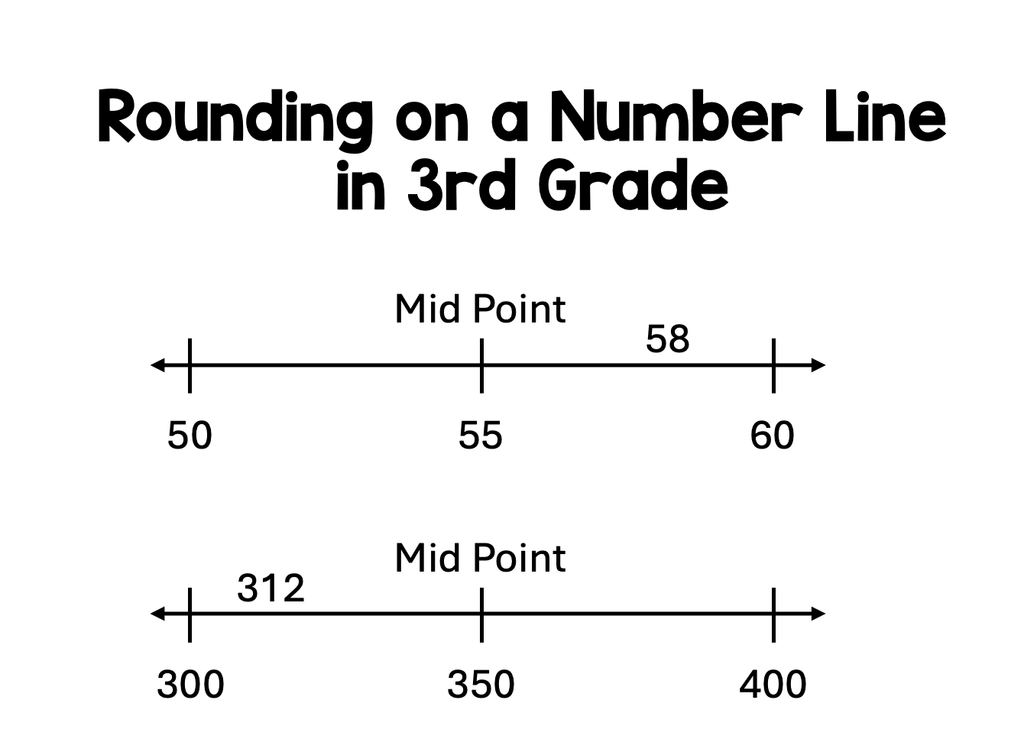
The ironic thing is that students actually start out pretty strong with rounding. Most kids can look at a number like 58 and tell you it’s closer to 60 than to 50. They can tell you 312 is closer to 300 than to 400. That’s number sense at work!
The problem is that in 3rd grade, we often lean too heavily on that number sense. Then kids get to 4th grade without the tools they need to handle bigger numbers.
In 4th grade, students are asked to round a number like 482,392 to the nearest ten thousand, and suddenly everything they learned in 3rd grade gets them NOWHERE.
How to Teach Rounding in 3rd Grade (so they’re ready for 4th Grade)
1️⃣ Use Number Lines
- Have students build a number line showing that 58 falls between 50 and 60. Make sure they also mark the midpoint, 55. Now they can see that 58 rounds to 60. It’s not just because “duh, it’s closer.” It’s because 58 is past the midpoint.
- Try the same thing with 312. Students set up a number line from 300 to 400 and mark the midpoint at 350. They can see that 312 rounds to 300 because it comes before the midpoint.
2️⃣ Practice Rounding 3-Digit Numbers to the Nearest Ten
Spend extra time having students round 3-digit numbers to the nearest ten. This is the only chance 3rd graders get to practice rounding to a place other than the greatest place value. Is it harder? Totally. But this is where students move past what they can “just see” and start building real number sense.
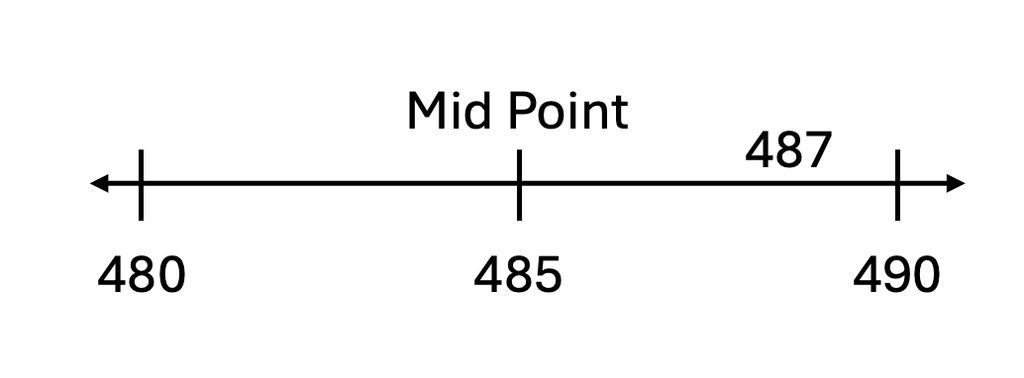
Here’s what it looks like when rounding 487 to the nearest ten:
- Which two tens is 487 between? 480 and 490.
- What’s the midpoint? 485.
- Where does 487 fall? Past the midpoint, so it rounds to 490.
Teaching Rounding in 4th Grade
Once we move past 2- and 3-digit numbers, we need a new strategy.
Can we use a number line to round 5,618,922 to the nearest ten thousand? We can. But you try asking a room full of nine-year-olds which two ten thousands this number falls between. And then ask them for the midpoint. DISASTER.
So we need something else! And I’m here to tell you that the something else is NUMBER SEATS.
How to Teach Rounding with Number Seats
Let’s take that big ugly number and round it to the nearest ten thousand using number seats.
1️⃣ Set up one number seat for every digit in our BIG UGLY NUMBER.
2️⃣ Identify the place we’re rounding to (the ten thousands).
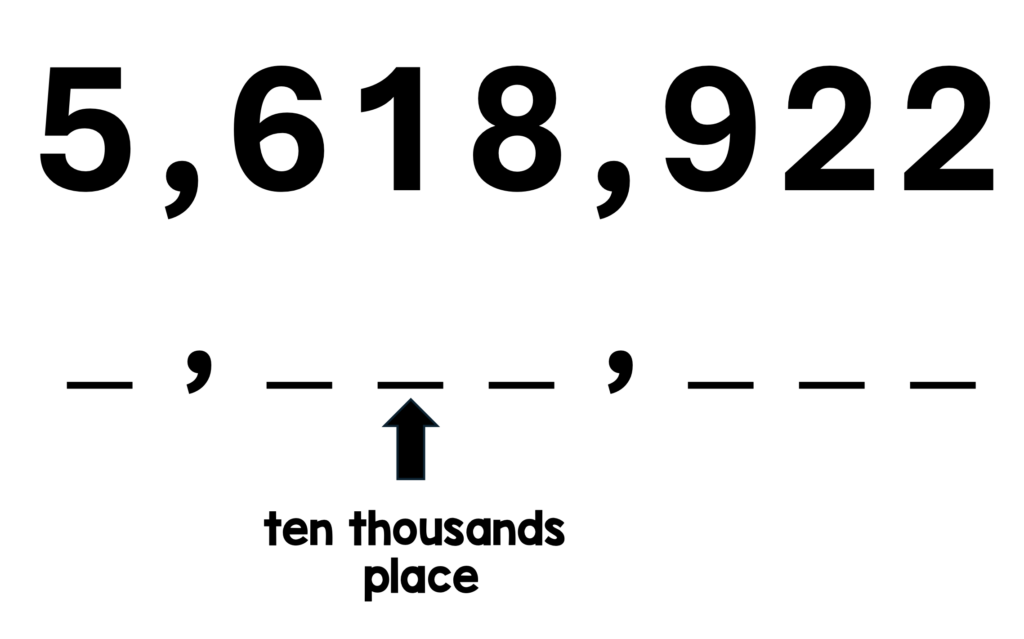
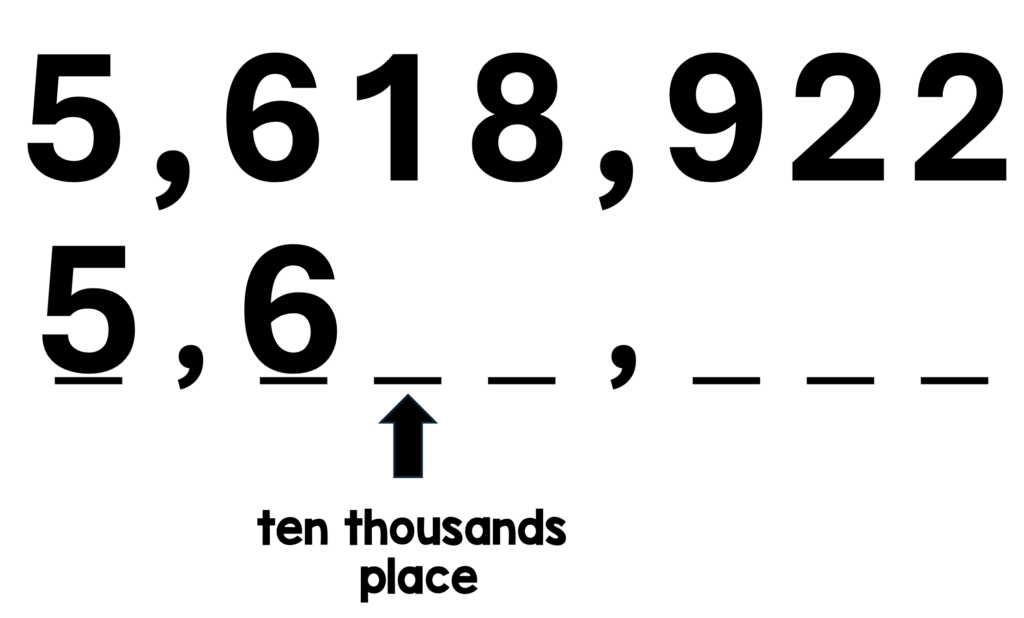
3️⃣ Copy down everything to the left.
There are a few things we know are about to happen. First, everything to the left of the ten thousands place stays exactly the same. In 5,618,922 that means the 5 and 6 get copied down right into their seats.
(Yes, I know there are special cases with 9s, where we round up and have to add another group. We’ll tackle those once the basics are solid. CHILL.)
4️⃣ The right becomes ZERO.
The ten thousands place is where we’re rounding, so every seat after it fills up with zeros. In 5,618,922 that’s the last four digits: the 8,922 all become 0.
That’s the whole point of rounding! We want a nice ROUND number.
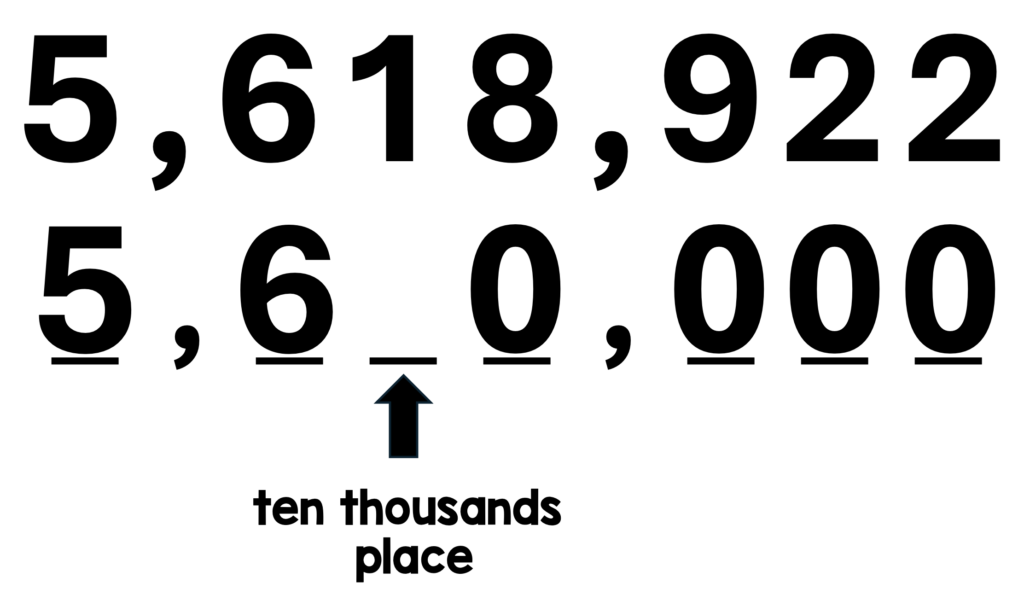
5️⃣ Decide what digit goes in the empty number seat.
Here’s the beautiful part: there are only two possible answers. Is it 5,610,000 or 5,620,000? That empty seat is either a 1 or a 2.
Now we look at the digit right next door, in the thousands place. It’s an 8. Eight is past the midpoint, so we round up. The empty seat gets a 2.
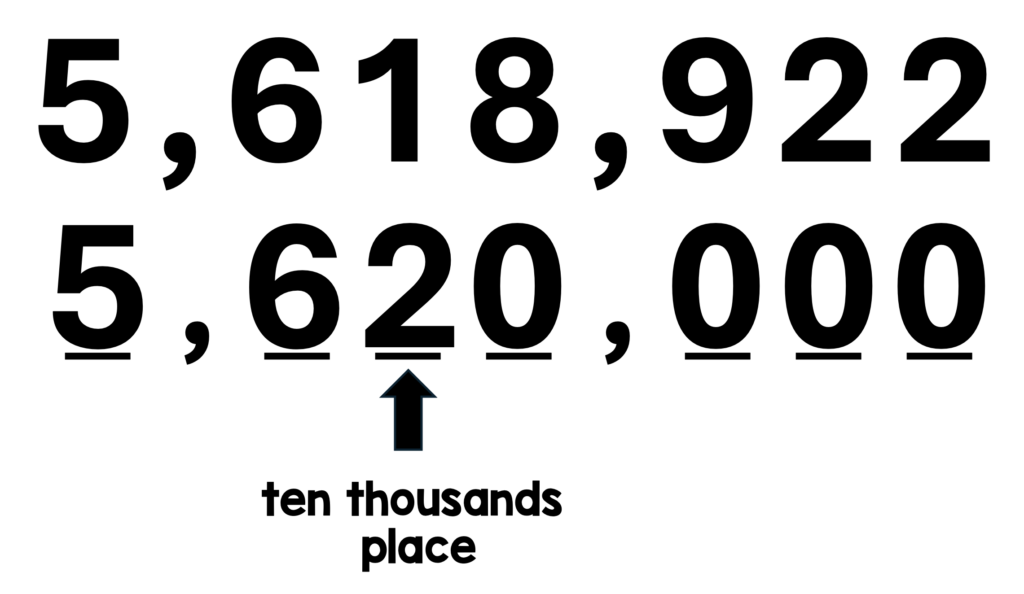
You will notice kids cover up the hundred thousands and the millions places to help them make this choice. This is EXCELLENT! It means they understand that the larger places no longer make a difference. We are only focused on the ten thousands place and the one immediately to its right.
5,618,922 rounded to the nearest ten thousand is 5,620,000.
Teaching Rounding Decimals in 5th Grade
“Ok, Sally. My mind is blown. But there’s no way this works with decimals, right?”
Oh friend. I would never show you a method that doesn’t GROW with the kids.
(Again, my number line purists: I double dog dare you to ask a room full of 5th graders which two THOUSANDTHS a number falls between 😵💫 Please report back.)
Here’s what number seats look like with decimals. Let’s round 18.438 to the nearest tenth.
1️⃣ Set up one number seat for every digit in our number.
2️⃣ Identify the place we’re rounding to (the tenths).
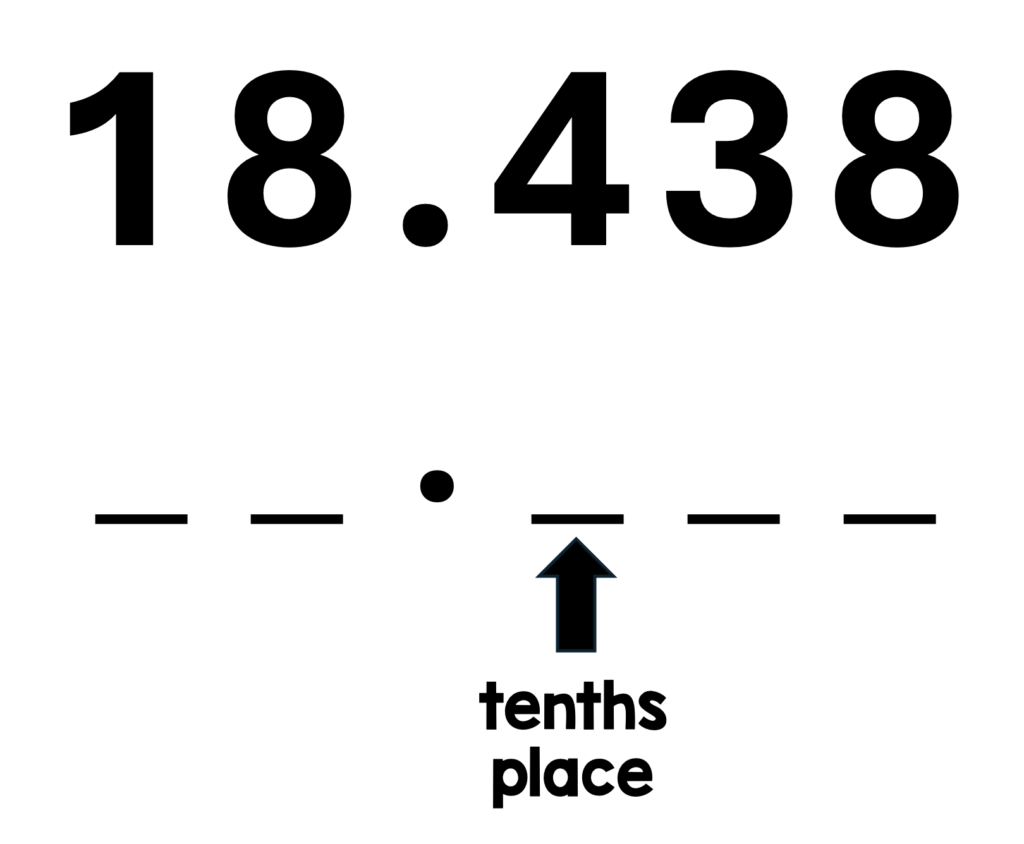
3️⃣ Copy down everything to the left
Our whole number stays the same. We can even cover it up with our hand. It won’t change!
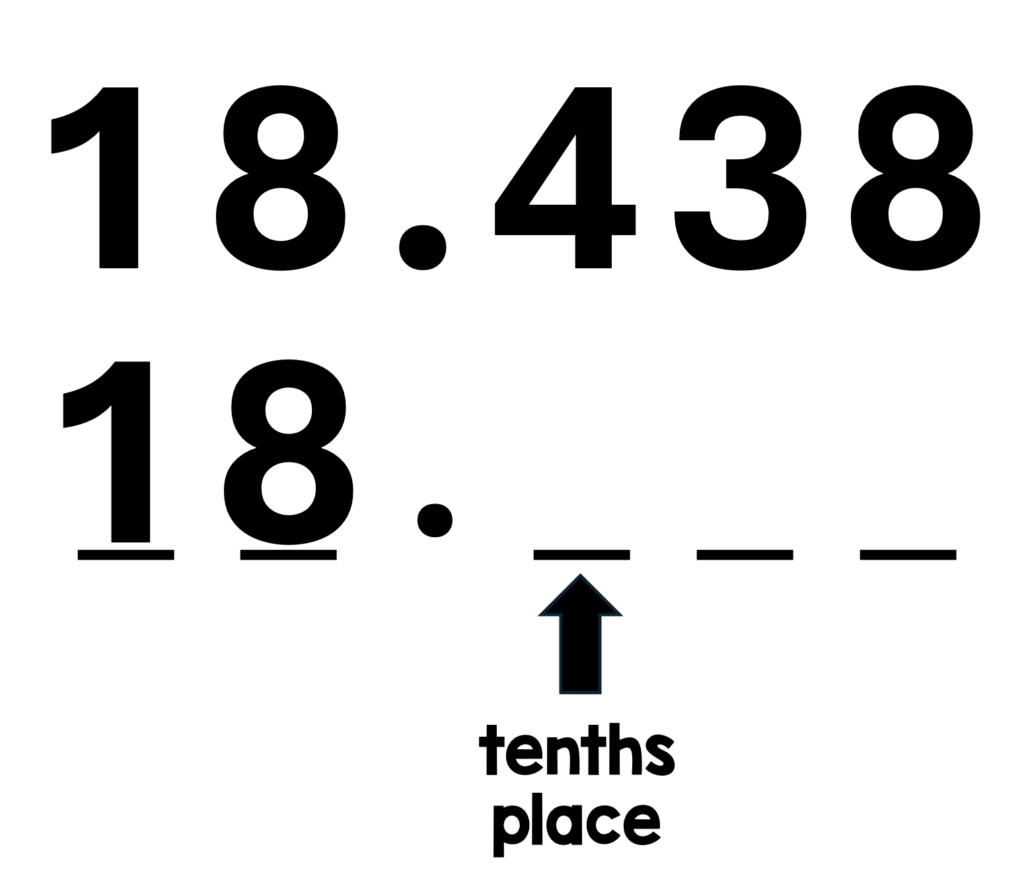
4️⃣ The right becomes ZERO.
This is even sweeter with decimals because we actually get RID OF the right! We don’t need those places anymore. They are too small to matter!
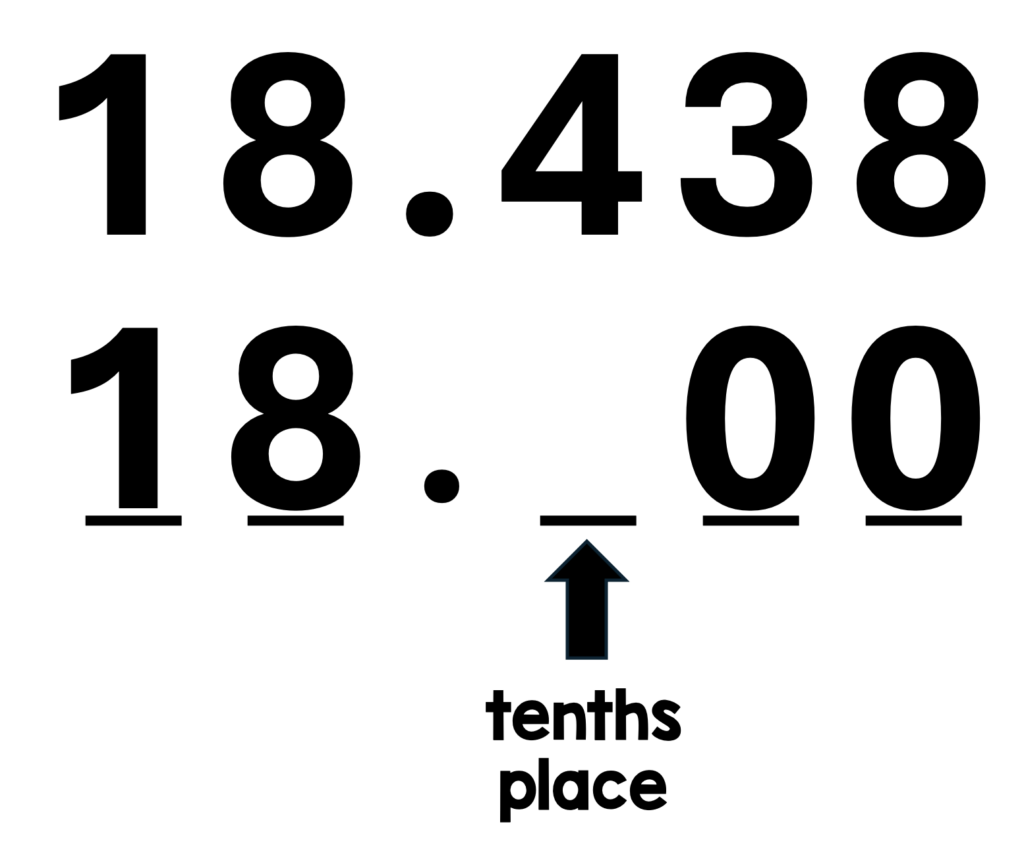
Let’s see that number without those zeros. Oh man, is that a beautiful sight or what?
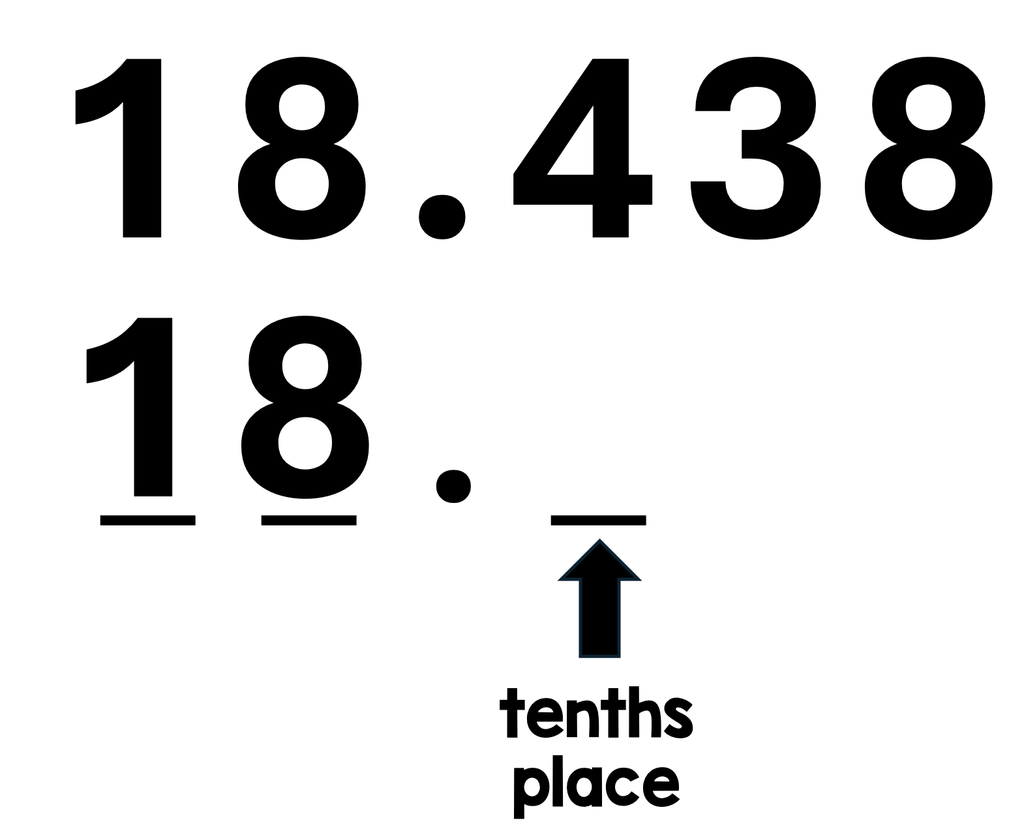
5️⃣ We decide what digit goes in my empty number seat
All that’s left is to decide between 4 tenths or 5 tenths. That 3 in the hundredths place tells me my tenths place will stay the same.
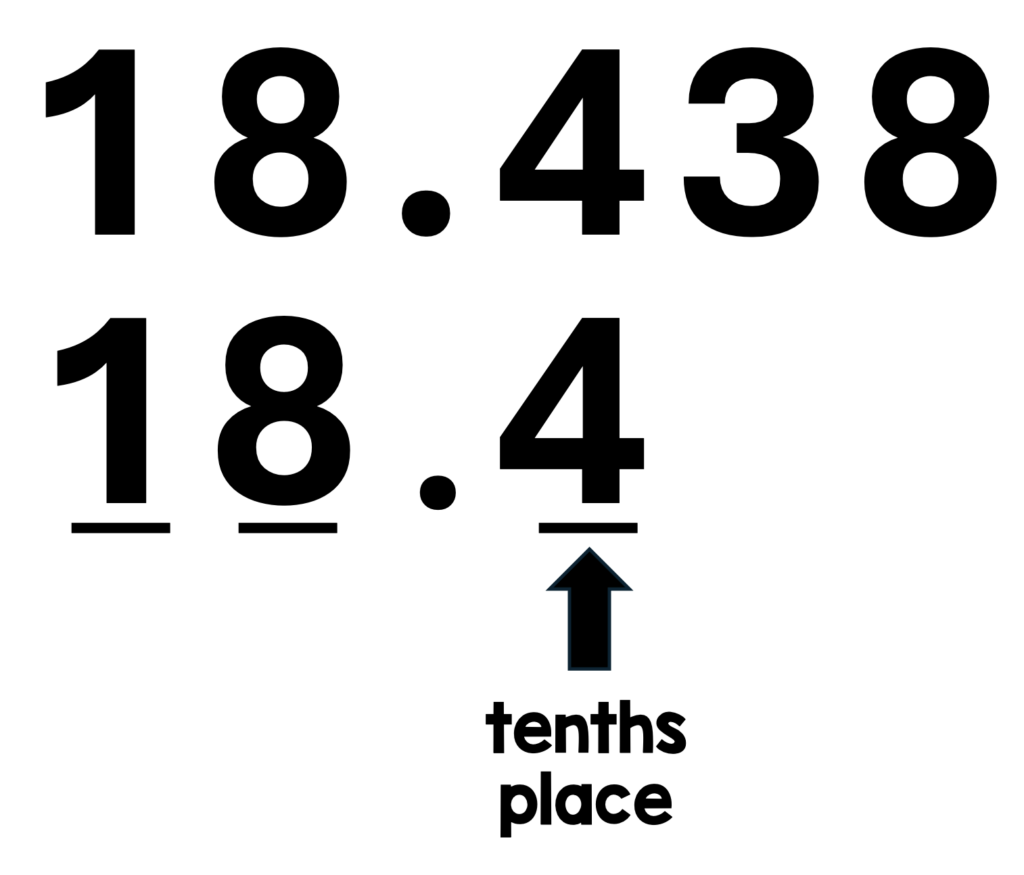
18.438 rounded to the nearest tenth is 18.4.
What About Rounding When There’s a 9?
Remember that special case I told you to CHILL about? Number seats handle it beautifully.
Let’s round 79.825 to the nearest whole number.
1️⃣ Set up one number seat for every digit in our number.
2️⃣ Identify the place we’re rounding to (the ones).
3️⃣ Copy down everything to the left.
4️⃣ The right becomes ZERO.
Everything up to this point is exactly the same as any other problem.
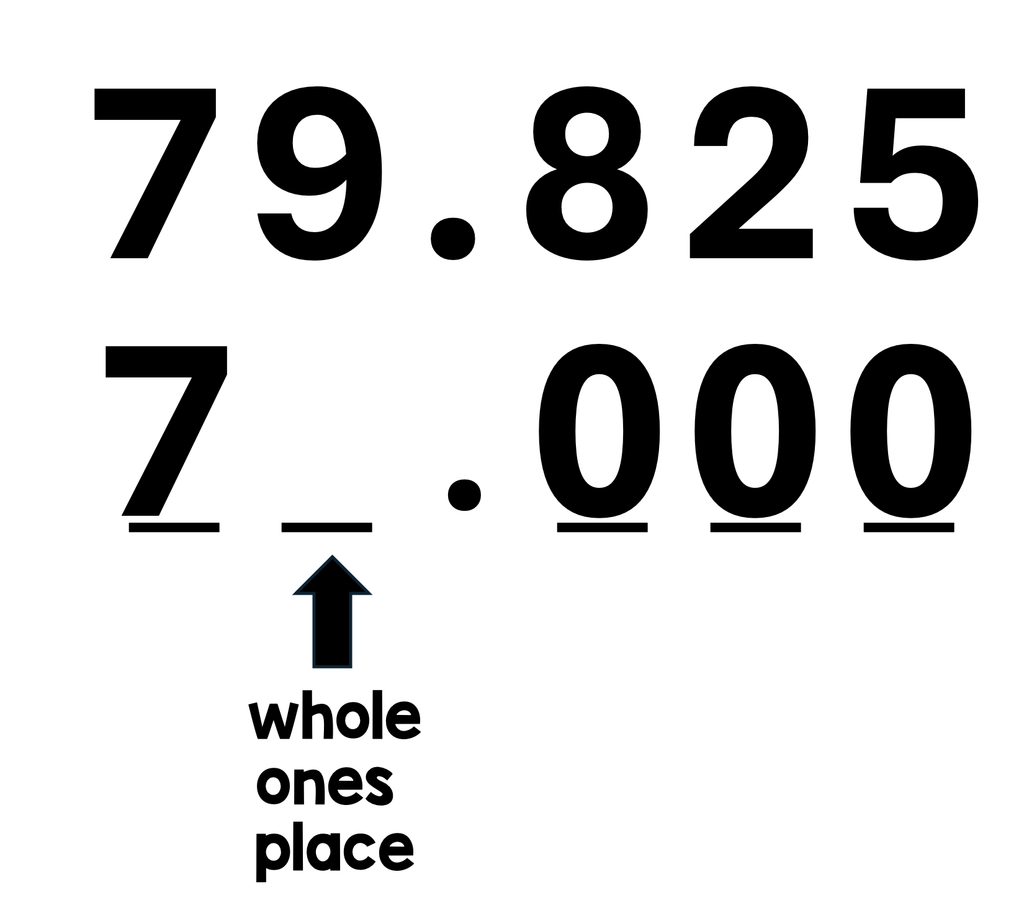
We can even get rid of the zeros and the decimal point, because we’re in WHOLE NUMBER LAND now. No decimals allowed!
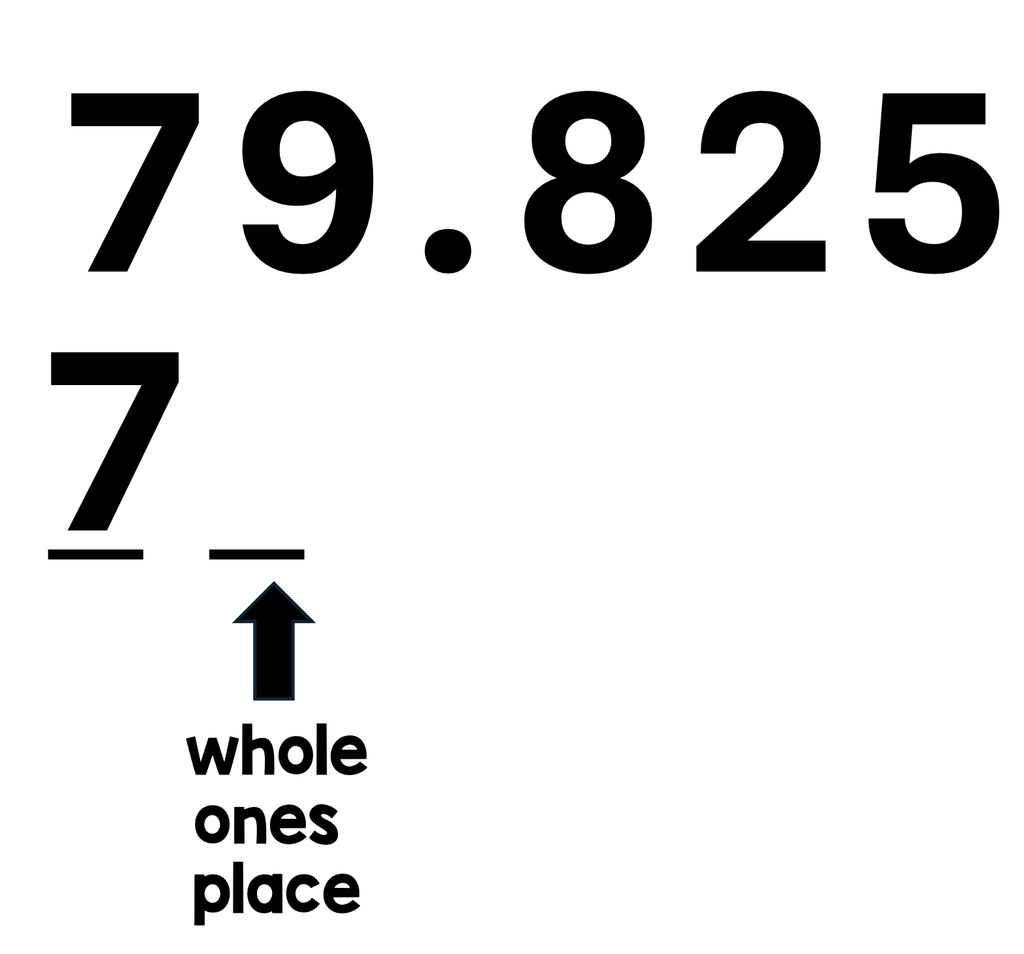
5️⃣ Decide what digit goes in the empty number seat.
All that’s left is choosing my ones place. It’s either going to be a 9 or a 10… wait a minute! A 10 won’t fit in one seat.
But what’s one more than 79? 80. So my two choices are 79 or 80. That 8 in the tenths place tells me I’m rounding up, which makes the answer 80.
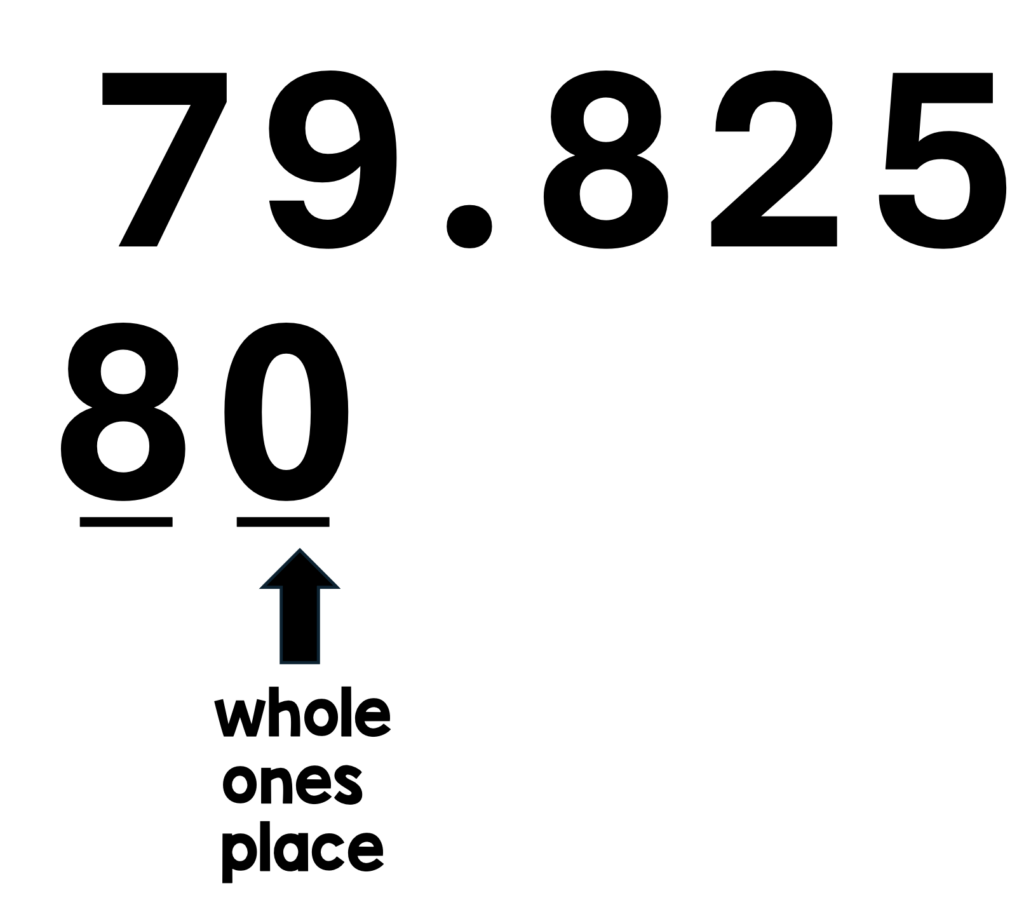
Notice what happened: the digit to the left had to change too. That’s the only time our “copy down the left” rule bends, and kids can see exactly why. The extra group didn’t fit in its seat, so it moved next door.
This is why erasers are so important in math class!
Eventually this whole process just happens in their heads. And that is a beautiful thing.
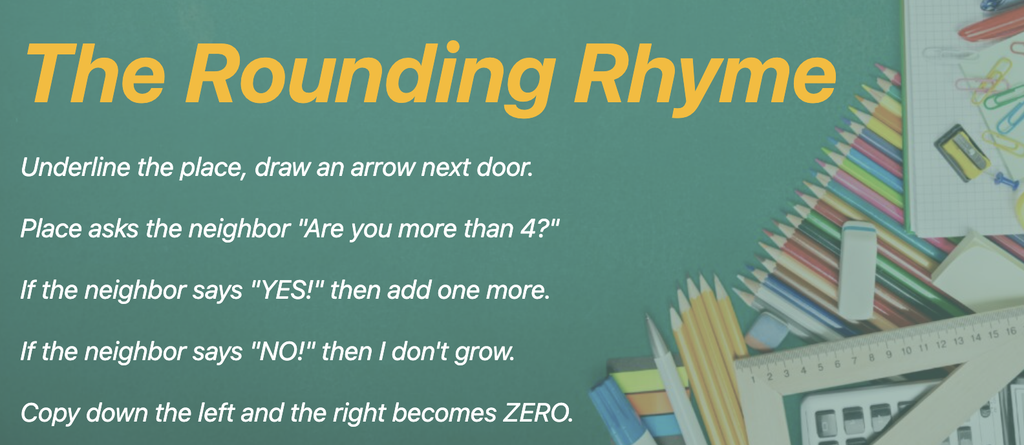
A Rounding Rhyme (That Actually Builds Number Sense)
Now, I’m all for a handy dandy jingle! As long as you teach it alongside a strategy that builds number sense. Which we just did.
More Support for Teaching Rounding
“Sally, I love this strategy, but that’s not how my curriculum teaches it!”
I’ve got you.
4th Grade Rounding Lesson Bundle → starts with small numbers and number lines, then builds to bigger numbers and number seats. 4 days. 4 lesson packets. Total mastery!
5th Grade Rounding Decimals Lessons → is for my 5th grade teachers. Rounding decimals is actually much more straightforward than the mega numbers kids have to master in 4th grade. If you’ve laid a strong foundation, you can knock this out in a single day. (No strong foundation? Teach the 4th grade rounding lessons first. Your future self will thank you.)
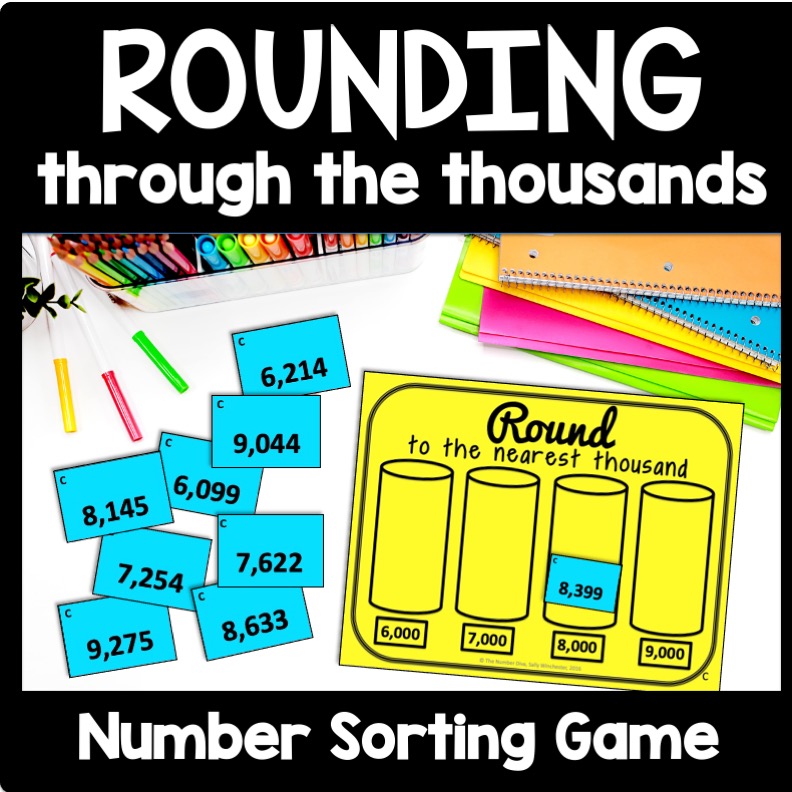
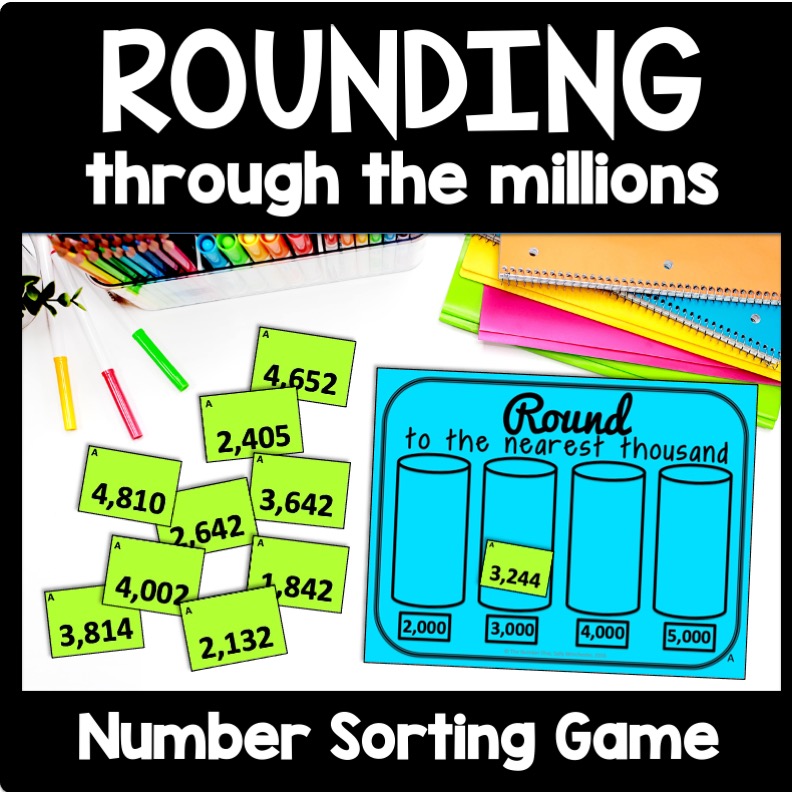
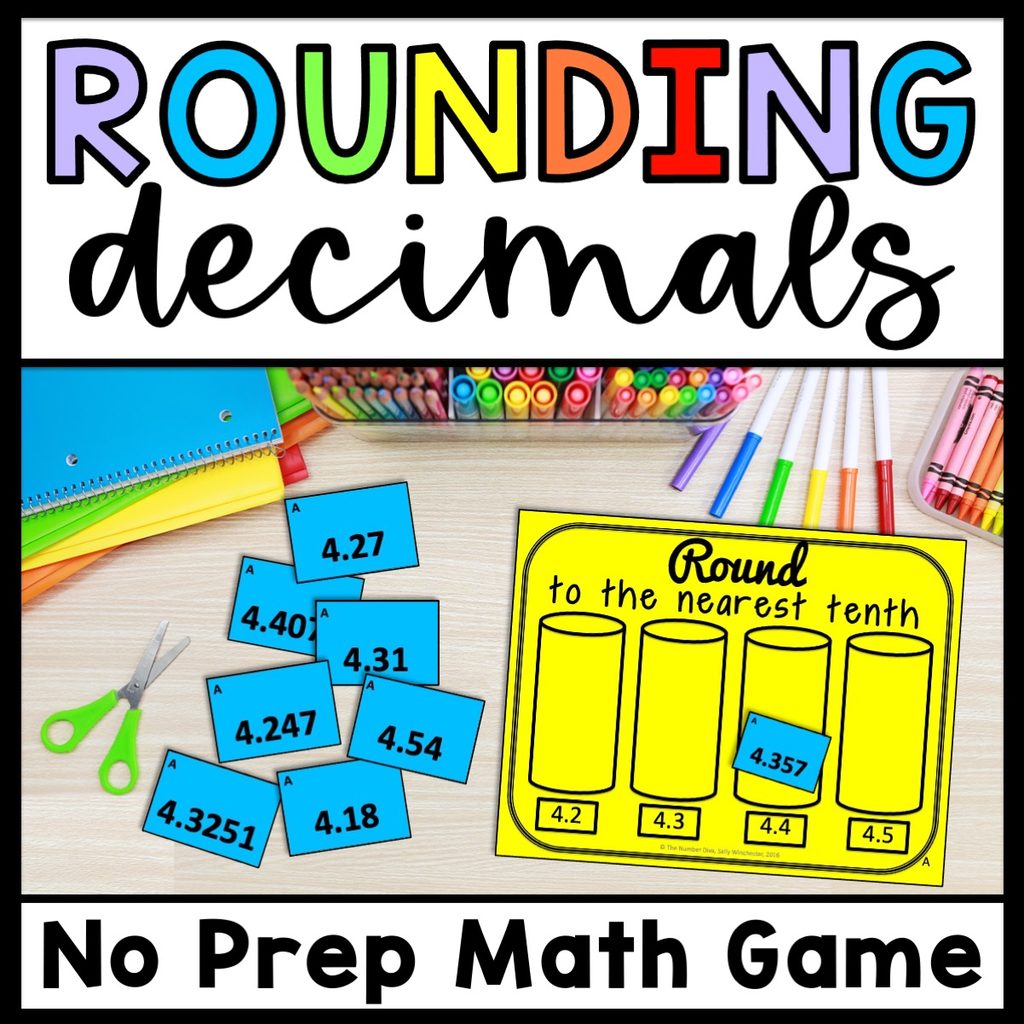
Rounding Games → I love these maths sort because it removes the barrier of writing that slows so many students down. The game mat creates “buckets,” and students simply decide which rounded bucket each number belongs in. It’s visual, which helps deepen the knowledge, and is great for kinesthetic learners.
It also comes in three versions: small numbers, big numbers, and decimals!
Final Thoughts on Teaching Rounding
Rounding gets a bad reputation, and honestly? It earns it. But most of the tears happen because we ask kids to memorize a rule before they understand the numbers underneath it.
Start with number lines and midpoints in 3rd grade. Move to number seats when the numbers get too big to draw. Keep the same five steps all the way through decimals in 5th grade. Add the rhyme after the number sense is there, not instead of it.
Do that, and rounding stops being the topic everyone dreads. Your kids will round 5,618,922 to the nearest ten thousand without blinking, and you’ll get to be the teacher who finally made it make sense.
Now go forth and round, friend. 🎉
Math love,
Sally 💛
How to Teach Rounding FAQs
What grade do students learn rounding?
Rounding is formally introduced in 3rd grade (3.NBT.A.1), where students round to the nearest ten and hundred. In 4th grade (4.NBT.A.3), they round multi-digit whole numbers to any place up to 1,000,000. In 5th grade (5.NBT.A.4), they round decimals.
Do 2nd graders learn rounding?
Usually not. In most states, 2nd grade builds the foundation instead: place value to 1,000, skip counting by 5s, 10s, and 100s, and working on number lines. A few states are exceptions, so check your own standards.
Why is rounding so hard for students?
Because rounding is really a number sense skill, not a procedure. Students who have only memorized steps have nothing to fall back on when the numbers get bigger. Kids who understand midpoints and what number a value is closest to can round anything.
What is the rounding rule for 5?
When the digit to the right of the rounding place is 5 or more, you round up. When it’s 4 or less, the digit stays the same. The reason is the midpoint: 5 is exactly halfway, and by convention we round it up.
How do you round when the digit is a 9?
Follow the same steps. When the 9 rounds up, it becomes a 10, which won’t fit in one place value, so the extra group moves to the place on the left. For example, 79.825 rounds to 80, not “710.”
Should I teach a rounding rhyme?
Yes, but not first! A rhyme is a memory aid, not a strategy. Teach number lines and midpoints so kids understand why rounding works, then add the rhyme to help them remember the steps.
How do you round decimals?
Exactly the same way you round whole numbers. Find the place you’re rounding to, look at the digit next door, and decide whether it rounds up or stays the same. The one difference is that the digits to the right get dropped instead of becoming zeros.