
There is literally nothing worse than hearing a student yell “I’M DOOONE!” while half the class is still hunched over their papers, thinking hard.
Now suddenly you’re managing behavior instead of supporting the kids who actually need your attention.
It happens every single day, and yet somehow we’re always “surprised” by it. We plan the lesson, we differentiate, we prep the materials and then the fast finishers blow a hole right through the middle of it. Left unplanned-for, early finishers become one of the biggest sources of headaches and classroom management issues we face.
But it’s time we changed all that.
Because here’s the mindset shift that changes everything: your early finishers aren’t a problem to manage. They’re an opportunity!
Table of Contents
Two Types of Math Early Finishers
First, let’s take a second to think about the students who finish first. They usually fall into one of two categories: Team 1: your high-flyers, who genuinely mastered the work and are ready for more, and Team 2: your speed demons, who raced to the finish line and left quality somewhere back at question three. The good news? I’ve got strategies for both teams.
The 5 Ways I Deal with Math Early Finishers
1️⃣ Make Independent Practice Extra Long
My daily independent practice is loooooong by design. Almost always 4 full pages! It’s also extremely scaffolded: it starts easy and gets spicier and spicier as it goes. Page 2 is built to match the rigor of the Exit Ticket, page 3 is hard, and page 4 is a “Challenge Page” where I add an extension for the topic from that day.
This deals with 90% of math early finishers right out of the gate. Because the problems get progressively harder, every student has the opportunity to be challenged and almost no one runs out of things to do.
And for my Team 2 kids (the speed demons), it’s easy to spot exactly where the rigor passed up their skill level. I just send them back to that point and have them try again.
Want to see this beautiful Independent Practice for yourself? It’s included in all 200+ of my lesson packets!
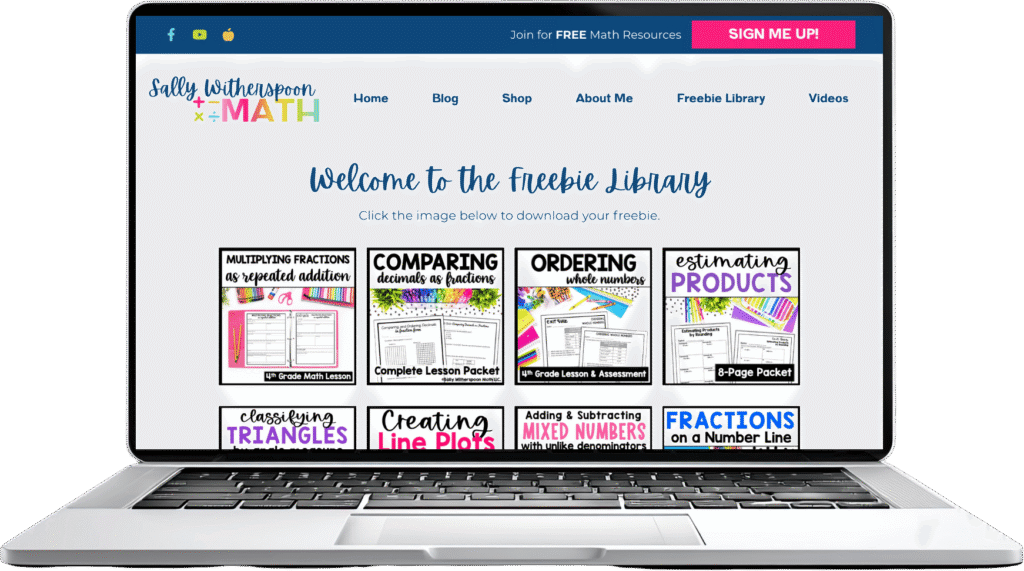
Want to try it for yourself? Check out my Freebie Library!
2️⃣ Flashcards in Desks
It’s as simple as it sounds: I keep a deck of flashcards in every student’s desk. Anyone who finishes early can pull them out and quiz themselves for a few minutes.
This could be times tables flashcards (I’ve got a printable deck here!) or really any mental math skill you’re working on. Simplifying fractions, rounding decimals, exponents, you name it!
Flashcards are perfect for those moments when a few kids are done and you’re only a few minutes away from bringing the class back together. Just grab some flashcards and go.
Want more ideas on how to use flashcards in your classroom? I wrote a whole blog about my deep love for them!
3️⃣ Student Answer Checker
Do you have 1-3 students who consistently finish before everyone else? If they fall into Team 1 (your high-flyers), it can be helpful to hand them an answer key and let them (QUIETLY) check in with students who are still working.
Fair warning: this one takes a special kid, because it can quickly become a management challenge. But if you train the right students, it can feel like you’re literally tripling your capacity to support the class! Plus, it builds leadership in your high-flyers, who are so often the most bored and overlooked kids in the room.
4️⃣ Extension Games
Have a designated spot where students can grab a game and play it quietly at their desks while they wait for others to finish.
Here are a few of my favorites:
When I use my sorting games for math early finishers, I put the cards in a snack-sized ziplock and clip it to the game mat. Students grab one round at a time and take it back to their seats to complete. When they finish they can swap it out for another round. To cut down on “walking back fourth” you could designate a spot in the room where students quietly play these games if they finish early.
You could also use these as Mental Math Games in partners or small groups, if you have a quiet corner where students can play without disturbing the rest of the class.
Another fair warning: games require students to get up out of their seats. I would only use this option if your management is very solid! Remember, your priority is not the early finishers. It’s the kids who are working that still need your attention.
5️⃣ Head Start on Homework
I use this option during Exit Tickets only. I don’t want students rushing through independent practice just to dodge homework. Exit Tickets are a different story, though, because students know they count for a grade, they’re much less likely to rush.
However, if your early finishers are those Team 1 high-flyers, I see no reason why they can’t get a head start on homework and earn themselves more free time at home later.
The Tipping Point
There is a critical mass of early finishers, and I think it’s about 20%. If 5 kids out of a class of 25 are finished, it’s time to move the lesson along. If that means you have extra time for your debrief, great!
But if your lesson is running short, that’s not an early finisher problem. That’s a planning problem. Complete your in-depth debrief, give the Exit Ticket, let kids start on homework, and then play some type of whole-group game as a reward!
These One Minute Mental Math Games are my favorite when I have extra time at the end of my math block.
Your “I’M DOOONE!” Action Plan
The next time you hear that dreaded “FINISHED!” from across the room, I hope it hits differently. Early finishers aren’t a problem to manage. They’re a built-in opportunity to challenge your high-flyers, coach your speed demons, and build a classroom culture where the learning never just… stops.
You don’t need to overhaul everything tomorrow. Pick ONE idea from this list and try it this week. My vote? Start with extra-long independent practice. It’s the one that handles 90% of the problem before it even starts.
Have a favorite math early finisher strategy I didn’t mention? I’d love to hear it! Drop it in the comments below.
Math love 💛
Sally
FAQs: Math Early Finishers
What should early finishers do in math class?
Early finishers in math class should move on to purposeful, self-directed work like scaffolded challenge problems, flashcards, or extension games. The best early finisher activities extend the day’s learning rather than just filling time. My go-to strategy is building independent practice that gets progressively harder, so students rarely “finish” at all.
How do you challenge early finishers in math without creating more work for the teacher?
The easiest way to challenge math early finishers is to build the challenge into materials you already use. Scaffolded independent practice that ends with a challenge page, flashcards stored in student desks, and grab-and-go extension games all run themselves once you set the routine. None of them require you to prep a separate activity or stop supporting the students who are still working.
What do you do with students who rush through their math work?
Students who rush through math work (my “speed demons”) need accuracy checks, not more work. Instead of handing them a new activity, look at where the rigor passed up their skill level and send them back to that point to try again. This teaches students that finishing fast only counts if the work is quality.
Should early finishers help other students in math?
Yes, high-achieving early finishers can check answers and quietly support classmates, but only with the right training. Give a responsible student an answer key and clear expectations, and you can effectively triple your capacity to support the class. This works best with 1-3 consistent early finishers who have truly mastered the content, not students who simply finished fast.
How many early finishers is too many?
If about 20% of your class has finished, it’s time to move the lesson along. In a class of 25, that’s 5 students. And if most of your class finishes early every day, that’s not an early finisher problem, it’s a pacing and planning problem. Tighten the lesson and use the extra time for an in-depth debrief or add a new spiral review structure like a math fluency block!
Are early finisher activities just busywork?
They don’t have to be! Strong math early finisher activities are extensions of the day’s learning: challenge problems, mental math flashcards, sorting games, or a head start on homework. If an activity is unrelated to math or requires zero thinking, it’s busywork. If it deepens fluency or extends the skill, it’s a win.