

Table of Contents
Table of Contents
A simple, repeatable math homework system that keeps students accountable, makes grading fast, and protects your sanity.
Let’s talk about math homework.
It’s one of the most debated topics in education. Does it actually help? Is it worth all the hassle? Should it even be graded?
But whether you love it or hate it, one thing stays true: homework only works if students are invested in it.
After years of trial, error, and a few near meltdowns over grading stacks of papers, I finally built a math homework system that balances student accountability with teacher sanity. Below are the six math homework tips for teachers I use every day, plus the grading routine that takes five minutes or less.
Key Takeaways
- Start homework in class to build urgency and finish more before the bell.
- Work must be shown. No work = no credit. This promotes effort and reduce copying.
- Grade only 5 random problems and have students self-grade to cut your grading time dramatically.
- Use a “Hot Seat” answer key to boost engagement and ownership.
- Recognize effort and excellence so students rise to what gets noticed.
- Keep the routine to 5 minutes and run spiral review every single day.
- Count it as a grade but not a big one.
Why Most Homework Systems Fail
Most homework systems fail because grading becomes unsustainable, so checking stops and students stop caring. Here’s the cycle most of us have lived:
Students rush through homework and “write anything” so teachers feel obligated to grade everything. Students are invested but grading 100 homework papers daily is unsustainable. Homework stops being checked consistently and students stop caring. And the brutal cycle continues.
Sound familiar? But what if the problem isn’t actually the concept of homework, but your system?
6 Math Homework Tips for Teachers
Tip #1: Build Urgency Into Class Time
Want students to care more about homework? Let them start it in class.
In my classroom, I pass out homework during the Exit Quiz. As soon as students complete their quiz, they immediately begin working on homework.
This works because it creates urgency, rewards efficiency, and builds time-management skills. Many students complete a large portion of the assignment before they even leave the room.
And bonus: if your lesson ever runs on the short side, homework is there to save the day!
Tip #2: “No Work, No Credit” (And Why It Matters)
This is non-negotiable in my classroom: if there’s no work shown, there’s no credit.
Showing work matters because it’s proof of thinking, a way to catch mistakes, and a safeguard against guessing or copying. I tell my students that showing your work is like a receipt. It proves the answer belongs to you and that you didn’t steal it from anyone else.
A few things that make this easier: provide enough space (double-sided pages help), ask students to staple looseleaf to their homework assignment, and make it clear which problems require written work and which ones are ok for mental math.
Tip #3: A Grading System That Won’t Burn You Out
Should you grade every single problem on every assignment? Absolutely not. Here’s the math homework grading system that keeps me sane.
Grade only 5 random problems. Students never know which ones, which keeps them accountable for all of their work. Sometimes odds, sometimes evens. Front, back. Hard, easy. Keep them on their toes.
Have students grade their own papers. Yes, I know this means sometimes they will give themself extra points, but this far outweighs the drama of “I can’t read his handwriting” every few minutes when we trade papers.
Use a simple grading scale:
- 5 correct = 100%
- 4 correct = 90%
- 3 correct = 80%
- 2 correct = 70%
- 1 correct = 60%
- 0 correct = 50%
Is it generous? Yes. Is it manageable? Also yes. And that balance is what makes the system last.
Tip #4: Make Homework Review Visible and Engaging
When checking homework in class, one of my favorite strategies is the “Hot Seat.”
Use a random number or name generator to pick a student. That student’s paper becomes the answer key, and the class grades using their 5 problems. It builds accountability, engagement, and ownership all at once.
Pro tip: always start with a shoutout! One kind thing about the student’s paper. I love how he showed his work for every problem. Her handwriting is so neat. His strategy for that fraction problem is very creative. Even if a student misses all 5 problems, they walk away feeling empowered to do better next time.
Important: only use this once your classroom feels like a safe space. If kids are prone to teasing or meanness, wait until classroom culture feels a little more stable.
Tip #5: Recognize Effort and Excellence
Recognition goes a long way. Ask students with perfect papers (aka all 5 random problems are correct) to stand up. Do a quick classroom cheer. It takes 10 seconds and goes a long way in motivating the whole class to do their best!
Tip #6: Keep It Short and Consistent
Your entire homework checking routine should take five minutes or less. If it’s taking 20–30 minutes, something needs to change. Find the balance between student investment and a light workload for you!
Tip #7: To Grade or Not to Grade?
This is a controversial one. Some schools have entire policies on this.
For me, I take all the homework grades for one quarter and average them together as one test grade. So it counts, but not too much.
The problem with homework is that we can’t control the home environment where kids are completing it. It is unfair to reward students who may have more support and structure at home. We don’t want homework to overly effect a students grade- positively or negatively.
I have a very simple google sheet with a tab for every class. My lunchtime homework helpers enter all the scores into the spreadsheet daily (separate from my grade book for security reasons). Occasionally it doesn’t happen and I “File 13” an entire stack. And that’s ok. Because students are invested and that’s all that matters.
At the end of the quarter I get one grade per kid and enter it into my real grade book.
My Homework Philosophy
I’ll be honest: I’m a bit old-school. I assign homework daily because I believe in spiral review, and I value time management as a life skill.
But I also recognize that every classroom is different and every school has different expectations. So whether you assign homework daily or not, the key is this: spiral review needs to happen every single day.
And remember, your spiral review system is only as strong as your student investment. If students don’t care, you can practice 10 hours per day and it won’t move the needle one bit.
Want spiral review homework for the entire year that’s ready to print and go? Say less!
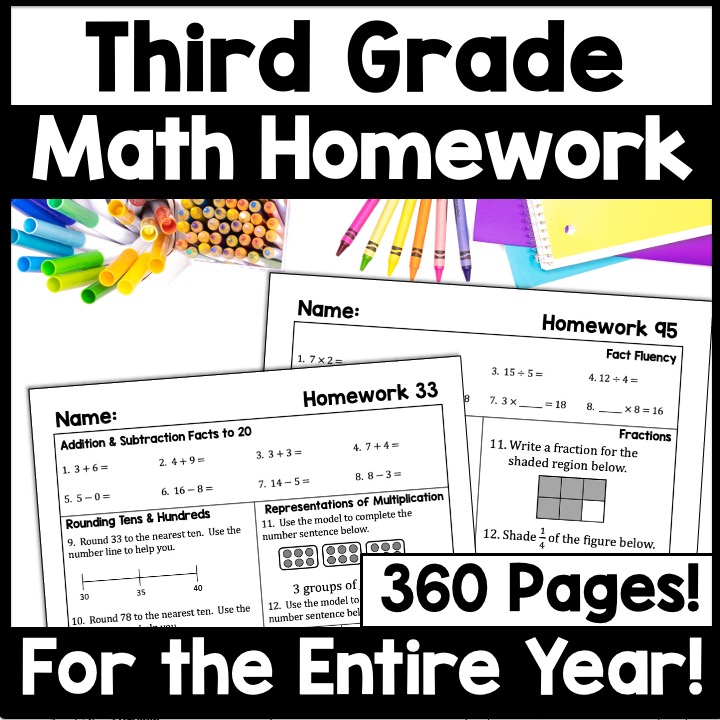
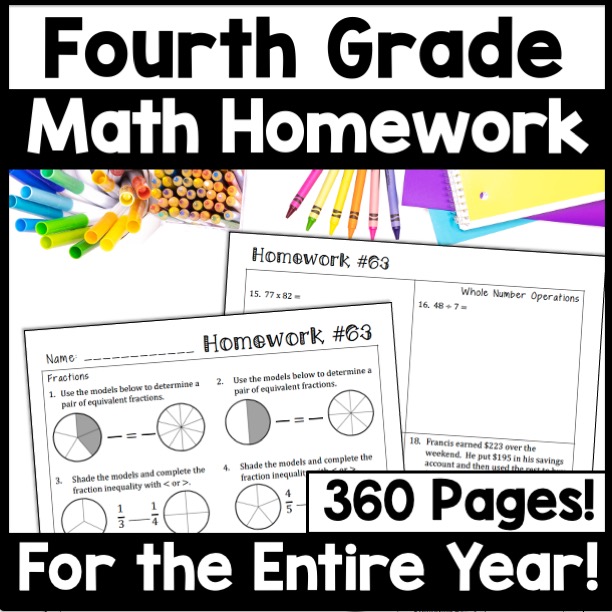
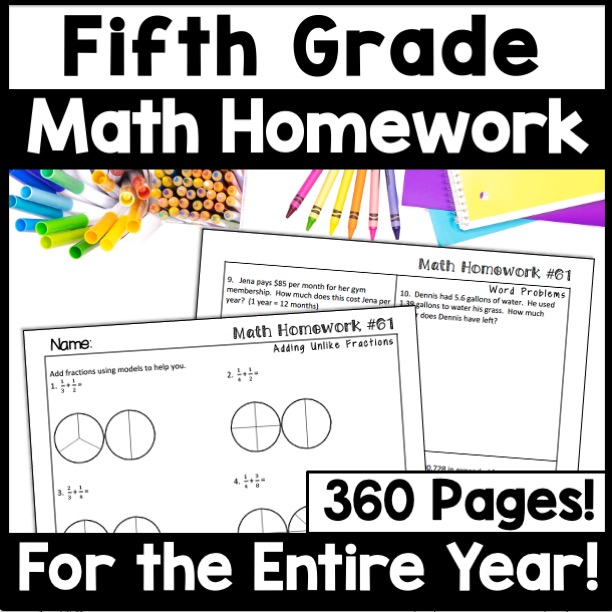
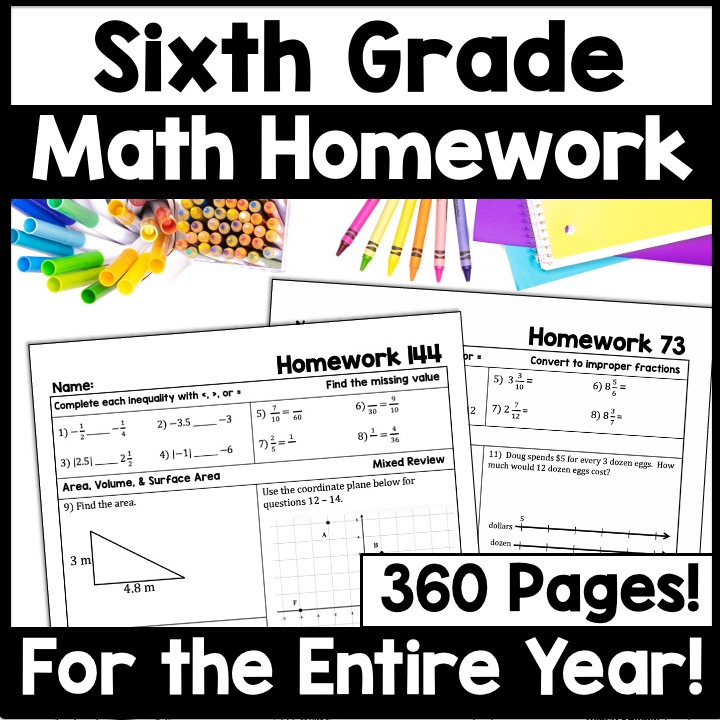
Get a free sample of homework for each grade level here:
- Free Sample 3rd Grade Math Homework
- Free Sample 4th Grade Math Homework
- Free Sample 5th Grade Math Homework
- Free Sample 6th Grade Math Homework
Math Homework Tips for Teachers: Final Thoughts
Math homework doesn’t have to be overwhelming — for you or your students. With the right system, it becomes manageable, meaningful, and actually effective.
The goal isn’t perfection. It’s a routine where students stay accountable, you stay sane, and learning keeps moving forward.
Math love,
Sally 💛
Math Homework Tips for Teachers: FAQs
How much math homework should I assign?
It depends on your school and students, but consistency and purpose matter more than quantity. A short, daily spiral-review assignment usually beats long, occasional ones.
Do I have to grade every problem?
No. Grading a small, random selection of about five problems keeps accountability high without overwhelming you.
Why should students grade their own homework?
Student self-grading saves you time, builds ownership, and gives students immediate feedback while the work is still fresh. It also cuts down on the fussing and drama that happens when students trade papers. I can’t read his writing! He marked this wrong but it’s actually right!
What if students cheat when self-grading?
It happens occasionally, but requiring shown work, grading random problems, and hiding pencils in desks during grading time keep the system honest and still builds better habits overall.
Is homework necessary for math?
Opinions vary, but regular spiral review is essential for retaining math skills over time — whether that practice happens as homework or in another portion of your class is up to you!
What about homework for absent students?
I just leave a blank in the homework spreadsheet. I could make myself crazy trying to track down every missing assignment, but with dozens of homework grades a quarter, a day here or there is a drop in the bucket.
In class, hand a student who was absent the previous day, a blank copy of the assignment so they can follow along and take notes during the debrief. Have them write their name and “Absent” at the top and pass it in with everyone else. If you want, your graders can give an effort-based grade for how well they took notes on the debrief.
I have a lot of thoughts about chronically absent students if you’d like to read more here.
I know this sounds controversial, so you’ll just have to trust me.

What do I do about kids who just won’t do their homework?
If a student doesn’t have their homework and they were here the day before, give them a blank assignment so they can follow along with the review. Have them mark their own grade as 0/5 and turn it in with the rest of the class. Trust me — that motivates them to get it done next time.
My late homework policy is simple: I don’t accept it. It’s just too much of a hassle for me. That might sound harsh, but students have 180 nights to get their homework done. Missing one here or there isn’t a big deal, especially since my homework grading policy is so lenient (see the 5-point scale above) and the full quarter average doesn’t carry much weight anyway.
Remember, this is about holding students accountable for high-quality practice. Try not to lose the forest for the trees.



One Response