
If you’ve ever watched a student confidently write 1/3 + 2/5 = 3/8, you know the struggle is real! Figuring out how to teach adding fractions with unlike denominators can feel overwhelming. There are so many steps, so many sub-skills, and so many places for students to get tripped up.
The good news? With the right foundation and a few simple strategies, adding fractions with unlike denominators can actually click for your students. In this post, I’m sharing my top 6 tips for teaching adding and subtracting fractions with unlike denominators, from the prerequisite skills to tee up weeks ahead of time to the one mistake I see teachers make with mixed numbers. Let’s dive in!
Table of Contents
Tip #1: Tee Up Prerequisite Skills
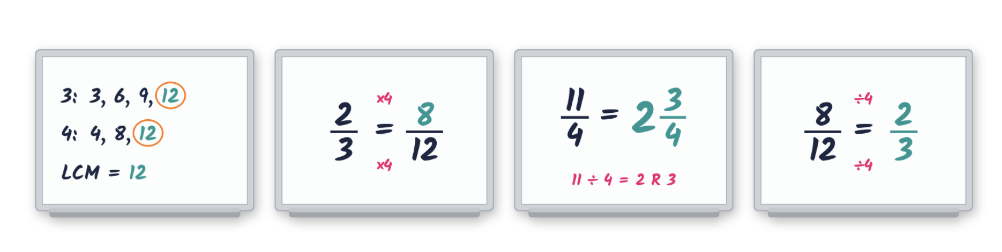
Adding and subtracting fractions with unlike denominators relies on several sub-skills. If students haven’t mastered these first, the new unit can feel overwhelming. Several weeks before the unit starts, mix these types of problems into warm-ups, homework, morning work, small-group intervention, tech spiral review, or anywhere else you can fit them.
Prerequisite Skills
- Listing multiples to find the LCM
- Finding equivalent fractions with 3 of the 4 numbers filled in
- Converting improper fractions to mixed numbers
- Simplifying fractions
Tip #2: Make Sure Students Understand WHY We Don’t Add the Denominators
If students don’t have a clear understanding of what the denominator actually tells us, they’ll simply add straight across: 1/3 + 2/5 = 3/8.
So how do we build that understanding? Practice with visual models and adding fractions with like denominators first. Students need to see it. They need to understand that the denominator isn’t a quantity we have. It’s the size of the pieces, or the label.
If you need extra practice to lay the groundwork, here’s a packet where students add fractions with like denominators using models.

Tip #3: Use a Hook to Grab Their Attention
Before you jump right into adding and subtracting fractions with unlike denominators, we need a good visual anchor for finding a common denominator! Apples and oranges are my favorite way to get this point across. If I have 5 apples and 3 oranges, how many do I have in all? 8, right? But 8 what? 8 pieces of fruit! Before we can combine unlike groups, they need a common label. Fractions work the same way.

Tip #4: Line Fractions Up Vertically
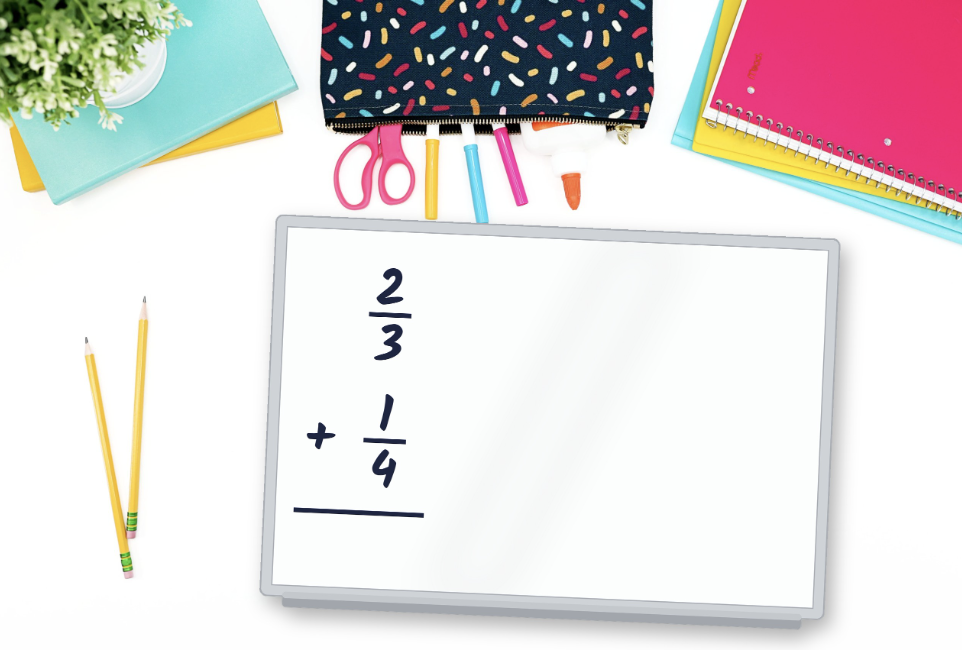
To take away the temptation to add straight across, have students line fractions up vertically when they add or subtract fractions with unlike denominators. This leaves room in their workspace for all that has to happen before they’re ready to add or subtract.
It also keeps students from mixing up these steps with the algorithm for multiplying fractions, which does go straight across.
Tip #5: Fraction Seats!
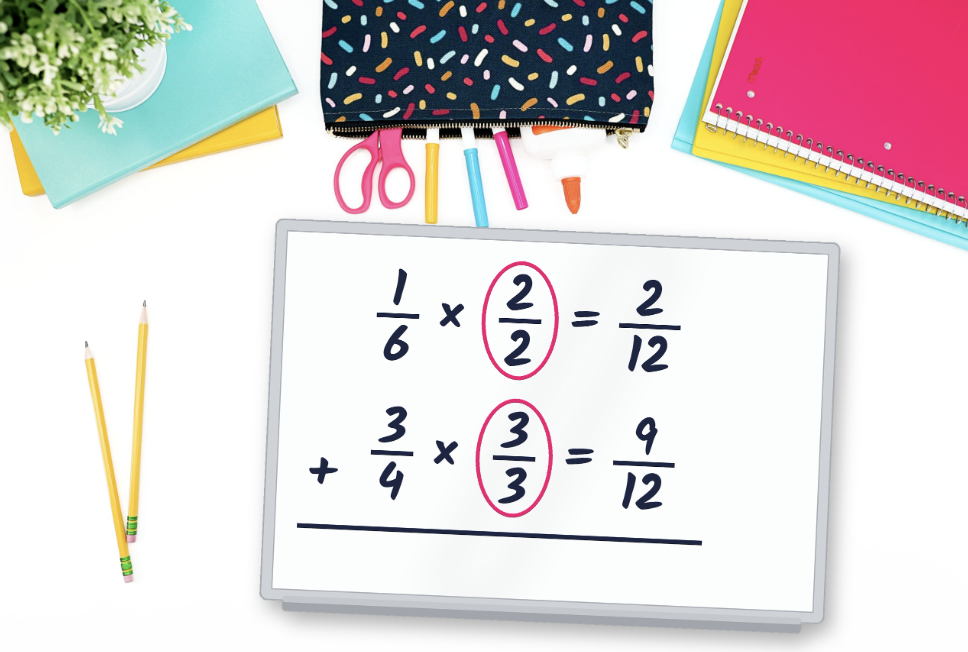
Fraction seats (aka number seats) are the best thing that ever happened to my math classroom. They’re little magical empty “seats” where a future number needs to go, so they remind students what to do next.
The first few times students add or subtract with unlike denominators, set up fraction seats. Then slowly wean students off them as they gain momentum. Some students may only need them for one or two problems, while others may need them for weeks. That’s okay! Adding and subtracting fractions with unlike denominators is something we’ll spiral back to all year long.
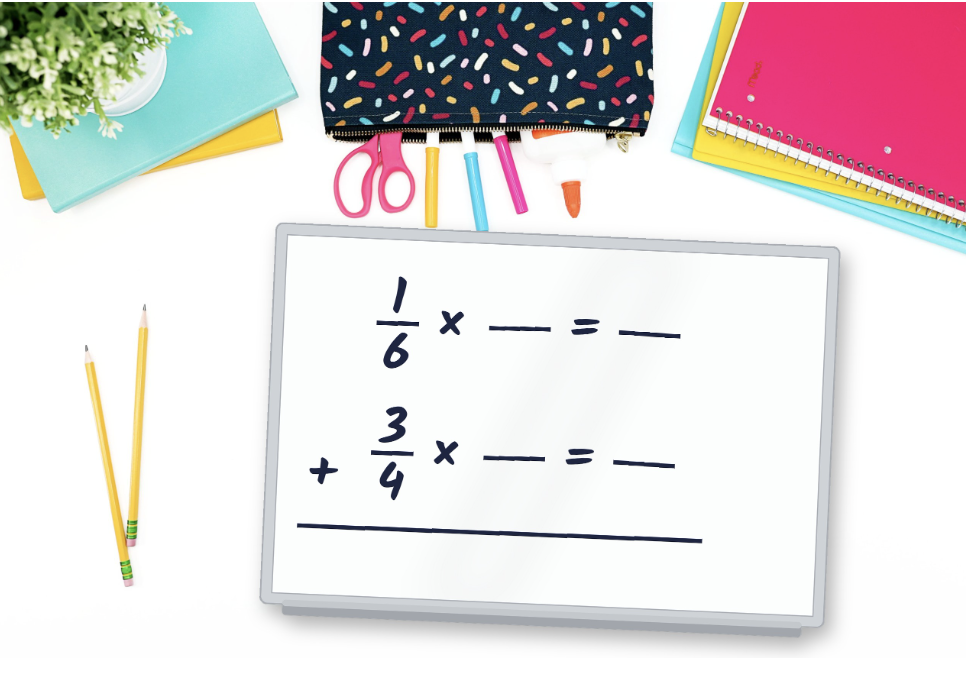
But wait, Sally! What are those fractions in the middle for? That’s the scale factor. We need to hammer home that we’re multiplying by a fraction equal to one whole, which is why the new fractions are still equivalent. I even have students circle that middle fraction to remind them it equals one.
We also use a choral response:
- Me: “Whatever you do to the bottom…”
- Students: “…you always do to the top!” CLAP, CLAP!
Tip #6: Keep wholes and parts SEPARATE!
Teachers constantly tell me they have students change every mixed number to an improper fraction. That way students can add or subtract everything at once and not worry about subtracting mixed numbers with regrouping.
For the love of all that’s holy, keep them separate! Why? Because you’ll end up with SOME BIG, GIANT, UGLY FRACTIONS. Those numbers are too big for kids to work with comfortably, and that’s when calculation errors creep in. Look at the examples below and you tell me: which one looks harder?
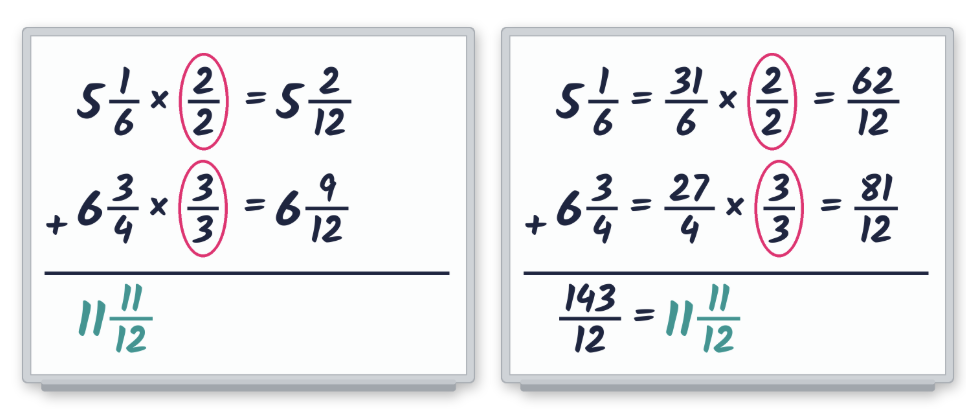
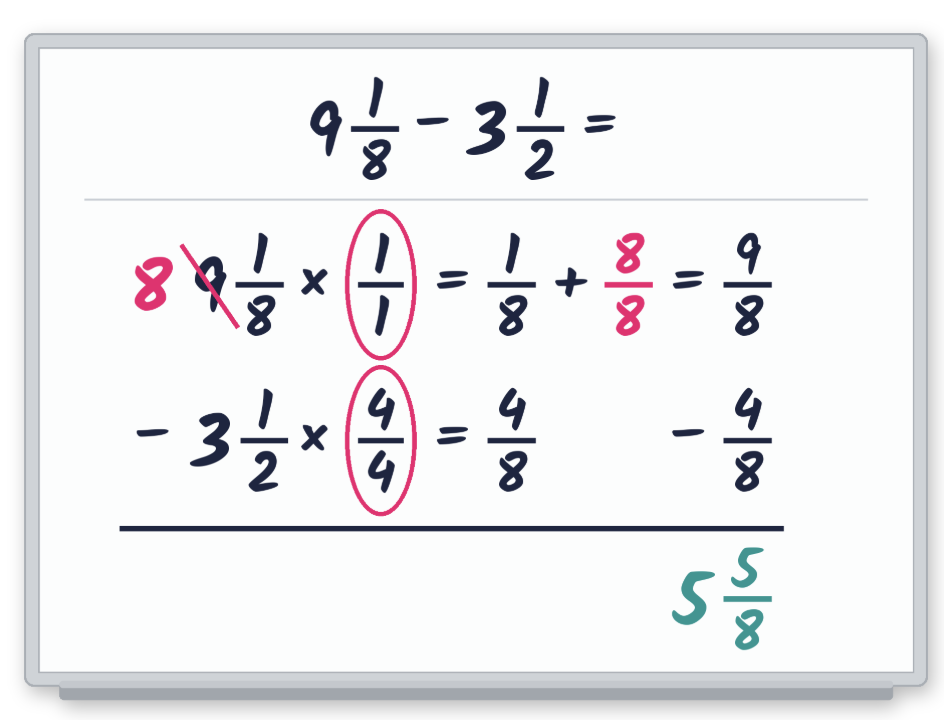
Does this make subtracting mixed numbers harder? Nope! The numbers stay manageable, and we get to teach students how to regroup, which builds number sense.
Want more practice with this? Here’s a full lesson focused on Subtracting Mixed Numbers with Regrouping!
More Support for Adding Fractions with Unlike Denominators
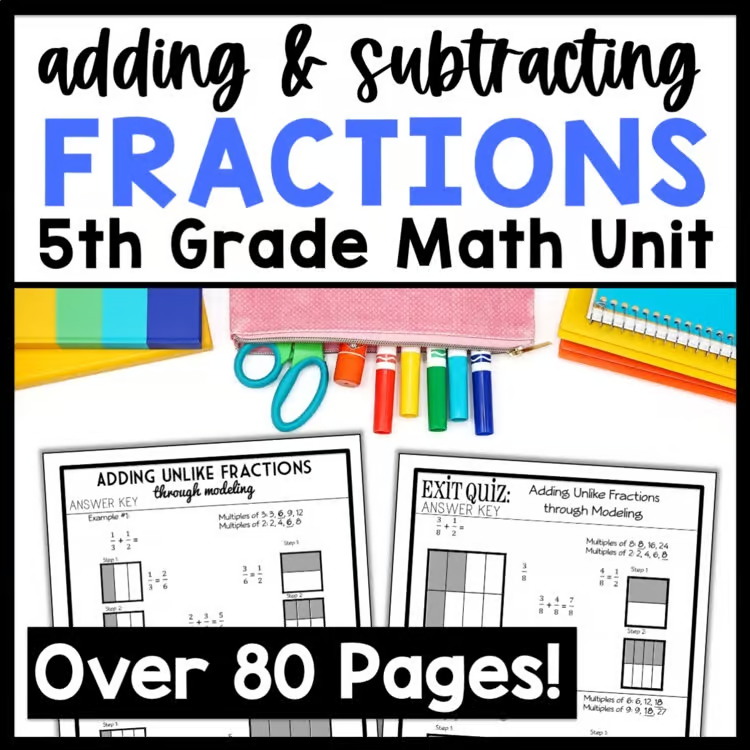
Here’s my entire 5th Grade Adding & Subtracting Fractions Unit! It starts with like denominators, teaches common denominators through modeling, moves into word problems, and finishes with mixed numbers. You’ll get 10 full days of scaffolded practice on more than 80 pages. There’s a reason more than 1,500 teachers have purchased this unit!
Final Thoughts on Adding Fractions with Unlike Denominators:
Teaching students to add and subtract fractions with unlike denominators doesn’t have to feel like an uphill battle. When students understand why we don’t add the denominators, have the prerequisite skills down, and use tools like fraction seats and vertical alignment, the steps start to click. Keep wholes and parts separate, keep the numbers manageable, and keep spiraling this skill all year long. Your students will be adding and subtracting fractions with unlike denominators like pros in no time!
Math love,
Sally 💛
FAQs: How to Teach Adding Fractions with Unlike Denominators
What grade do students learn adding fractions with unlike denominators?
Adding fractions with unlike denominators is a 5th grade standard (5.NF.A.1). Students build the groundwork in 3rd and 4th grade by learning what fractions mean, finding equivalent fractions, and adding fractions with like denominators.
What should students know before learning to add fractions with unlike denominators?
Before you start, make sure students can list multiples to find the LCM, find equivalent fractions, convert improper fractions to mixed numbers, and simplify fractions. Spiral these skills into warm-ups and homework a few weeks before the unit begins.
Why can’t students just add the denominators?
The denominator isn’t a quantity. It tells us the size of the pieces, like a label. Just like 5 apples + 3 oranges isn’t 8 “apploranges,” we can’t combine fractions until they share a common label, or a common denominator.
What’s the best way to teach adding fractions with unlike denominators?
Start with visual models and like denominators so students see what’s happening. Then line the fractions up vertically, use fraction seats to show the steps, and have students circle the scale factor so they remember they’re multiplying by one whole.
Should students convert mixed numbers to improper fractions before adding?
I don’t recommend it! Converting creates big, ugly fractions that lead to calculation errors. When adding and subtracting fractions with unlike denominators, keep wholes and parts separate. The numbers stay manageable, and students build number sense through regrouping.
How long should I spend teaching adding fractions with unlike denominators?
Plan on about two weeks of focused instruction, then keep spiraling it in all year. Some students will need fraction seats for just a few problems, and others will need them for weeks. That’s okay!