It’s no secret that parents are often overwhelmed by “new math.” The way we teach math today isn’t always the way parents learned it, and finding good math resources for parents can feel tricky. As teachers, we hear it all the time: “Why are we making this so complicated?!”
The good news? Parents genuinely want to help. Whether it’s family math night, parent conferences, or open house, families are eager to support their kids’ math success. They just need the right tools. That’s why I keep a short list of math resources for parents that I send home every year. These 3 tools are always met with rave reviews!
Table of Contents
Math Resource for Parents #1: Multiplication Flashcards
It’s a classic for a reason. Whether you teach 3rd grade or 12th grade, I’m guessing your students could use extra fact practice. Sending home a pre-cut, ready-to-use deck of multiplication flashcards is a simple way to get parents involved in a powerful way.
The best part? Fact fluency is something parents already recognize. It’s not intimidating like an unfamiliar Common Core math model, so families can jump right in.
And just a few minutes a day with a parent can make a HUGE difference in a student’s math trajectory.
I always tell parents to keep the flashcards in the car. That way, whether they’re stuck in traffic or waiting at the dentist’s office, they’re ready to go!
Want a deck of flashcards that is ready to print, cut, and send home?! Grab my printable multiplication flashcards here!
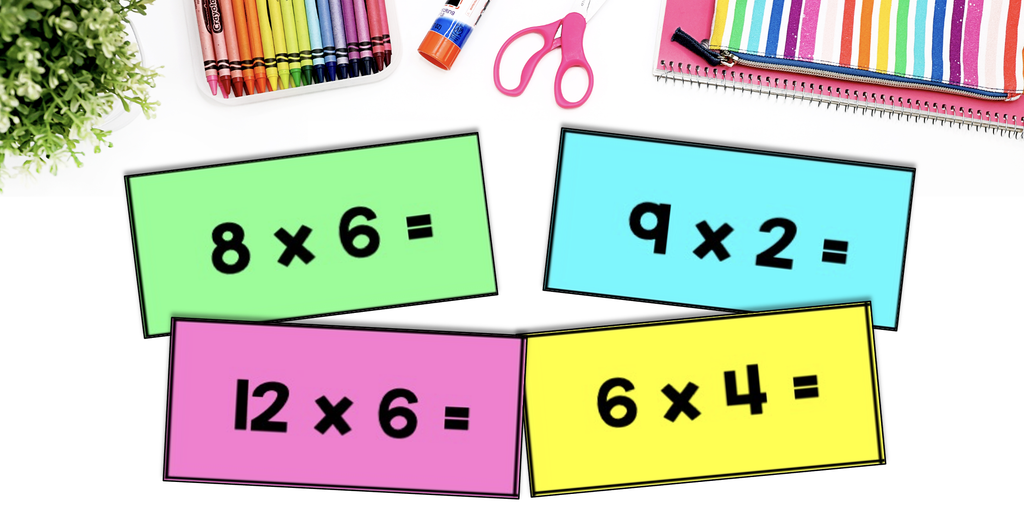
Want more ideas for using flashcards in your classroom? Check out my post on mental math flashcard activities for times tables fluency!
Math Resource for Parents #2: Kid-Friendly Math Standards
“What does my kid need to learn this year?!”
Parents ask me this all the time, and they want the answer in kid-friendly language (which is also parent-friendly!).
Don’t get me wrong. The Common Core standards are a beautiful thing, but they are WORDY! For example, here’s 5.NBT.B.6:
Find whole-number quotients of whole numbers with up to four-digit dividends and two-digit divisors, using strategies based on place value, the properties of operations, and/or the relationship between multiplication and division. Illustrate and explain the calculation by using equations, rectangular arrays, and/or area models.*
Parents just want to know: “My kid needs to be able to divide by a 2-digit number.”
I get asked for this so often that I finally created kid-friendly math standards for every grade level, K–8! And each one is under $2!
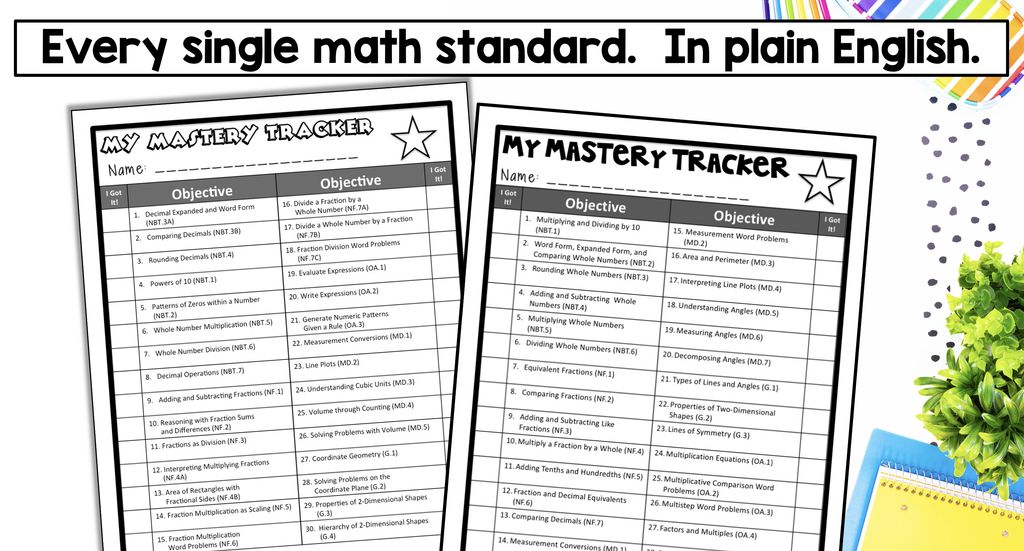
Print a copy for every student and send it home at open house, tuck it into conference folders, or add it to your back-to-school newsletter. Kids can check off each “I Got It!” box as they master a skill, and parents always know what’s coming next.
Grab the kid-friendly math standards for your grade level here!
- Kindergarten Kid-Friendly Math Standards
- 1st Grade Kid-Friendly Math Standards
- 2nd Grade Kid-Friendly Math Standards
- 3rd Grade Kid-Friendly Math Standards
- 4th Grade Kid-Friendly Math Standards
- 5th Grade Kid-Friendly Math Standards
- 6th Grade Kid-Friendly Math Standards
- 7th Grade Kid-Friendly Math Standards
- 8th Grade Kid-Friendly Math Standards
Math Resource for Parents #3: Cheat Sheets
Now that parents know the standards, they know what their kids are learning. But they don’t necessarily know how it’s being taught. This is especially frustrating for parents who didn’t grow up with the Common Core.
A parent might know their child needs to multiply 2-digit by 2-digit numbers, but that doesn’t mean they understand how the area model works.
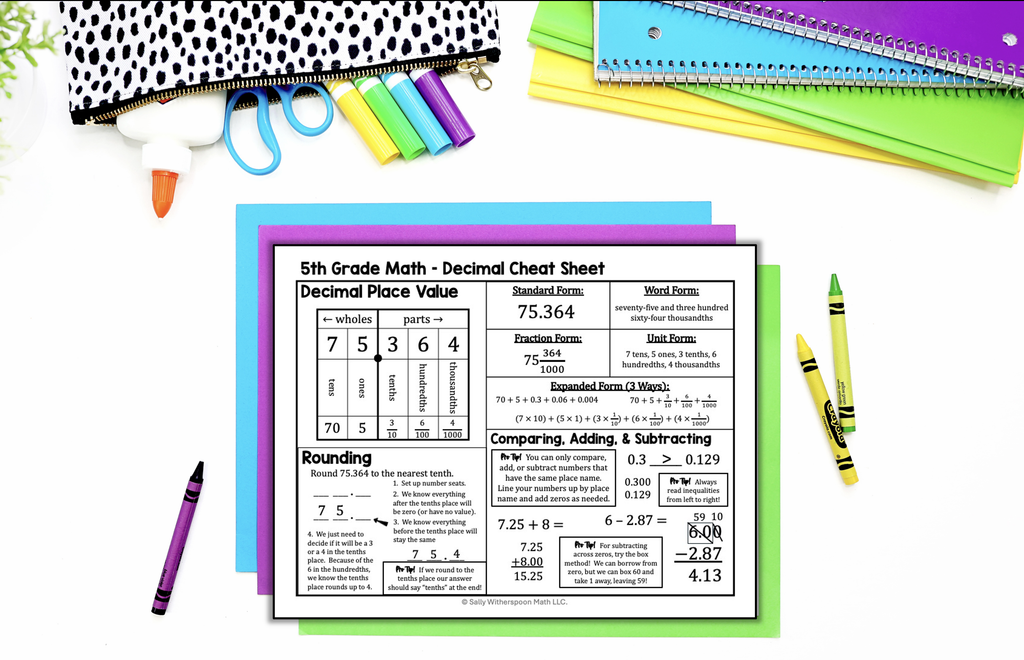
I hear it from parents all the time: “Where is the textbook?!” Often, we don’t have one. But what we can send home is a reference sheet for each unit, with every skill broken down, example problems, key vocabulary, and even a few teaching hacks to make the learning stick.
The beautiful part? You’re teaching parents at the same time you’re teaching students. Together, you’re all learning to speak the language of math, and that brings out the best in every child.
Get your grade-level cheat sheets here! There’s one reference sheet for every single unit, with everything parents need to know to support their child at home.
- 3rd Grade Math Cheat Sheets- Coming soon!
- 4th Grade Math Cheat Sheets
- 5th Grade Math Cheat Sheets
- 6th Grade Math Cheat Sheets- Coming soon!
Final Thoughts on Math Resources for Parents
Parents want to help their kids succeed in math. They just need to know how. When you send home the right tools, families go from overwhelmed to empowered.
Flashcards give parents an easy, familiar way to build fact fluency. Kid-friendly standards show them what their child is learning this year. Cheat sheets show them how it’s being taught. Together, these 3 math resources for parents turn “Why is this so complicated?!” into “I’ve got this!”
Whether you share them at open house, parent conferences, or family math night, your families will thank you, and your students will feel the difference.
Math love,
Sally 💛
FAQs about Math Resources for Parents
What are the best math resources for parents?
The best math resources for parents are simple, familiar, and easy to use at home. Multiplication flashcards build fact fluency, kid-friendly math standards explain what students are learning, and unit cheat sheets show parents the strategies being taught in class.
How can parents help with math at home?
Parents can help by practicing math facts for a few minutes each day, asking their child to explain how they solved a problem, and using reference sheets to learn the strategies taught in class. Short, consistent practice makes a bigger difference than long sessions.
Why is math taught differently now?
Today’s math instruction focuses on understanding why math works, not just memorizing steps. Strategies like the area model and place value methods help students build number sense before moving to traditional algorithms. That’s why many parents don’t recognize the methods.
When should students know their multiplication facts?
Under the Common Core standards, students are expected to know all products of two one-digit numbers from memory by the end of 3rd grade. Many older students still benefit from extra fact practice, which is why flashcards are useful in every grade.
What are kid-friendly math standards?
Kid-friendly math standards rewrite the official grade-level standards in plain language that students and parents can easily understand. Instead of technical wording, each standard tells families exactly what skill their child needs to master that year.
When should teachers send math resources home?
Great times include open house, back-to-school night, parent conferences, and family math night. You can also send cheat sheets home at the start of each new unit so parents are ready before homework begins.
*© Copyright 2010. National Governors Association Center for Best Practices and Council of Chief State School Officers. All rights reserved.